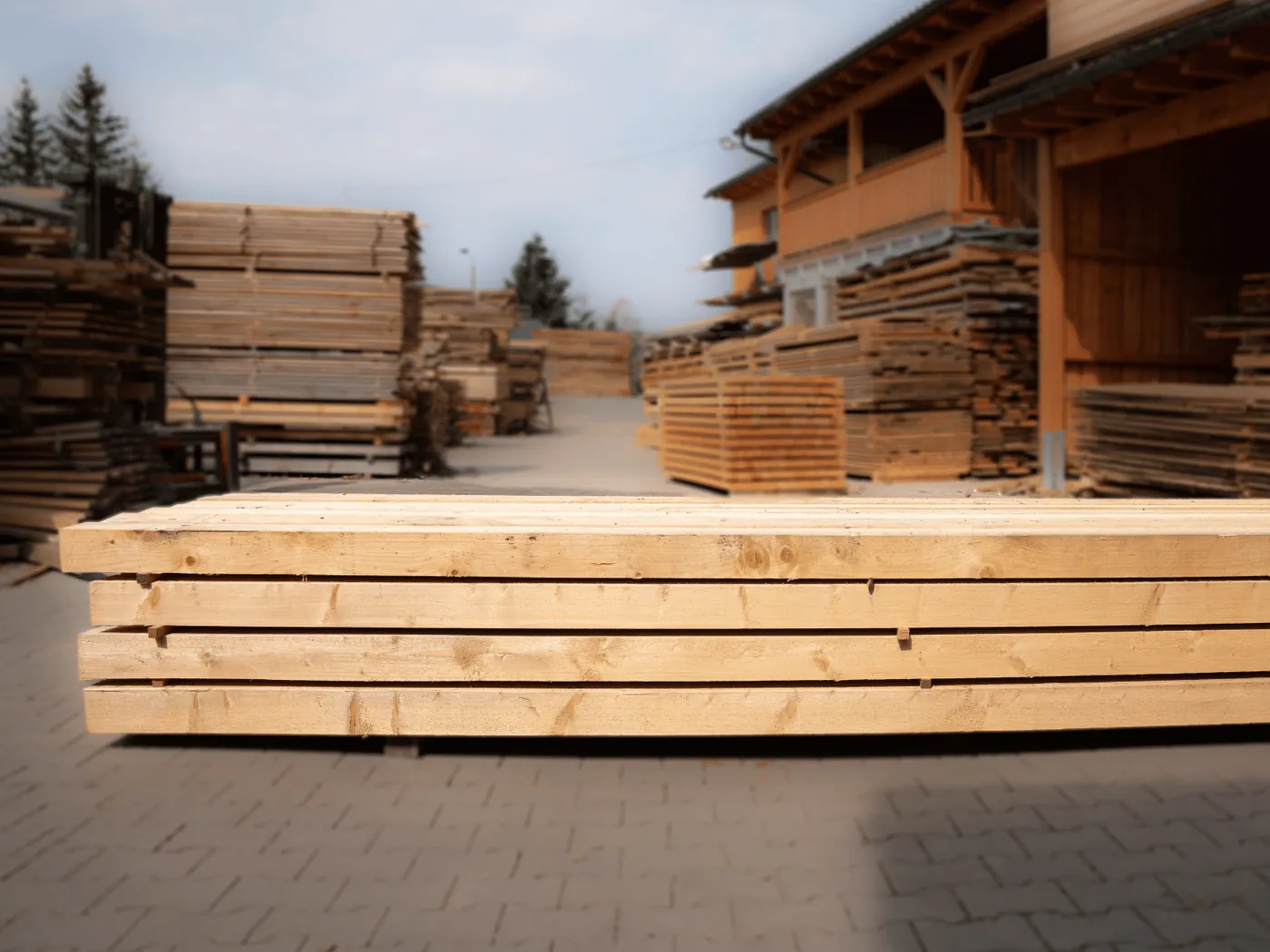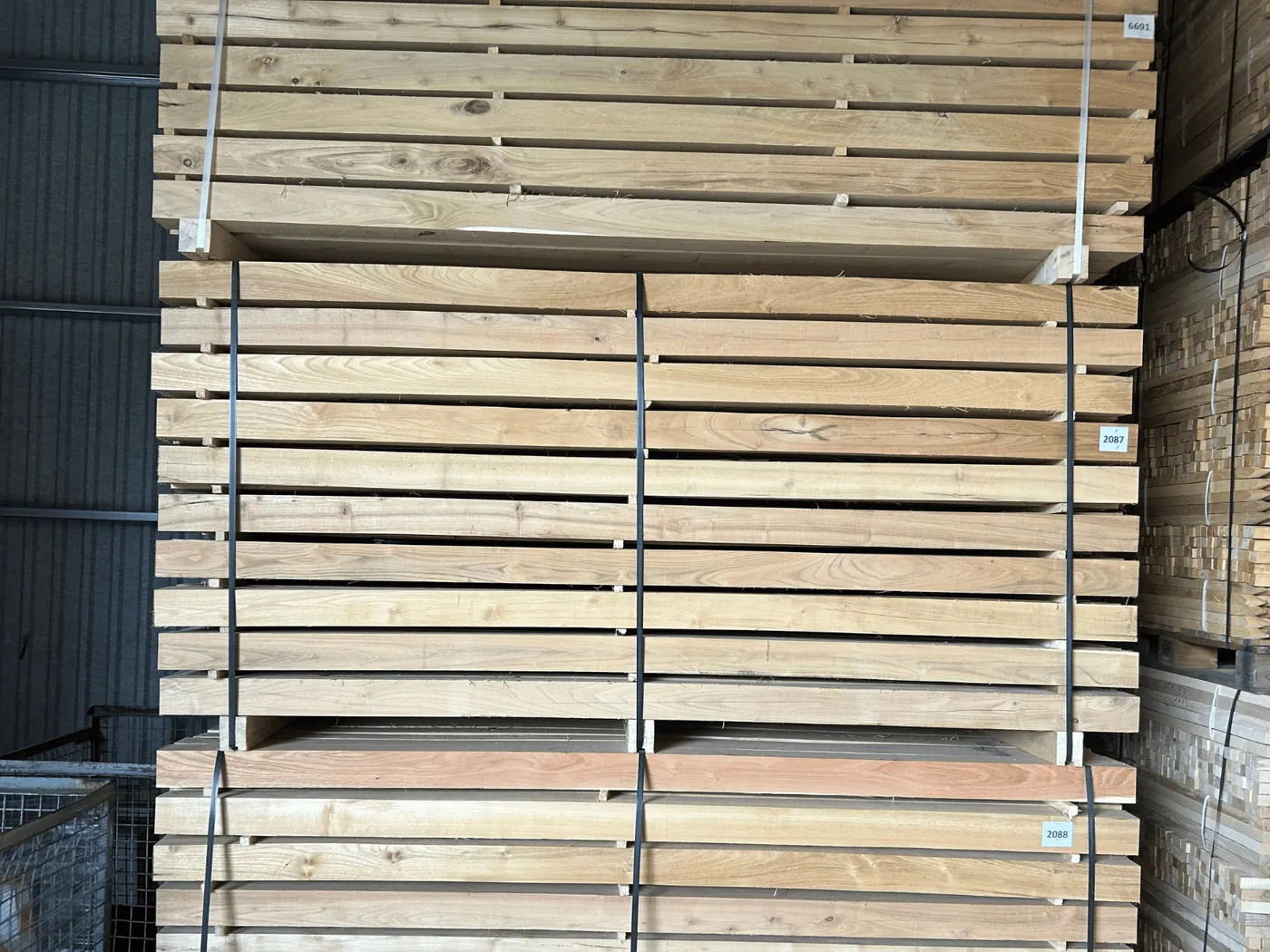
Anyone ordering sawn timber quickly comes across terms such as sawn size, finished size, rough-sawn or planed. With squared timber, beams and posts in particular it is important to know which state of machining a size specification refers to. Because a piece of timber cut at the sawmill to a particular cross-section, for example, need no longer have exactly that size after drying and further machining. For softwood sawn timber, DIN EN 1313-1 therefore expressly allows for dimensional deviations and dimensional changes depending on the moisture content.
What is the sawn size?
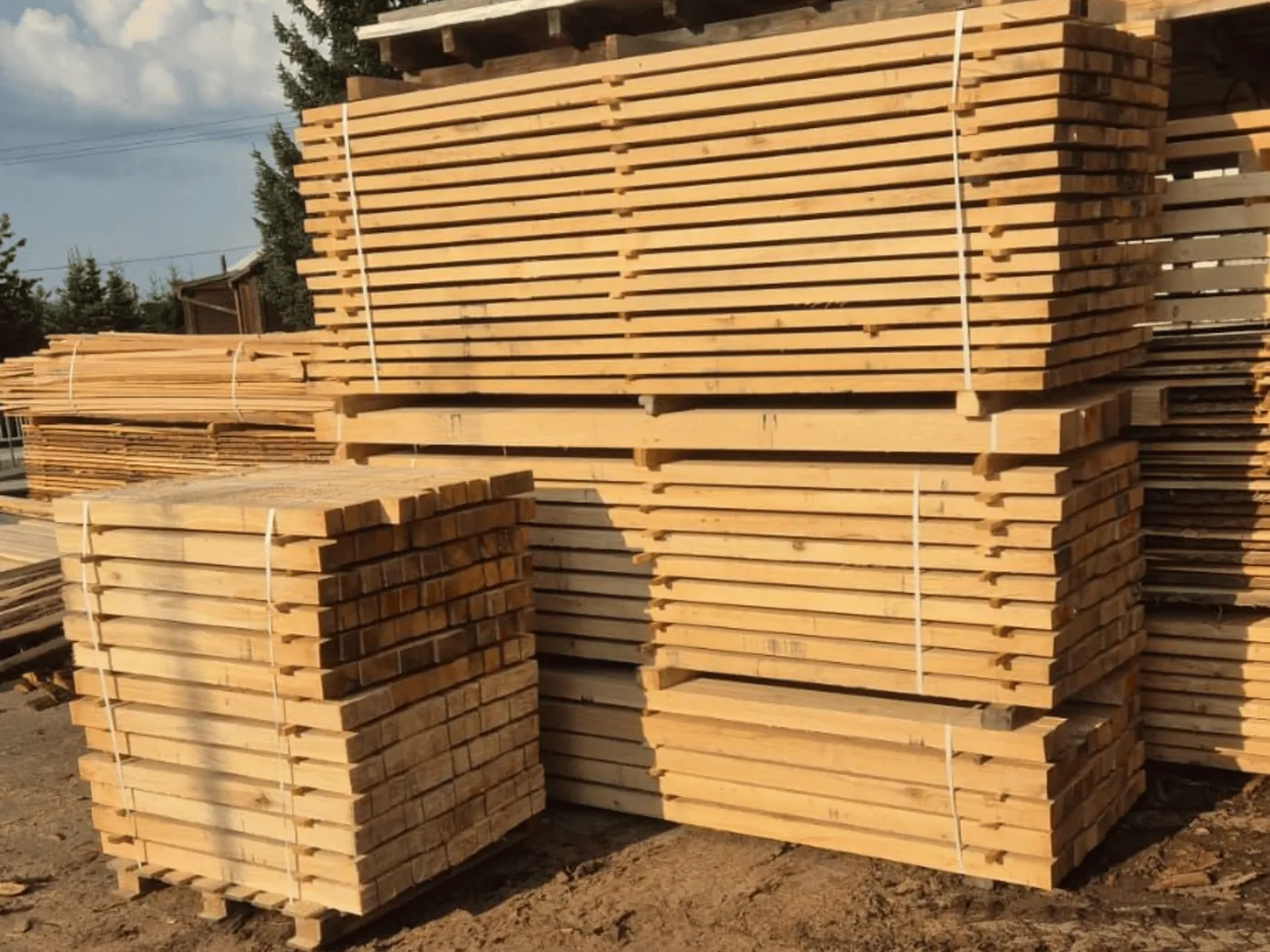
The sawn size is the size to which the timber is cut when it is broken down at the sawmill. It therefore describes the starting size of the sawn cross-section. In the timber trade the term is used accordingly for the size set on the saw.
Example: a piece of squared timber is cut to a sawn size of 100 × 100 mm. That first of all describes the cross-section the timber was cut to. Whether the timber will later dry, be planed or be machined in some other way is not stated by that alone.
That matters in particular for products from the Sawn & Round Timber area when sizes are needed for a specific project.
What is the finished size?
The finished size is the size that is actually to be reached after the intended machining steps, or that is present on the finished product.
Two processes in particular can lie between the sawn size and the finished size:
- Drying
Timber gives off moisture and shrinks. Its dimensions change as a result. - Planing
Planing removes material from the surface. The finished cross-section is therefore smaller than the cross-section before planing.
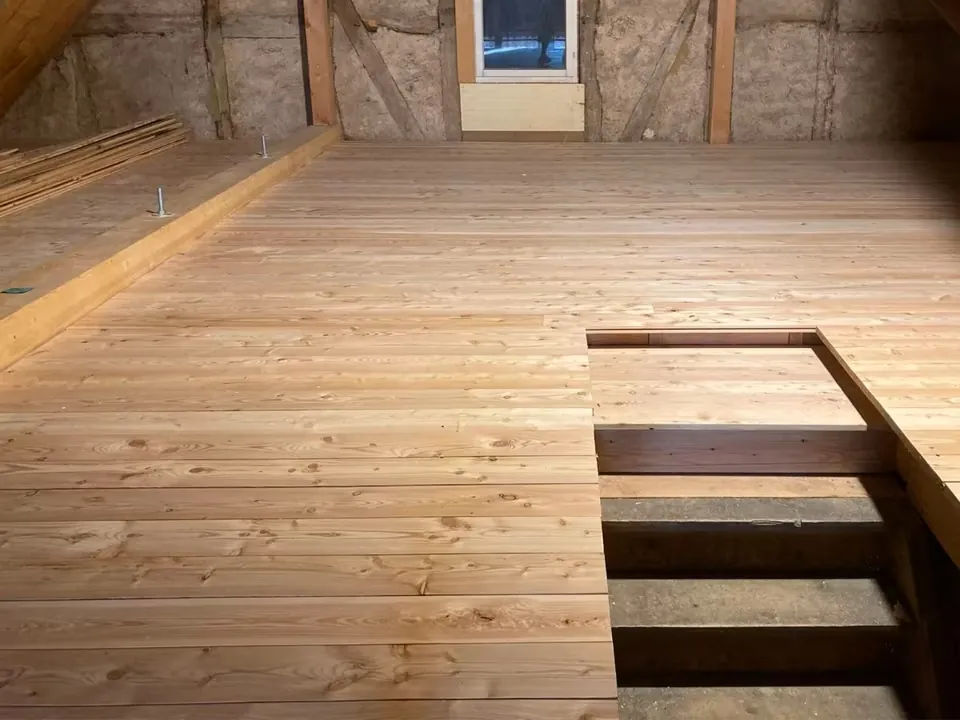
How large the difference turns out cannot be given as a single general figure. It depends among other things on the starting size, the moisture content, the timber species and the intended machining. In practice, manufacturers therefore sometimes state sawn and finished sizes expressly separately. Larch decking boards and larch rhombus battens, for example, are always supplied planed.
Rough-sawn is not the same as freshly sawn
Two things are often confused here.
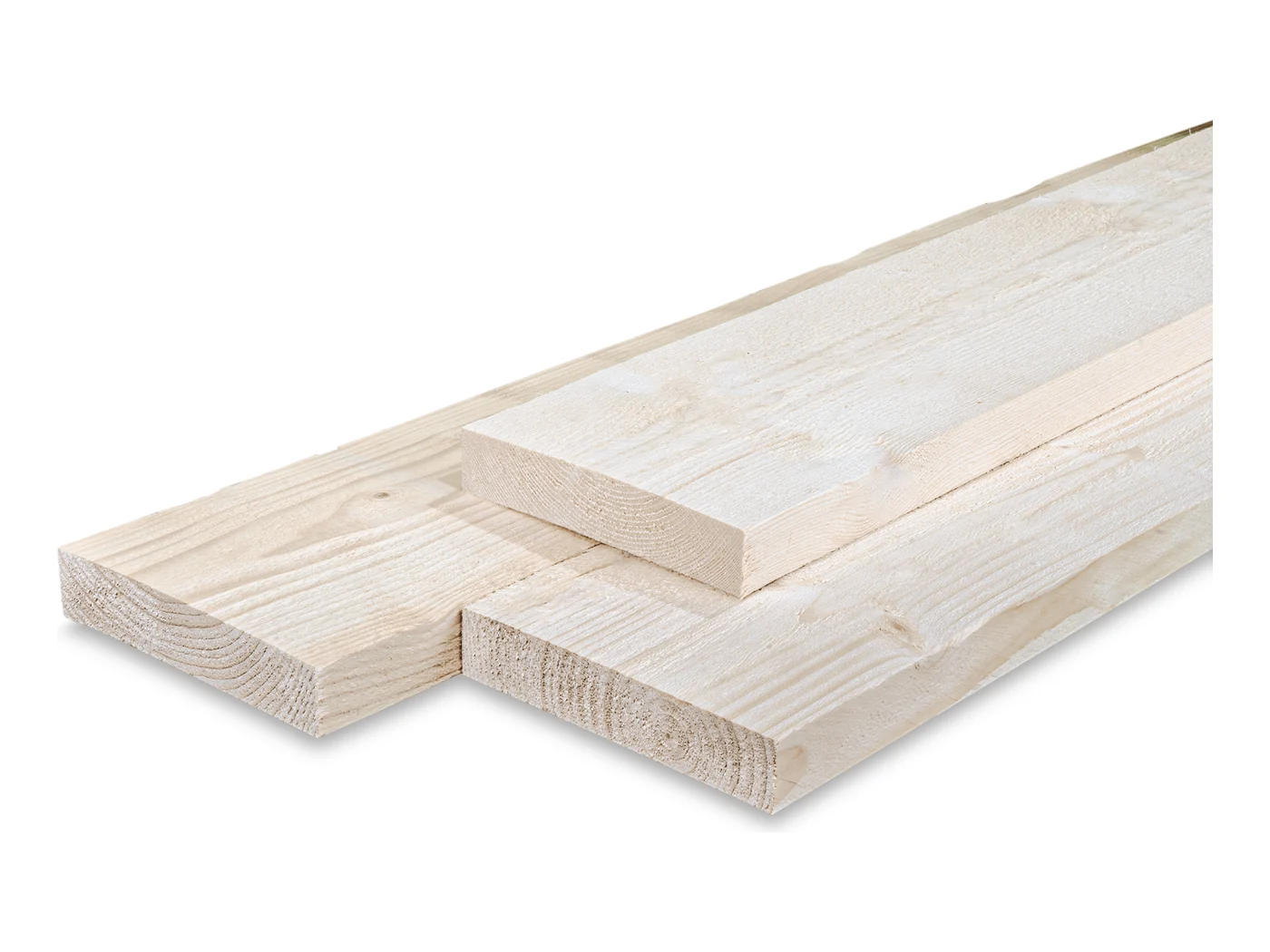
Rough-sawn describes the surface: after sawing, the timber still has its typical saw texture and has not been planed smooth.
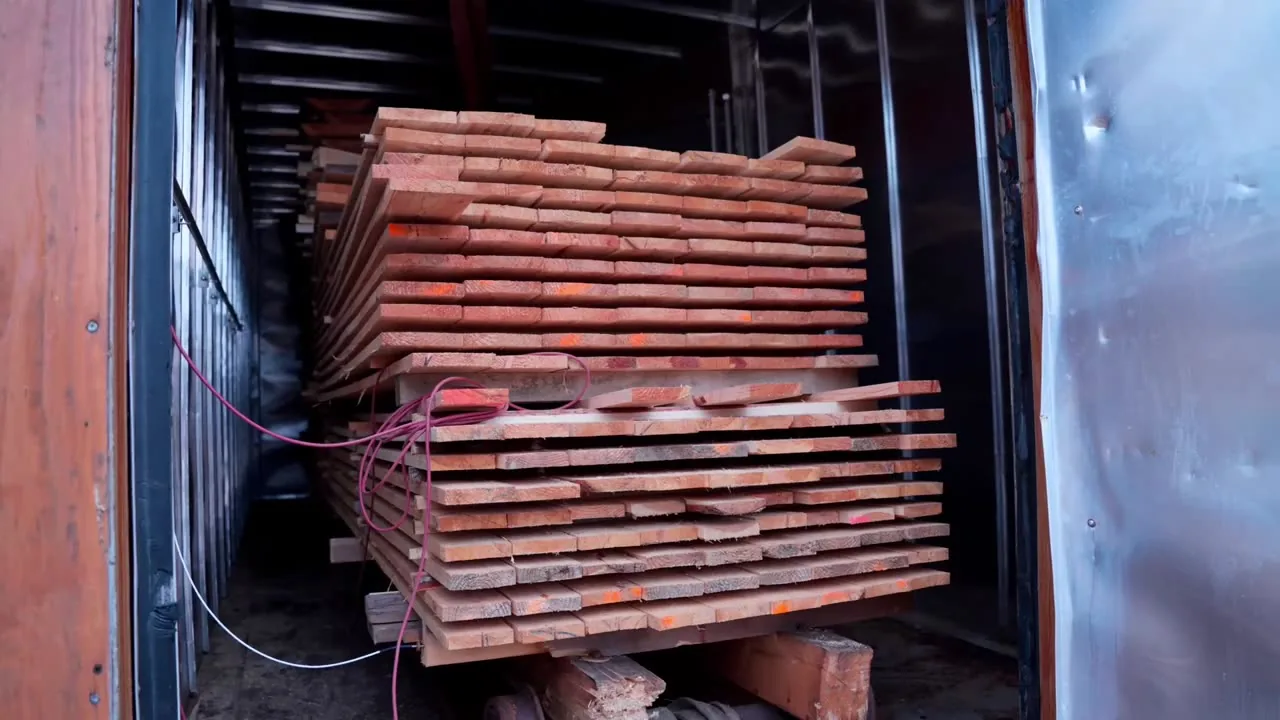
Freshly sawn or kiln-dried, by contrast, describes the moisture condition, or the drying.
Timber can therefore, for example, be kiln-dried and still be rough-sawn. With planed stock there is a further machining step.
Anyone who needs a particular finished cross-section for larch structural timber or spruce structural timber should therefore check whether the quote or order states a sawn size or an actual finished size.
And what does that mean for the length?
With the length, too, it has to be clear whether the starting length or the finished cutting length wanted is meant.
A simple example: a post with a finished length of 220 cm is needed. A 250 cm section is available as the starting material. The post is then cross-cut to 220 cm. That leaves 30 cm of length, or waste.
The same applies if, for example, a 5.00 m round timber is first cross-cut into two 2.50 m sections and a 2.20 m post is made from each. That leaves 30 cm of length per post.
This length waste has nothing to do with the difference between rough-sawn and planed. It arises from the starting lengths available and the cutting wanted.
Why the distinction matters when ordering
With sawn timber it should be clear:
| Specification | What is meant? |
|---|---|
| Sawn size | Cross-section as cut |
| Finished size | Size after the intended further processing |
| Rough-sawn | Surface condition after sawing |
| Planed | Surface has been machined by planing |
| Finished length | Length wanted after cross-cutting |
With dimension-critical applications in particular, the later finished size should therefore not be assumed automatically from a stated sawn size.
With oak structural timber, larch or spruce structural timber and other products from Sawn & Round Timber, what matters is which machining state the size given applies to.
In brief
- Sawn size and finished size are not automatically the same.
- The sawn size describes the size as cut.
- Drying and planing can change the cross-section afterwards.
- Rough-sawn and planed, by contrast, describe the surface machining.
- With the length it also has to be taken into account which starting length is available and what size the timber is to be cross-cut to.
Anyone ordering sawn timber should therefore always check whether a size given is to be understood as the sawn size or as the actual finished size.