
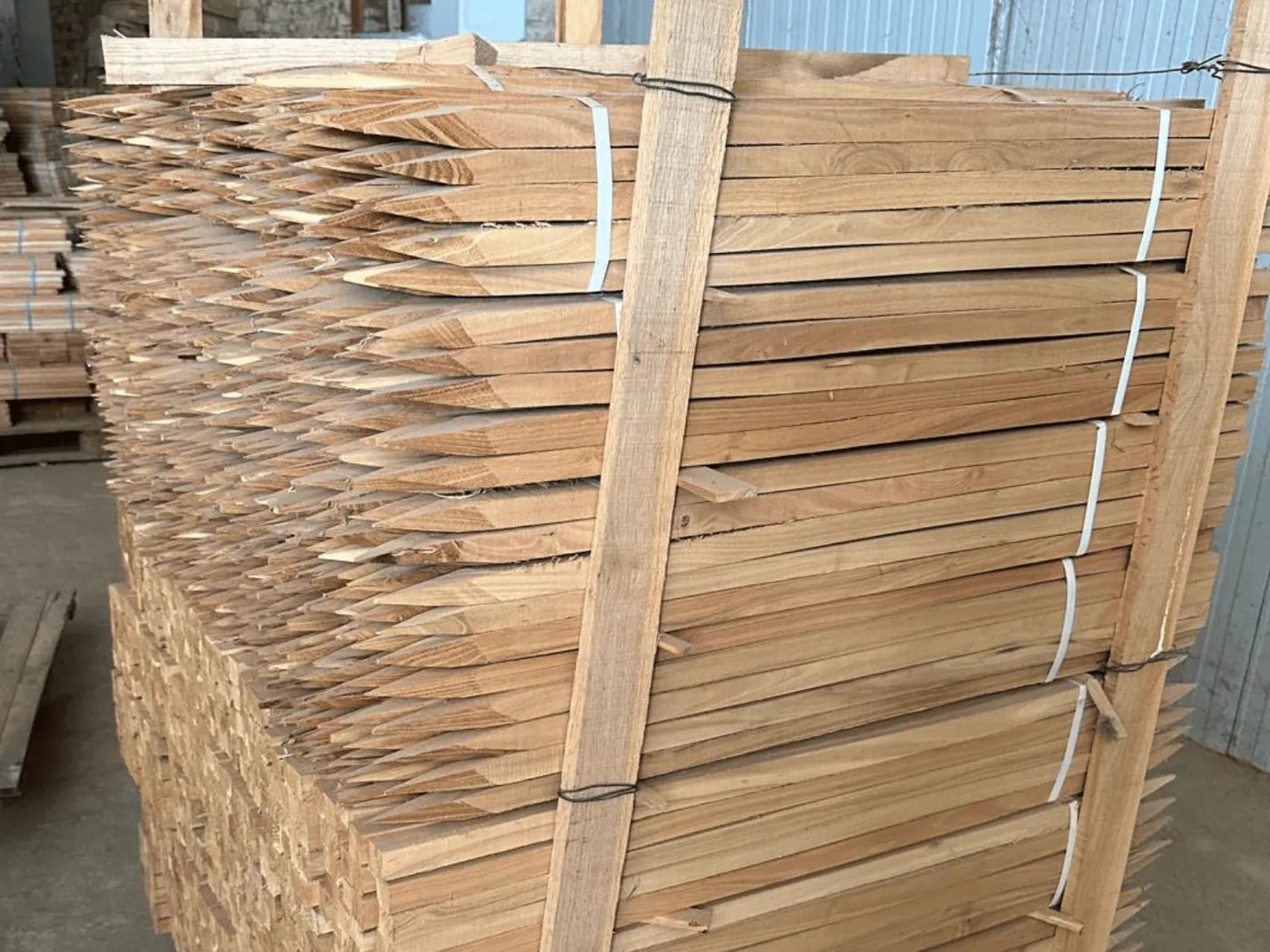
Robinia
Robinia plant stakes
Square plant stakes in robinia, left natural, for vineyards, fruit growing and supporting perennials.
In viticulture and fruit growing, stakes and plant stakes are used to support wire frames, young vines and fruit trees over the long term. With components in direct contact with the ground and the weather in particular, the natural durability of the timber used plays an important role.
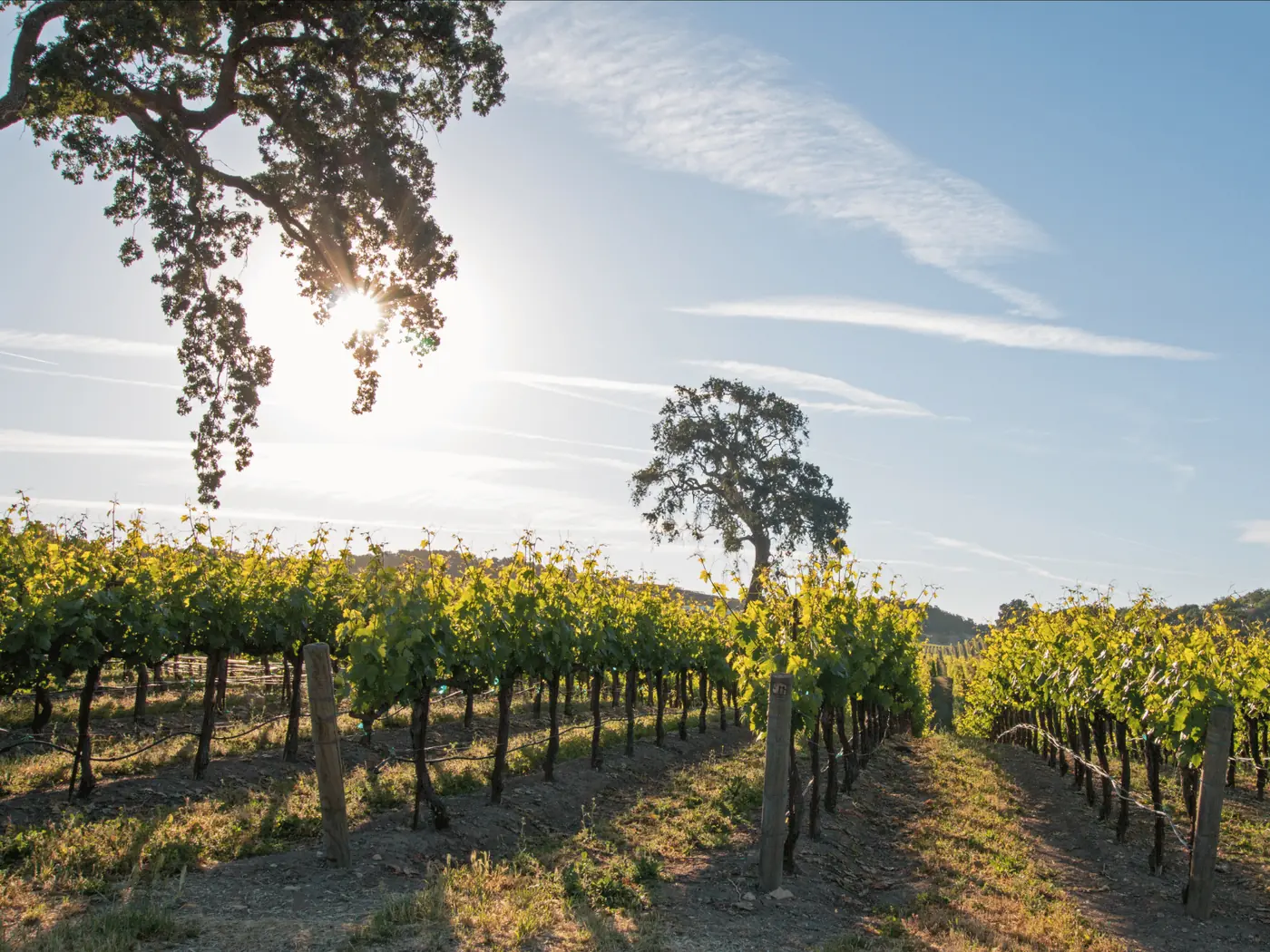
Robinia heartwood has a very high natural durability and is traditionally used for stakes, vine posts and trellises. For this, our range includes Robinia stakes, Robinia plant stakes and Robinia cleft posts in different versions and dimensions. Further timbers for ground contact are in the Stakes & Posts category.
The heartwood of robinia is among the most naturally durable timbers grown in Europe. Because of this natural durability, robinia heartwood can also be used outdoors in direct weathering and in contact with soil without chemical timber preservation.
That makes robinia particularly interesting for applications in which stakes stand outdoors over longer periods. The Bavarian State Institute of Forestry expressly names vine posts, trellises as well as fences and stakes in fruit growing and viticulture as typical fields of use. Our complete range of round and cleft posts is in the Stakes & Posts category.
Further technical information: LWF – Das Holz der Robinie: Eigenschaften und Verwendung
In viticulture, stakes and wires together form the wire frame of the vine row. The stakes have different jobs to do: at the row ends the forces from the tensioned system have to be taken up, while intermediate stakes guide and support the wires along the row.
For such uses, Robinia stakes or Robinia cleft posts come into question, for example. Which version and dimension is needed depends on the wire frame in question, the training system, the terrain and the conditions of the site.
Robinia plant stakes have a different job. They serve above all to guide and stabilise young vines or woody plants while they establish and in their early development. The cross-sections and lengths available are given directly on the respective product page.
How cleft and round posts differ is compared in the article Cleft post or round post: which shape suits which job?
In fruit growing, too, stakes and plant stakes are used for various support and guiding systems. Young fruit trees can be supported with robinia plant stakes, for example, while robinia stakes or robinia cleft posts come into question for larger support, trellis or row systems.
Which dimensions are needed depends on the crop, the planting system and the layout of the site. With stakes used outdoors over the long term in particular, the high natural durability of robinia heartwood is an advantage.
The different robinia products therefore cover various jobs: from the slender plant stake for a single young plant to the heavier stake for row and support systems.
For stake spacings, row widths and setting depths there is no single figure that suits every vineyard or orchard. Training system, crop, terrain, soil, wind loading and the machinery used all influence the layout of a site.
In viticulture in particular, row width and wire frame are matched to the way the site is worked over the long term. The spacings of the intermediate stakes can also differ depending on the training system and the loading.
Actual spacings, setting depths and sizes have to be determined for the site in question. On setting the stakes themselves: Setting robinia stakes: depth, spacing and common mistakes.
What robinia and the other timbers are used for outside row crops is shown in the overview of areas of use.
Further technical information: LVWO Weinsberg – Überlegungen zur Rebenerziehung und Drahtrahmengestaltung
The information on this page is intended as general orientation. Stake spacings, dimensions, setting depths and the layout of wire frames or support systems depend among other things on the crop, the training system, the site, the terrain and the way it is worked, and should be determined for the site in question.
End posts stand at the beginning and the end of the row, with the intermediate stakes in between. The wire frame runs over both.
Square plant stakes in robinia, left natural, for vineyards, fruit growing and supporting perennials.
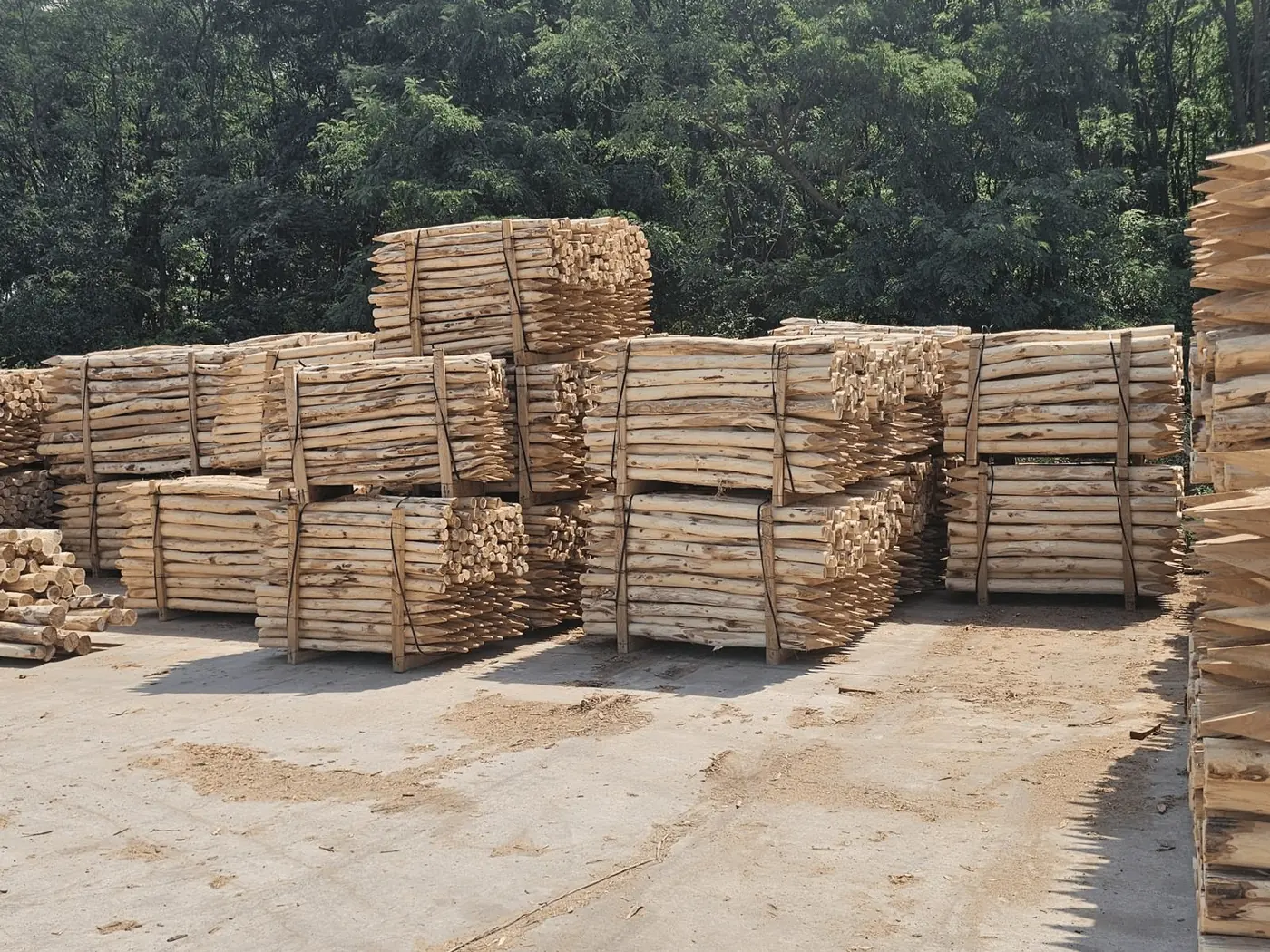
Round and debarked, untreated without impregnation, pointed or blunt.
Cleft as grown, available pointed or blunt. The hardest native timber for pasture fences.

Setting robinia stakes: what matters for depth, spacing, the point, pre-drilling and the ...
Read the article
Cleft post or round post: differences in production, cross-section, size specification, fixing and appearance ...
Read the articleThe product, size, quantity and delivery postcode are enough. Your written quote follows promptly, usually within 24 hours.
Rather speak to us directly? We are available Mon–Fri 8.00–18.00. In writing you can reach us through the contact form or by e-mail at info@worldwide-wood.de.