
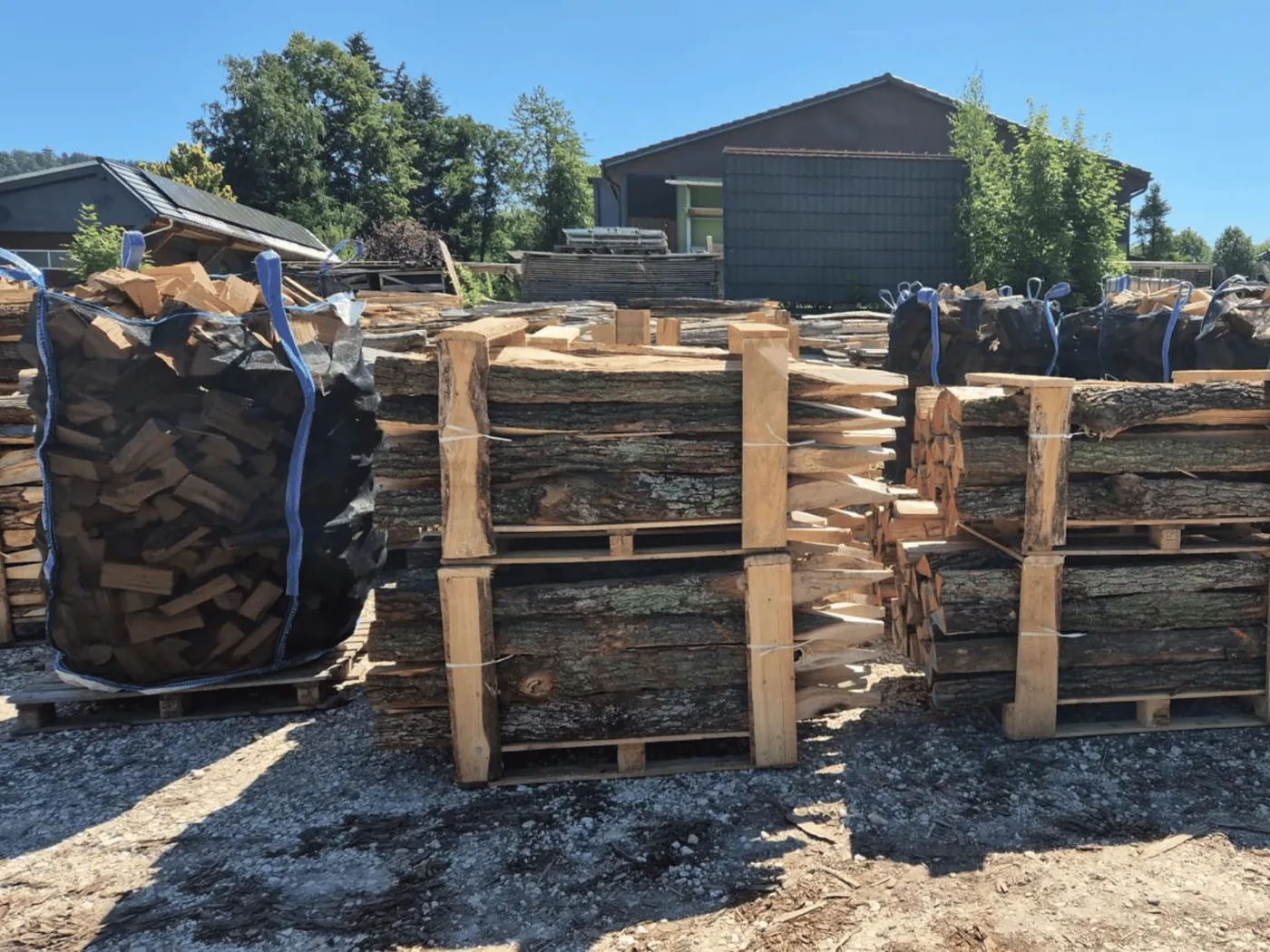
Oak
Oak cleft posts
The classic pasture stake, cleft from round timber. Available pointed or blunt.
Game and forestry fences are used to protect new planting, natural regeneration and young forest crops from browsing and other damage by game. Timber stakes are often combined with stock fencing for this.
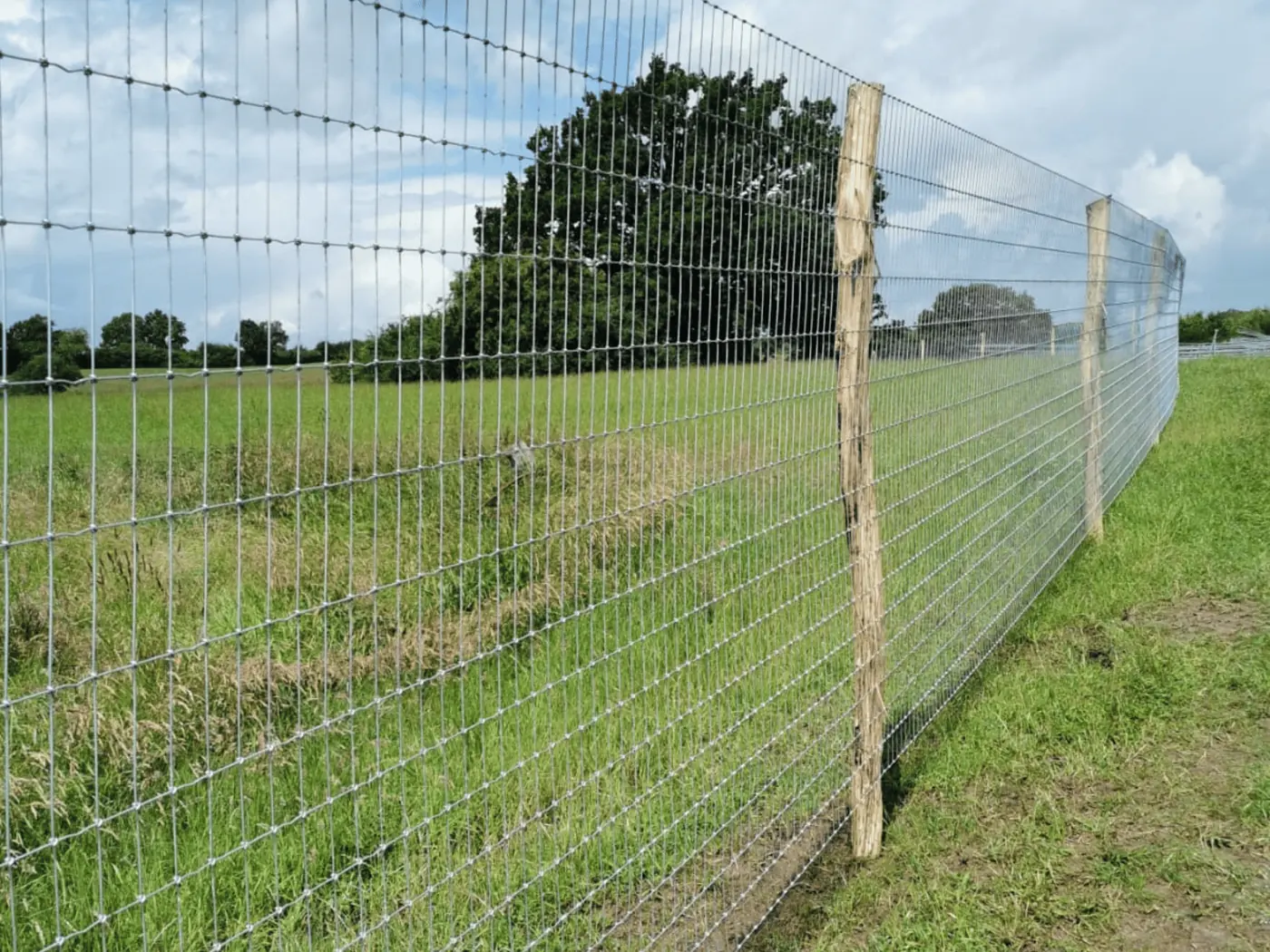
Depending on the version wanted, Oak cleft posts, Oak round posts, Robinia stakes, debarked or pressure-treated Softwood stakes come into question, for example. Fence height, mesh, stake sizing and stake spacings depend on the species of game present, the terrain and the fence system in question. You will find all versions in the Stakes & Posts category.
A game fence only does its job as long as it stays closed and functional. Fallen branches, loose stakes, damaged mesh, uneven ground or snow loads can create weak points through which game gets into the protected area.
In the forest in particular, regular checking is therefore part of the fence system. Damage should be repaired promptly. Waldwissen.net also points out that only an intact game fence can fulfil its protective function and that fenced areas have to be checked regularly.
Further information: Waldwissen.net – Der Bau von Wildzäunen muss gelernt sein
Different timber stakes are used for game and forestry fences. Oak cleft posts are produced by cleaving along the natural grain and accordingly have natural, varying cross-sections.
Oak round posts and debarked robinia stakes are further naturally grown options for fence building. For longer runs of fence, machine-rounded softwood stakes also come into question; we stock them untreated as well as pressure-treated in green or brown.
How cleft and round stakes differ is compared in the article Cleft post or round post: which shape suits which job?
Which timber species and dimension is used depends among other things on the intended service life, the fence height, the loading and the conditions at the site. Corner, starting, end and gate posts are more heavily loaded than stakes along the straight run and have to be allowed for accordingly.
The height required for a game fence depends above all on the species of game an area is to be protected against. For roe deer, figures of around 1.50 to 1.60 m are often found in practice and in official requirements. For red and fallow deer, higher fences are often provided for.
There is, however, no single figure that applies throughout Germany. The requirements differ according to the federal state, the purpose and the local situation. For example, official rules in some cases give 1.50 m for roe deer and 1.80 m for red deer, while other requirements provide for 1.60 m for roe deer and 1.80 m for red and fallow deer.
For that reason the fence height required and the design of the mesh should be determined before building, on the basis of the local species of game and any forestry, hunting or funding requirements that apply.
Snow and terrain can play a part too: in areas with heavy snow, the effective fence height can be reduced considerably by a continuous or drifted layer of snow.
Stake spacing and setting depth should not be chosen by a blanket rule of thumb alone. They depend among other things on the fence height, the mesh, the soil, the terrain and the function of the individual stake.
For classic game fences with timber stakes, Waldwissen.net gives stake spacings of about 3 to 5 m as orientation, depending on the stability of the fence mesh.
A distinction is also made between posts when it comes to setting depth. As practical orientation figures, about 40–60 cm for intermediate stakes and 60–80 cm for corner stakes are given for fences secure against roe deer. For versions secure against red deer, about 60–80 cm for intermediate stakes and 80–100 cm for corner stakes are given.
These are orientation values and not universally valid requirements. With soft soils, sloping ground, higher fences or particularly heavily loaded points, a different design may be necessary.
On the setting itself and on common mistakes while doing it: Setting robinia stakes: depth, spacing and common mistakes. The matching stakes are in the Stakes & Posts category.
Further information: Waldwissen.net – Vor- und Nachteile verschiedener Wildzaunarten
Stock fencing is a widespread choice for game and forestry fences. For the fence to work, the mesh, the posts and the fixings have to be matched to one another.
Stable starting, corner and end points are particularly important, because that is where the forces from the tensioned mesh are taken up. The bottom edge also has to suit the protective aim. The mesh should follow the run of the ground and be secured so that no larger gaps to the ground arise and the mesh cannot easily be lifted.
With wild boar the bottom edge deserves particular attention. A blanket statement such as “always bury the mesh” is not sensible, however, since different solutions are used depending on the fence system.
Over its service life the whole game fence should be checked regularly for damage, loose fixings, gaps at ground level and fallen branches. Wire fences that are no longer needed should be removed once their protective function has ended.
Which timbers we stock for other areas, from the paddock to the garden fence, is listed in the overview of areas of use.
With impregnated timber stakes, later disposal also has to be considered. Waste wood treated with timber preservatives is assigned to category A IV under the German waste wood ordinance, the Altholzverordnung. Impregnated waste wood from outdoor use may therefore not simply be left in the forest, burned on site or chipped at will, but has to be passed to a permissible disposal or recovery route.
The sizes and spacings given are intended as general orientation and are no substitute for project-specific planning. Requirements for game and forestry fences can differ according to the species of game, the federal state, the terrain, the site and the intended purpose. Locally applicable forestry, hunting, nature conservation or building law requirements are to be taken into account in the actual construction.
The two figures are common orientations for roe deer and for red and fallow deer. That does not fix the fence height bindingly; what applies are the local requirements.
Intermediate stakes and corner stakes are set to different depths. The lower figures apply to fences secure against roe deer, the higher ones to versions secure against red deer.
The classic pasture stake, cleft from round timber. Available pointed or blunt.
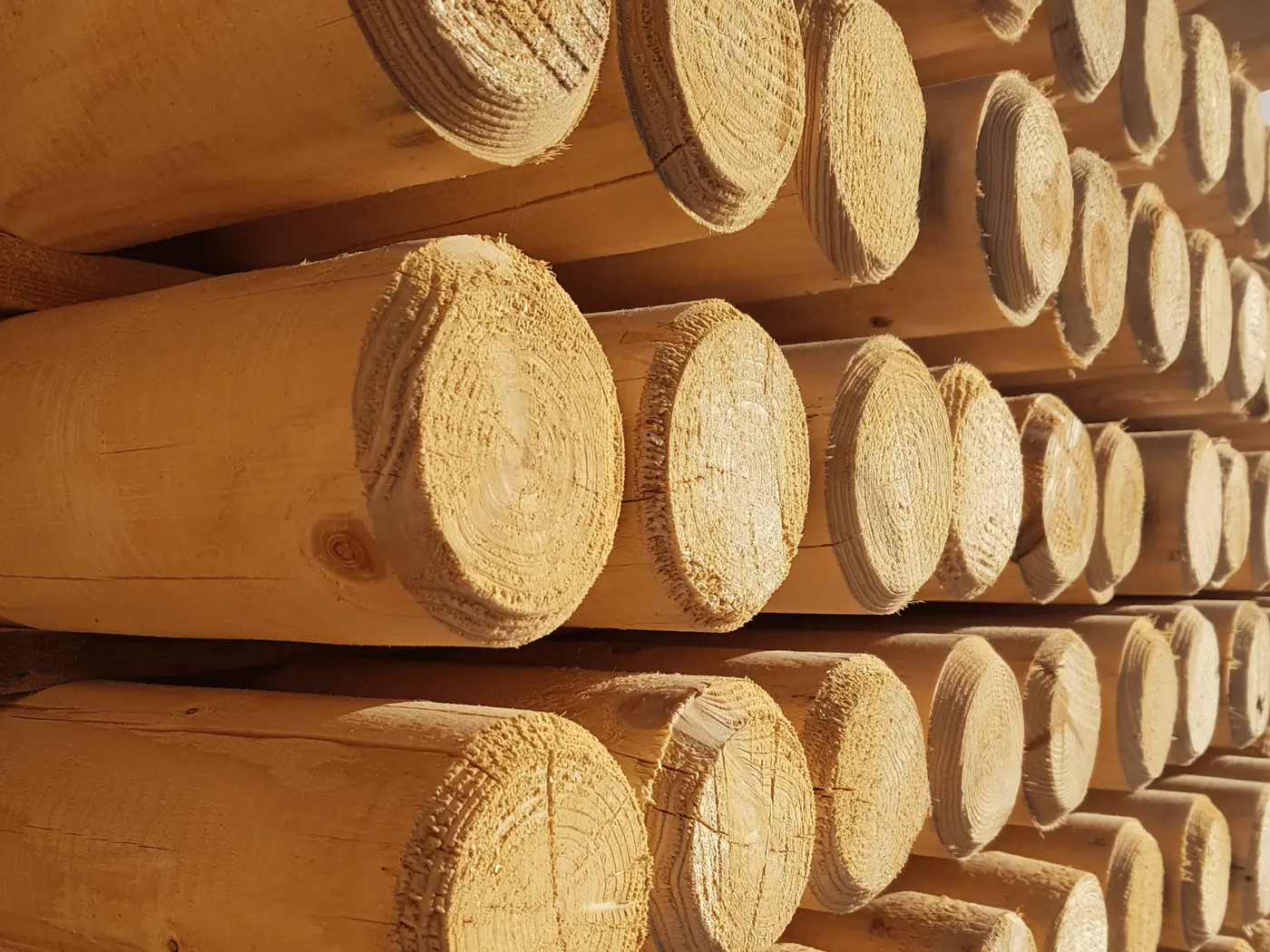
Cylindrically machined stakes, available untreated or impregnated. The economical standard solution.
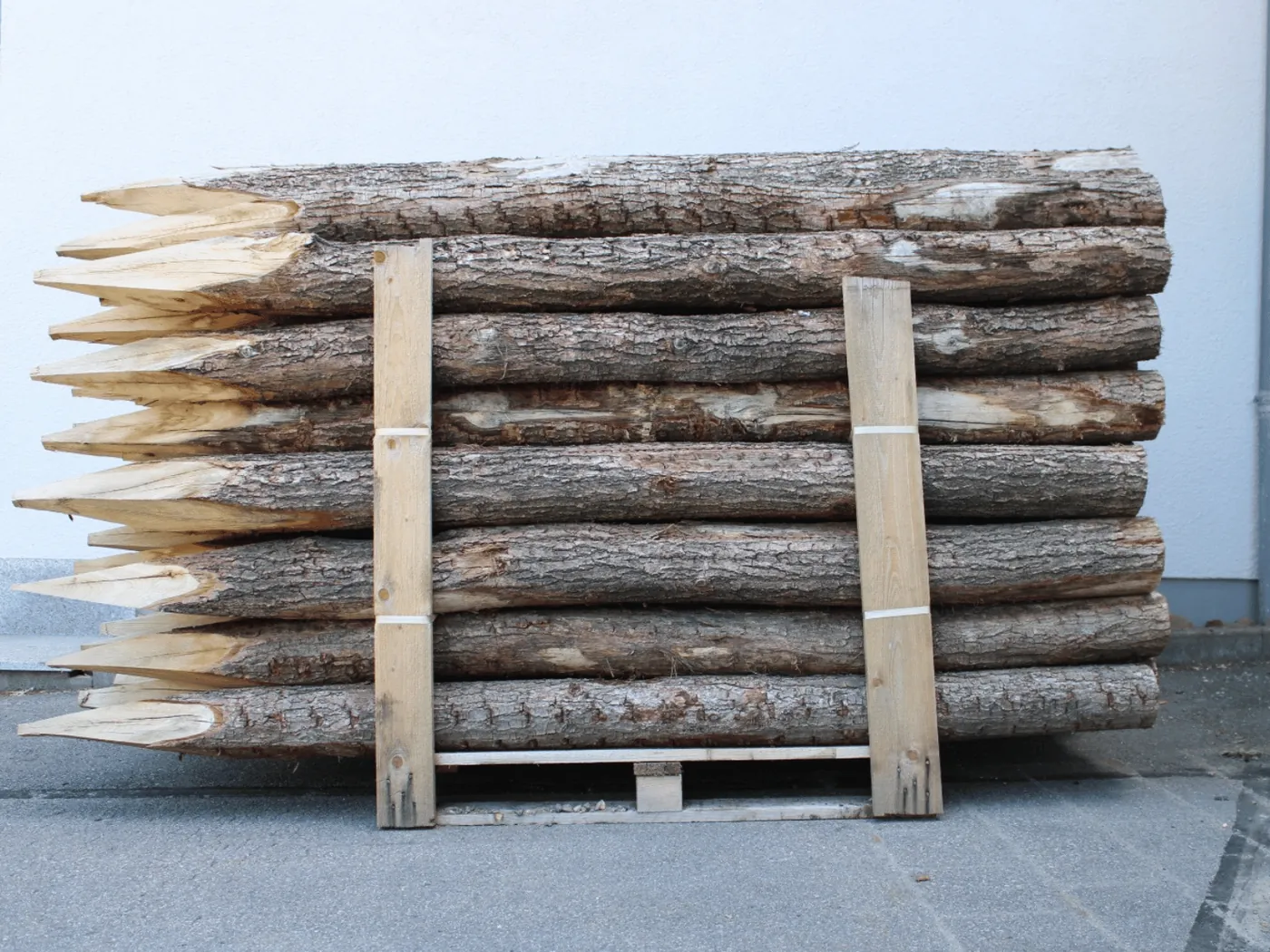
Naturally grown round posts in bark from German oak, left natural, available pointed or blunt.

Cleft as grown, available pointed or blunt. The hardest native timber for pasture fences.

Setting robinia stakes: what matters for depth, spacing, the point, pre-drilling and the ...
Read the article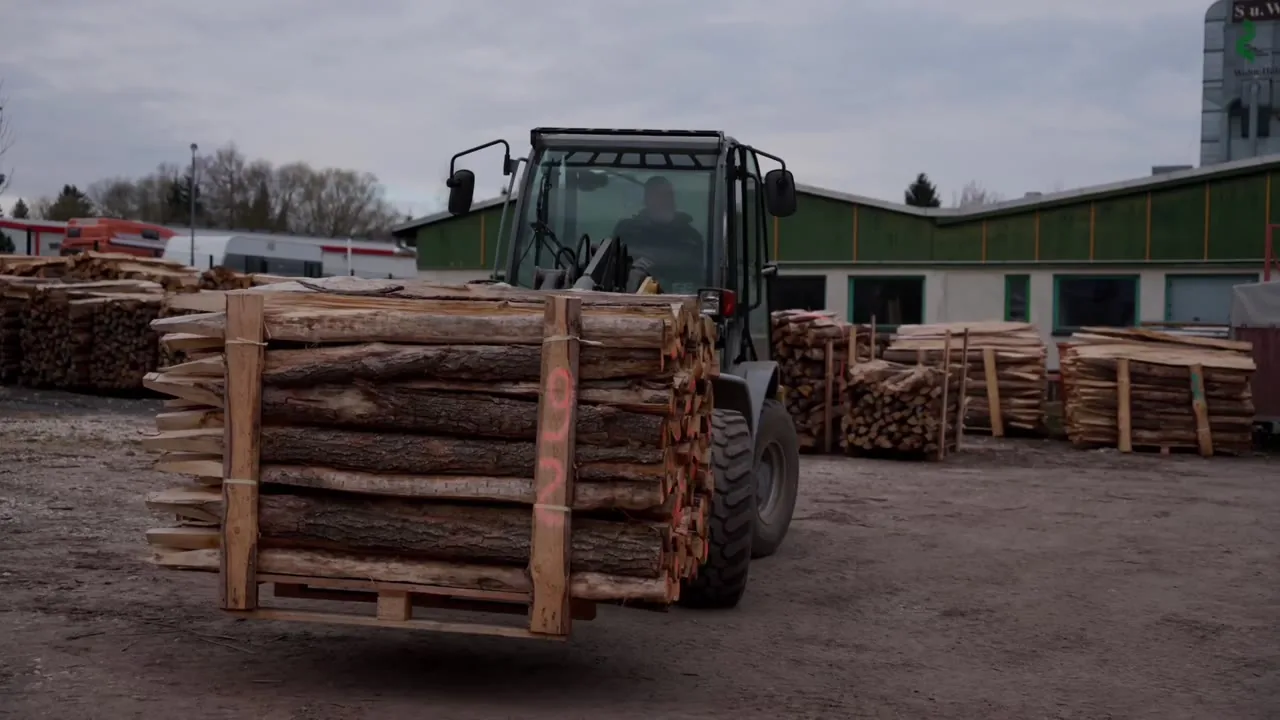
Cleft post or round post: differences in production, cross-section, size specification, fixing and appearance ...
Read the article
Cross-cutting, cleaving, pointing, palletising: production explained step by step, with video from the ...
Read the articleThe product, size, quantity and delivery postcode are enough. Your written quote follows promptly, usually within 24 hours.
Rather speak to us directly? We are available Mon–Fri 8.00–18.00. In writing you can reach us through the contact form or by e-mail at info@worldwide-wood.de.