
Larch
Larch fence posts
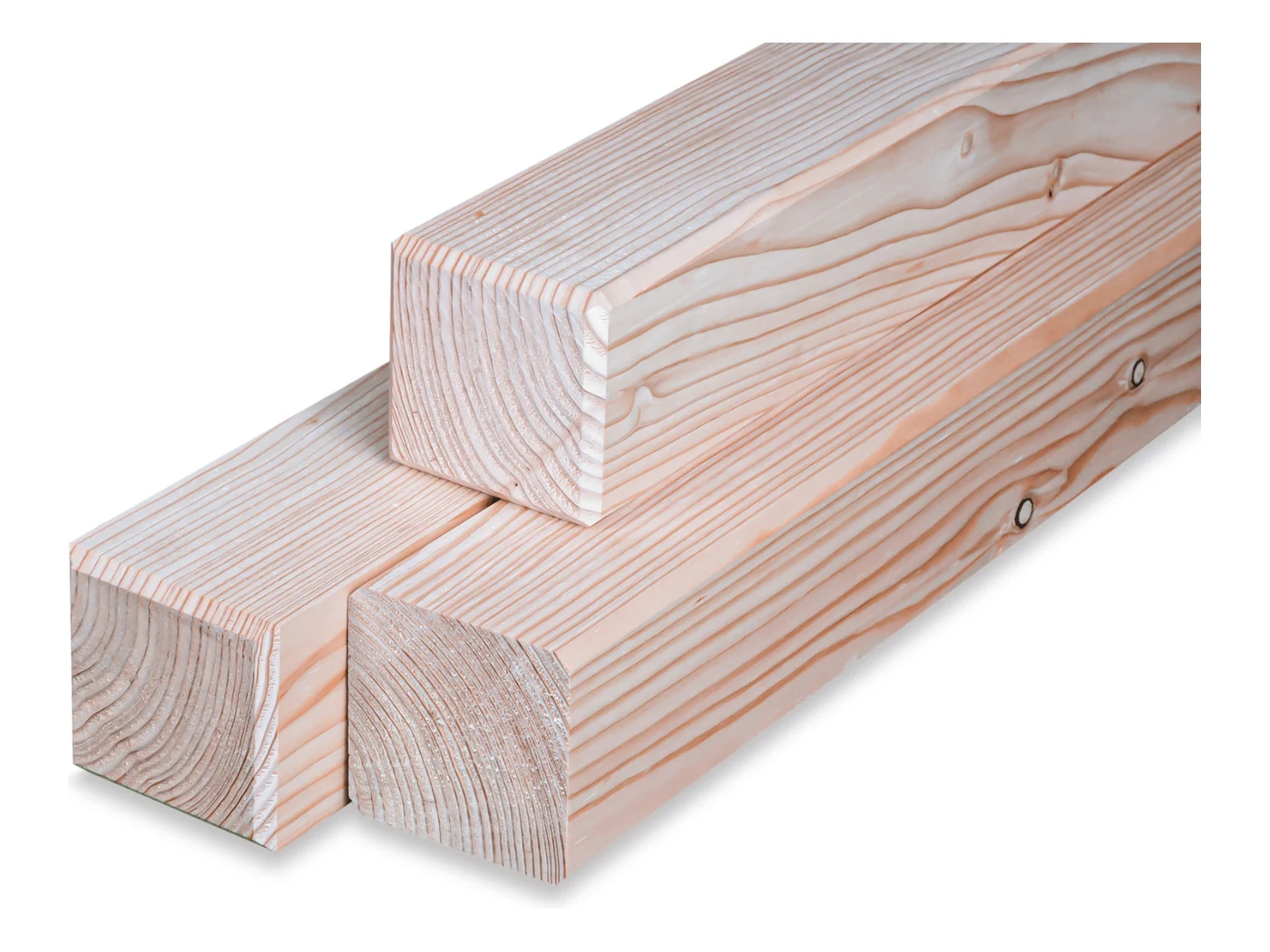
Fence posts in larch: head-chamfered, pointed, with a round head or square cut, additionally with or without a chamfer on the long sides.
A horse fence should be clearly visible, stable and designed to cause as little injury as possible. With fixed timber fences, posts and horizontal cross members provide a clearly recognisable boundary for a paddock, pasture or turnout area.
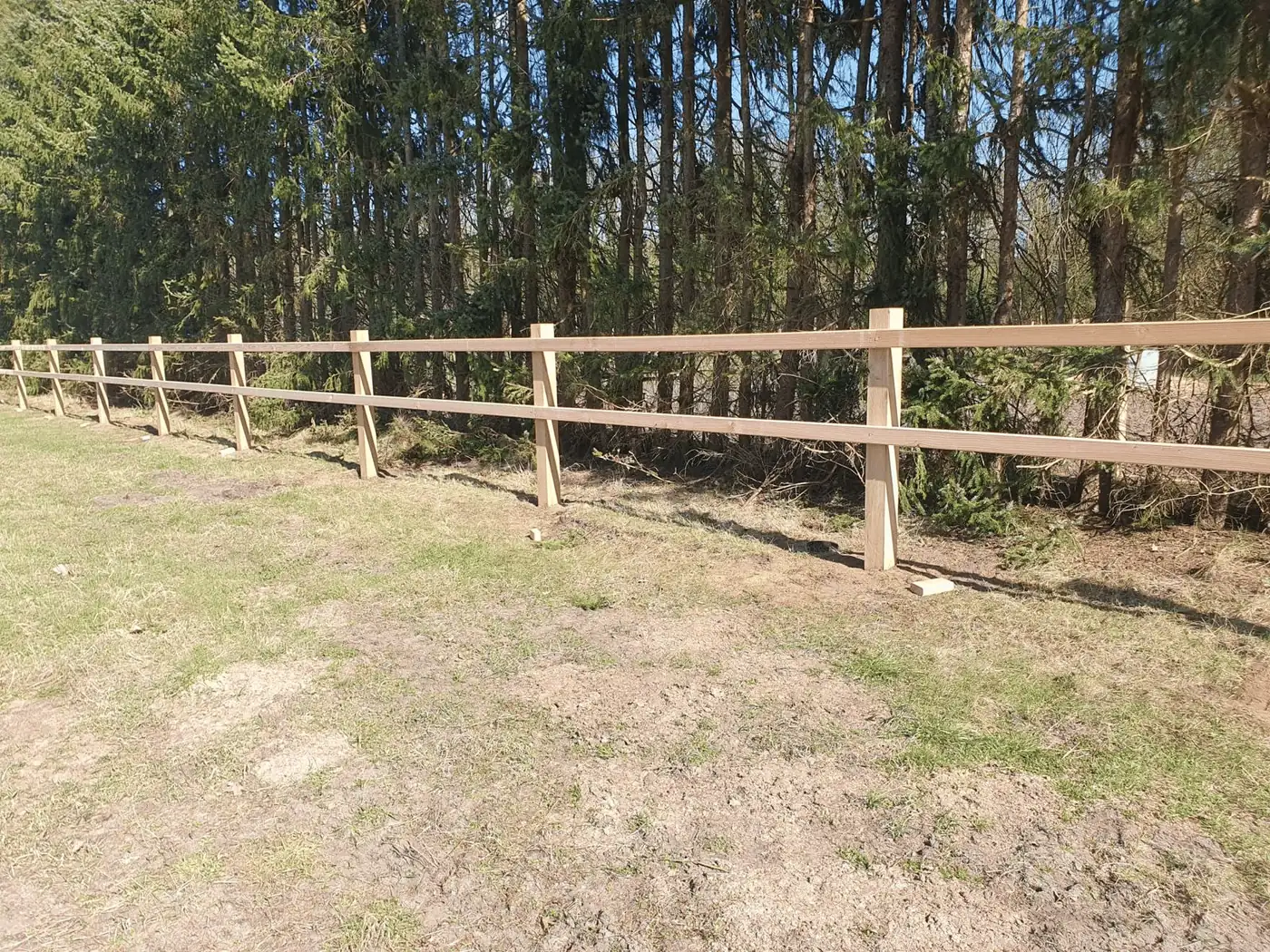
For such timber constructions we stock, among other things, larch fence posts and larch fence rails in various dimensions and versions. What fence height, sizing and construction are required depends on the horses kept, the use of the area, the site and the fence system in question. Further posts, rails and fence timbers are in the Fences & Fence Posts category.
Horses are flight animals. An enclosure must therefore be clearly visible and stable, and should have as few avoidable points of injury as possible. Particular attention should be paid to sharp edges, projecting components, unsuitable gaps and damaged fence elements.
Clearly visible cross members are used for fixed timber fences. Posts, rails, fixings and gates should always be considered as one coherent fence system. The timbers that come into question for this are gathered in the Fences & Fence Posts category.
The choice of other fence materials matters too. DLG leaflet 476 lists barbed wire, knotted mesh, bare metal wires, exposed springs on gate handles and gate springs as contrary to animal welfare for horses.
Further information: DLG-Merkblatt 476 – Zaunbau in der Pferdehaltung
For outdoor fences the DLG gives a guide value of a fence height of at least about 0.75 × the withers height. For solid fences, heights of about 1.20 to 1.60 m are given depending on the horses kept. For show jumpers and stallions the DLG gives at least 1.60 m.
The arrangement of the cross members is also part of planning a fence. For the first cross member the DLG gives a guide value of about 40 to 70 cm above the ground. With foals, small ponies and heavy horses, a correspondingly adapted design may be necessary.
The figures given are orientation values. The fence height and design actually required depend among other things on the horses kept, the use of the area, the site and possible risk areas.
With a fixed timber fence the posts form the basic framework. Horizontal rails or other cross members make the fence clearly visible to the horses and connect the individual fence bays.
For such timber constructions we offer, among other things, larch fence posts and larch fence rails. Our larch fence rails are available, for example, planed with a weather chamfer or half-round planed. The dimensions and versions available are given on the respective product pages.
Which cross-sections, bay lengths and post spacings are required depends on the construction in question. Corner, end and gate posts in particular are more heavily loaded than posts along straight runs of fence. What goes into the ground is in the Stakes & Posts category.
With oak and robinia stakes it should additionally be noted, in the context of horses, that the DLG expressly names round or cleft timber in oak and robinia without bark and cambium because of the risk of poisoning. Timber left natural should therefore not be described as harmless for horses simply because it has no impregnation.
How deep such stakes are set and what matters when doing so is covered in the article Setting robinia stakes: depth, spacing and common mistakes. The pasture fence calculator allows a rough estimate of quantities.
Even a solidly built horse fence has to be checked and maintained regularly. Particular attention should be paid to damaged cross members, loose posts, defective gates, projecting components and other possible points of injury.
For the housing environment including the fences, the DLG gives a check at least once a day. With pasture keeping, the proper condition of the fence and the pasture are to be checked. With electrified fences, checking that the system is working is also part of this.
Which other areas we supply fence timber for is listed in the overview of areas of use.
Basic information on keeping horses: Leitlinien zur Beurteilung von Pferdehaltungen unter Tierschutzgesichtspunkten
The information on this page is intended as general orientation and is no substitute for individual planning or assessment of a horse enclosure. The requirements can vary according to the horses kept, the form of keeping, the use, the area, the site and the fence system. For the actual construction, the requirements applicable in each case as well as the relevant technical rules and guidelines are to be taken into account.
The three figures are orientation values from the DLG. What height is needed in an individual case depends on the horses kept and the use of the area.
There is no blanket figure in metres. Cross-section, bay length and post spacing follow from the construction chosen.
Fence posts in larch: head-chamfered, pointed, with a round head or square cut, additionally with or without a chamfer on the long sides.
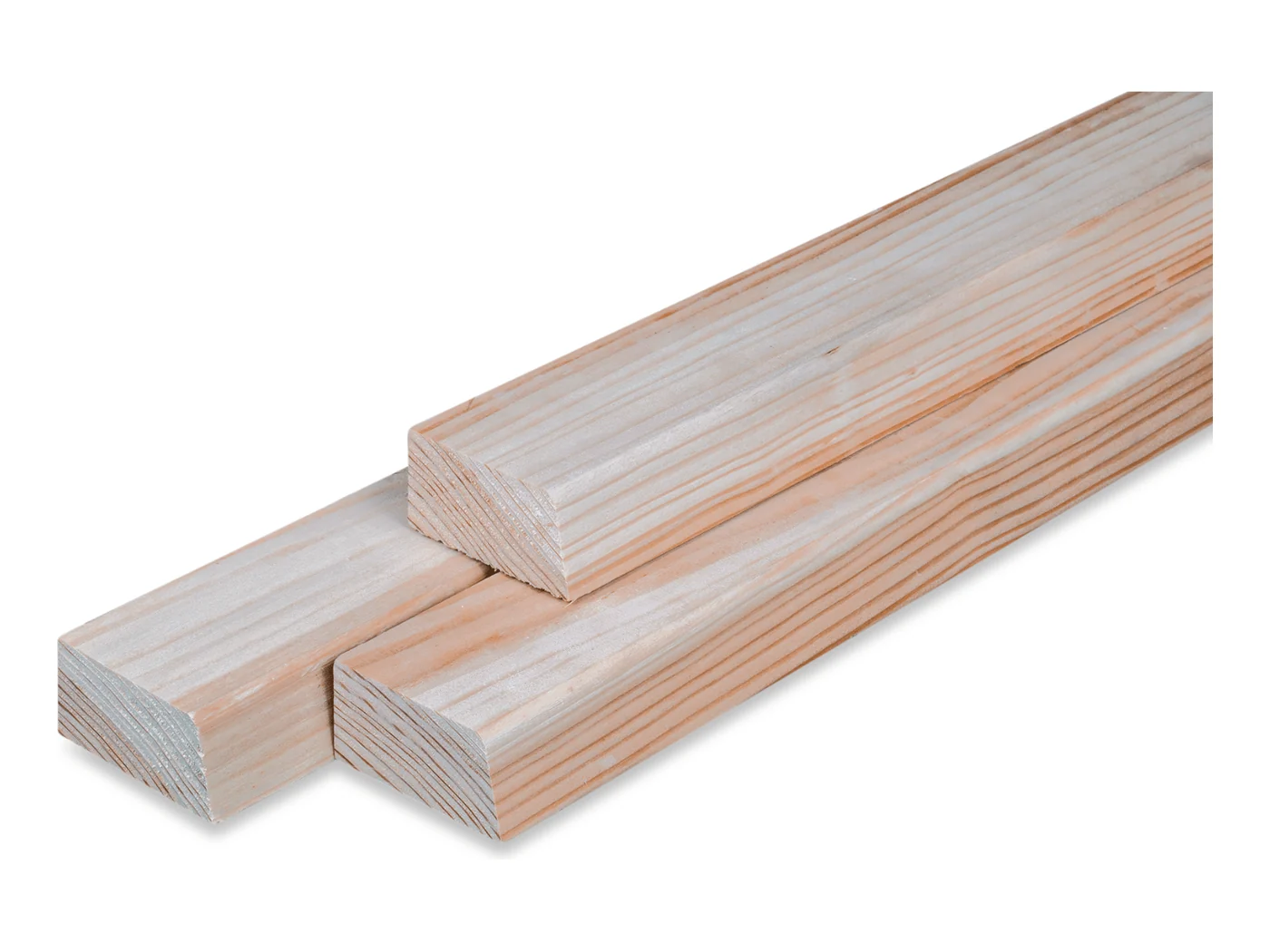
Planed fence rails in larch, either with a weather chamfer or as half-round rails, in the length you want.
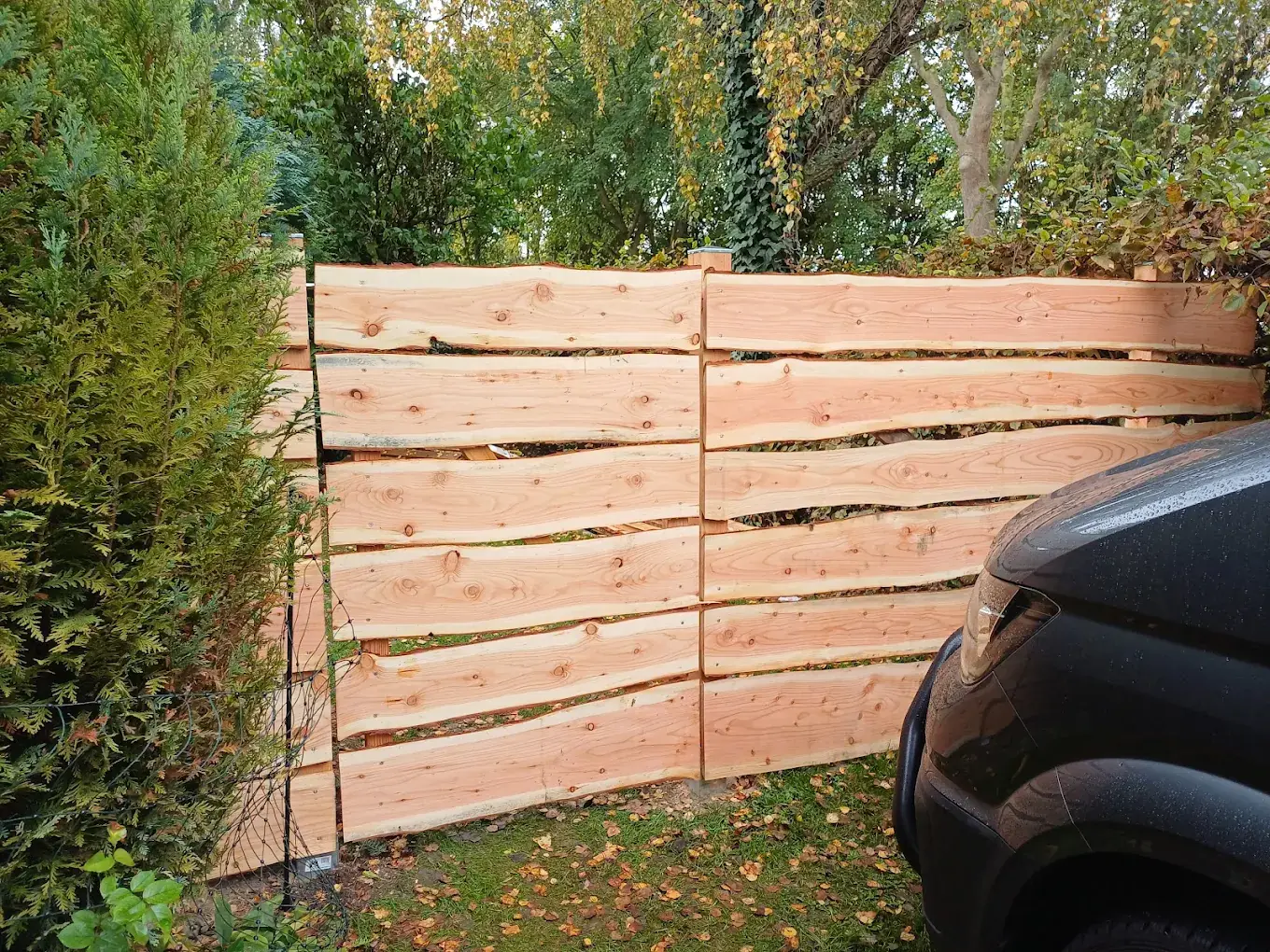
Bonanza fence in oak, larch or spruce: differences in surface, side boards and specification ...
Read the article
Setting robinia stakes: what matters for depth, spacing, the point, pre-drilling and the ...
Read the article
Cleft post or round post: differences in production, cross-section, size specification, fixing and appearance ...
Read the articleThe product, size, quantity and delivery postcode are enough. Your written quote follows promptly, usually within 24 hours.
Rather speak to us directly? We are available Mon–Fri 8.00–18.00. In writing you can reach us through the contact form or by e-mail at info@worldwide-wood.de.