
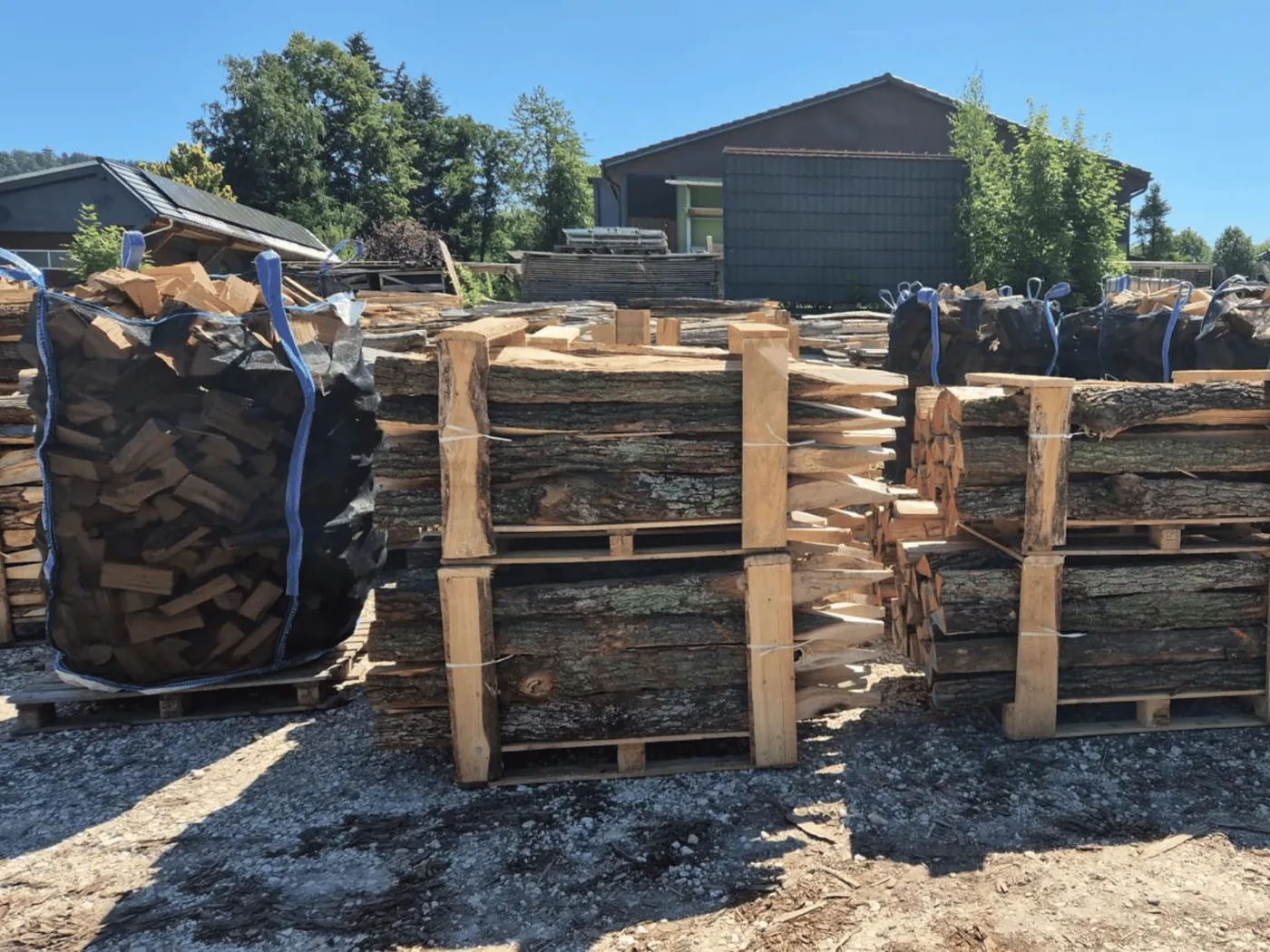
Oak
Oak cleft posts
The classic pasture stake, cleft from round timber. Available pointed or blunt.
A pasture or paddock fence has to withstand weather, fence tension and the loads from animals over the long term. Alongside the actual fencing material, what matters above all is suitable stakes, a stable construction and matching it to the fence system, the type of animal and the terrain.
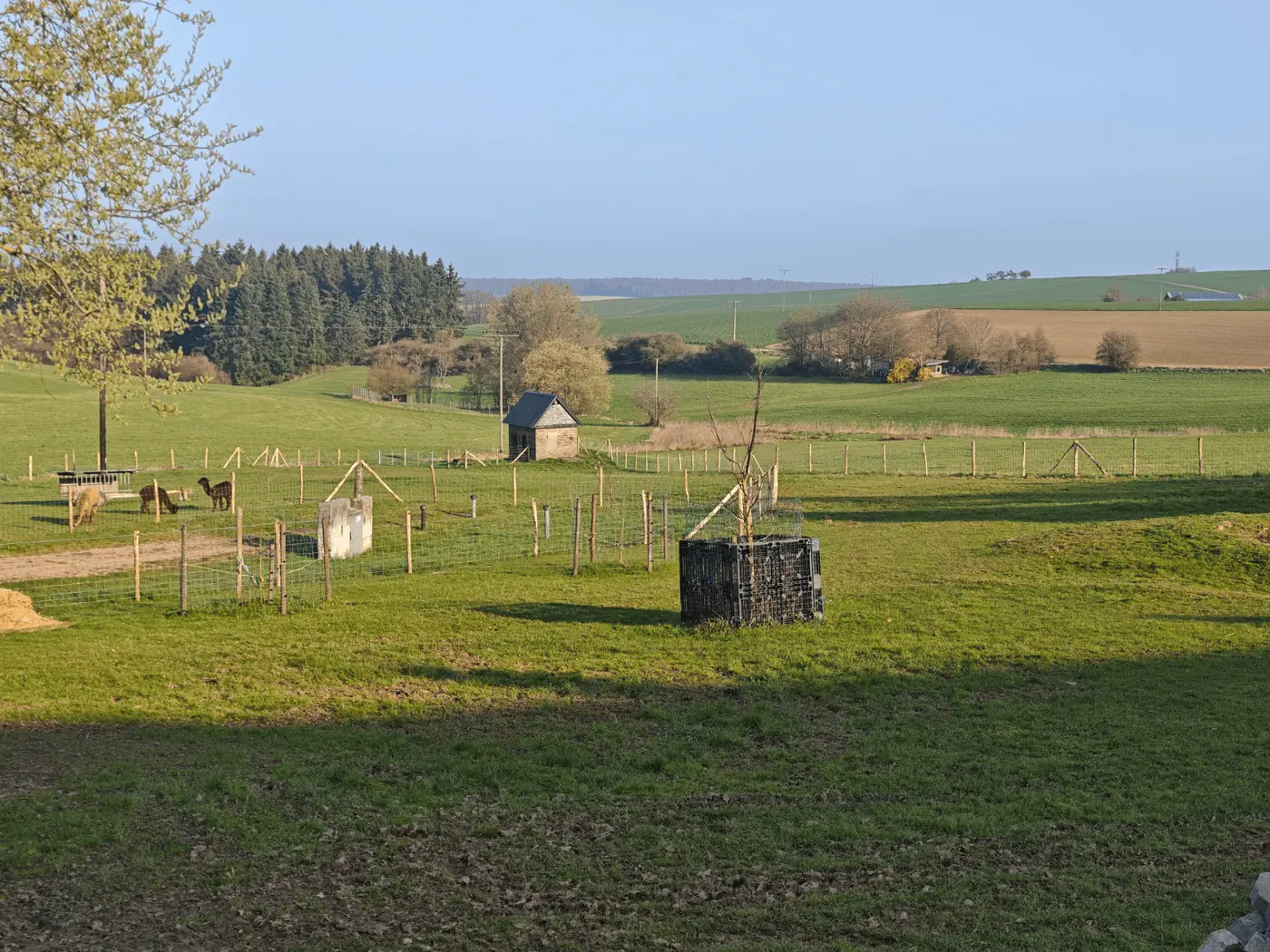
For timber stakes in ground contact, naturally durable timbers such as robinia and oak are often used. Alongside those, pressure-treated softwood stakes suitable for this use are a widespread solution.
Depending on the fence construction, Oak cleft posts, Oak round posts, Robinia stakes, debarked or Softwood stakes are used, among others. Which version is chosen depends on the fence system, the appearance wanted and the conditions on site. The complete range is in the Stakes & Posts category.
A timber stake is often most heavily loaded in the ground-air zone. There, moisture and oxygen meet – conditions in which wood-destroying fungi can be particularly active.
Robinia and oak heartwood in particular have a comparatively high natural durability and are therefore traditionally used for stakes outdoors and in ground contact. We stock the corresponding Robinia stakes, debarked, oak cleft posts and oak round posts left natural.
How an oak log becomes a cleft post is shown in the article How an oak cleft post is made.
With softwood, pressure-treated softwood stakes are often used for applications with a higher moisture loading.
For horse fences there are additional requirements for visibility, stability and safety from injury. You will find notes on this on our application page Horse fencing.
A cleft post is split along the natural grain of the timber. This produces the characteristic shape that differs from post to post. Oak cleft posts are a traditional version for pasture and paddock fencing.
With round posts a distinction has to be made between different ways of making them. Naturally grown Oak round posts largely keep their natural round shape, whereas machine-rounded softwood stakes are given a more even round cross-section.
Which version suits better depends on the timber species, the fence system, the way it is worked and the appearance wanted. The article Cleft post or round post: which shape suits which job? compares both shapes
How a cleft post is measured is explained in Back width and edge length on cleft posts.
For timber posts driven into the ground, an embedment depth of about 50 to 70 cm is often assumed in practice. The Deutscher Holzschutzverband gives this range as orientation depending on the fence height. In addition, with pasture and horse fences the rule of thumb of anchoring about one third of the post length in the ground is often used.
The association's figure and the rule of thumb are guide values and not blanket planning specifications. Soil conditions, fence height, wind and tensile loading as well as the function of the individual post can make a greater embedment depth necessary.
For a desired above-ground fence height of 1.40 m, for example, a 2.00 m stake gives an embedment depth of about 60 cm and is therefore within the range often given in practice.
The stake spacing also depends on the fence system. With wire fences, larger spacings are often chosen than with rigid timber fences with rails. Corner, end and gate posts are more heavily loaded and have to be sized accordingly and, where necessary, additionally braced.
Setting depth, spacings and common mistakes when setting are covered in the article Setting robinia stakes: depth, spacing and common mistakes. Which stakes we stock for this is in the Stakes & Posts category; rails, boards and fence posts are in Fences & Fence Posts.
Different loads act on a pasture or paddock fence: animals can touch the fence or push against it, tensioned fence conductors create tensile forces, and wind, weather and ground movement act on the installation as well. The pasture fence calculator gives a first overview of stake length, spacing and number.
Corner, end and gate posts are particularly heavily loaded. Intermediate stakes carry the fence along the run, while at changes of direction and at end points higher forces have to be taken up.
Which fencing material is suitable depends on the type of animal kept and the fence system in question. With horses in particular there are increased requirements for visibility and safety from injury. You will find further information on this on our page Horse fencing.
Which timbers are used in the other areas, from game fencing to garden fencing, is shown in the overview of areas of use.
The example shows a 2.00 m stake with a desired fence height of 1.40 m. How deeply a stake is actually embedded depends on the soil, the fence system and the loading.
The spacing depends on the fence system. With wire fences, larger spacings are usual than with rigid timber fences with rails. At corners, ends and gates the higher forces act.
The classic pasture stake, cleft from round timber. Available pointed or blunt.
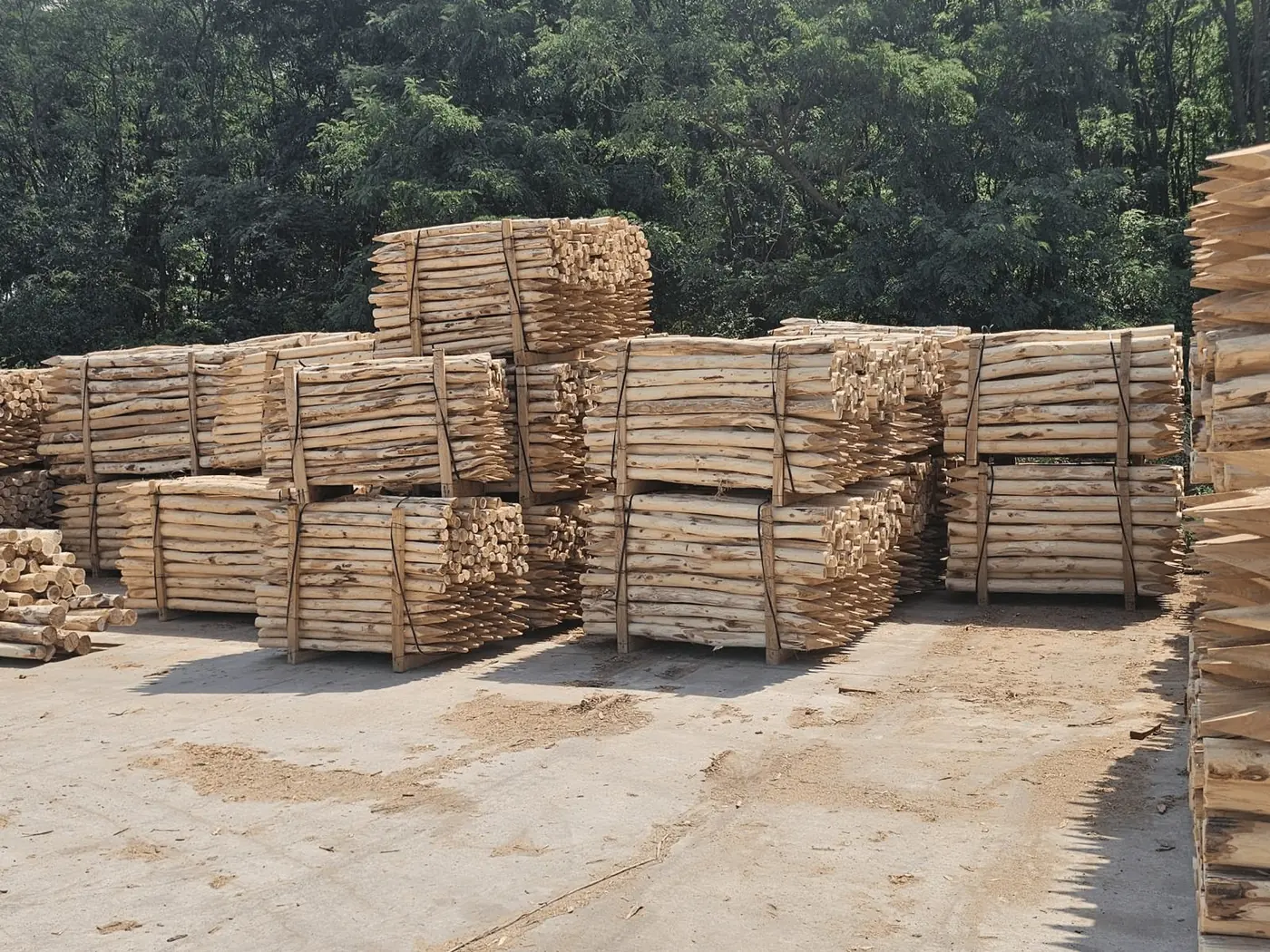
Round and debarked, untreated without impregnation, pointed or blunt.

Cleft as grown, available pointed or blunt. The hardest native timber for pasture fences.
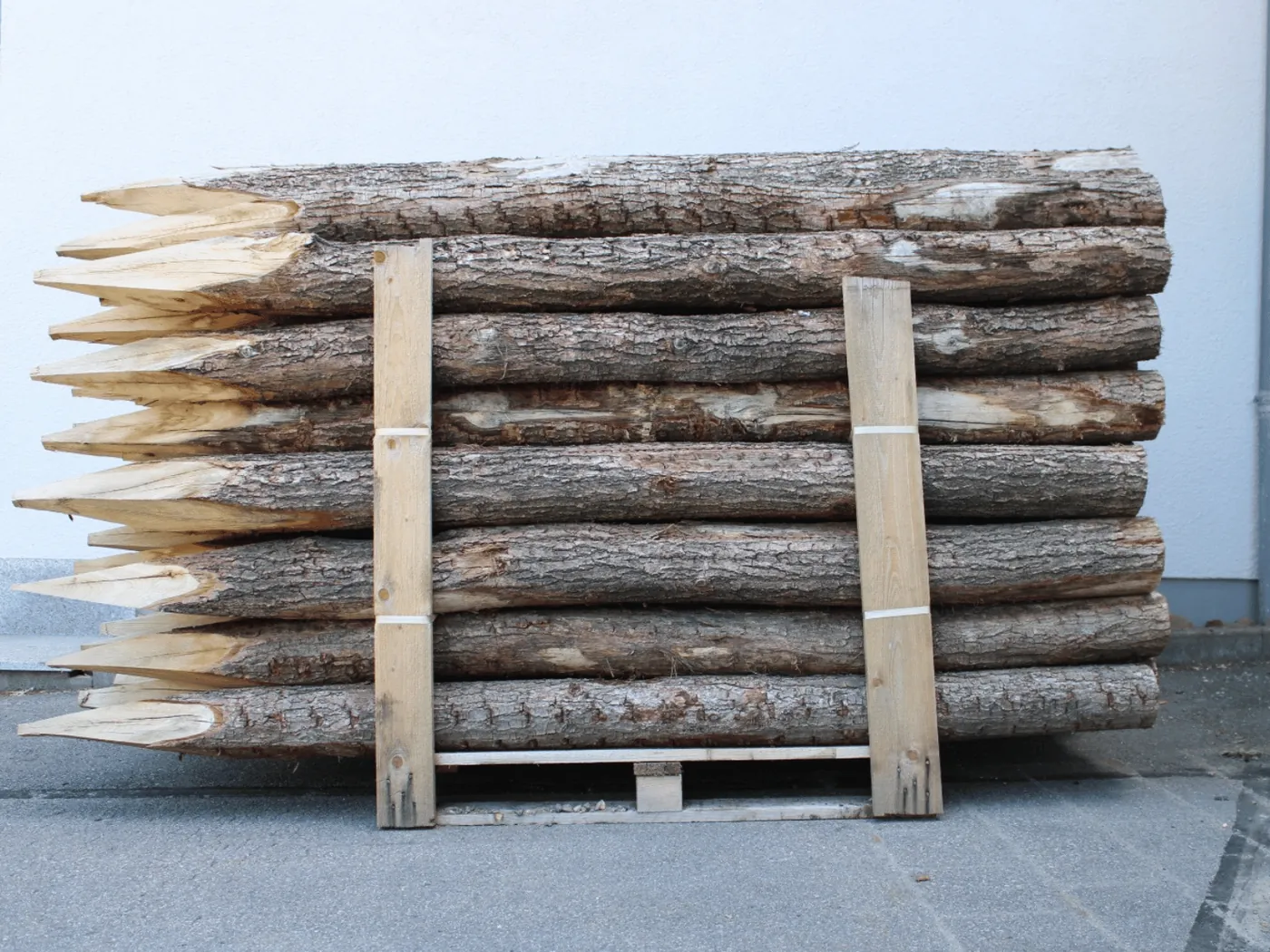
Naturally grown round posts in bark from German oak, left natural, available pointed or blunt.
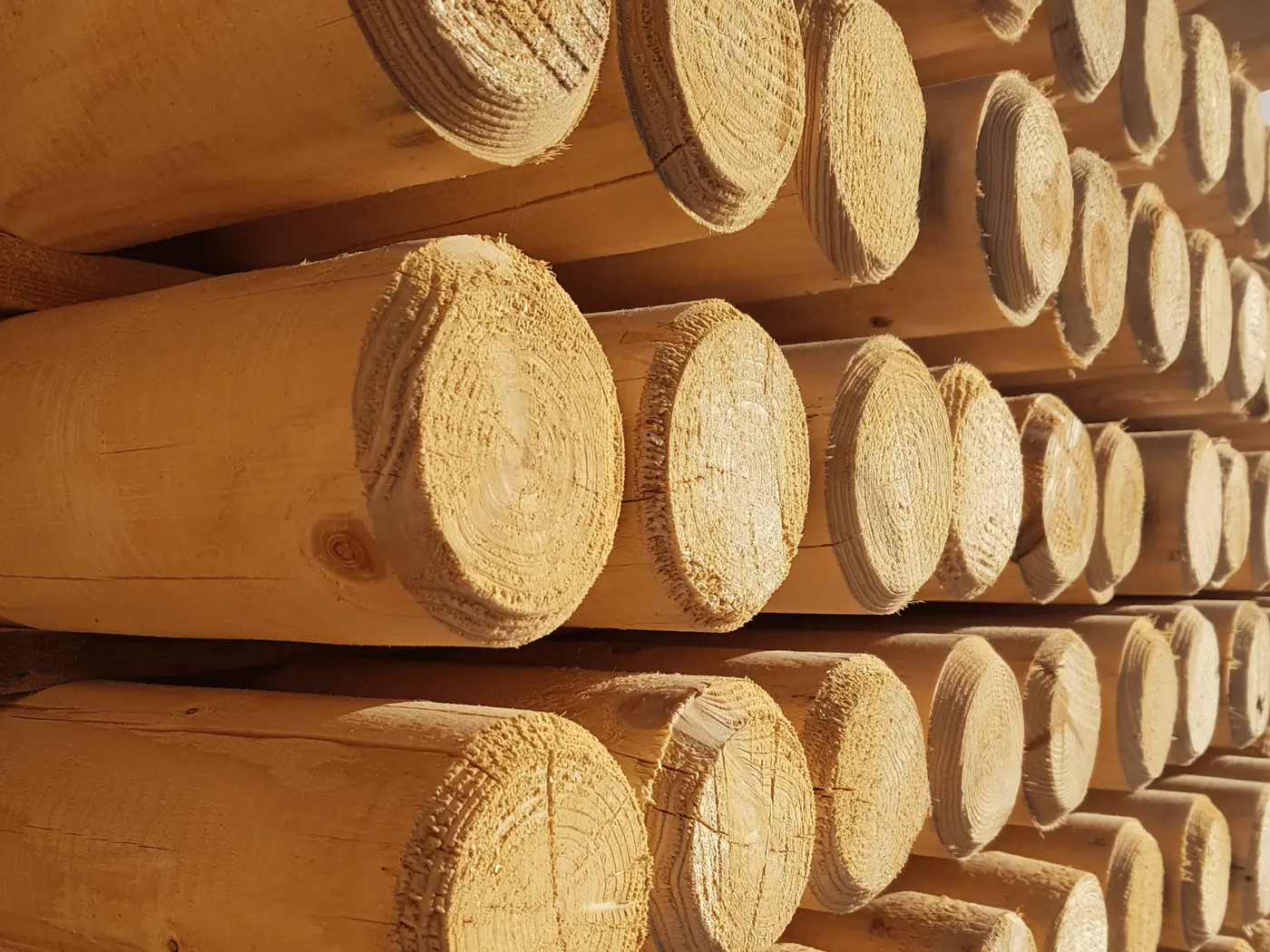
Cylindrically machined stakes, available untreated or impregnated. The economical standard solution.
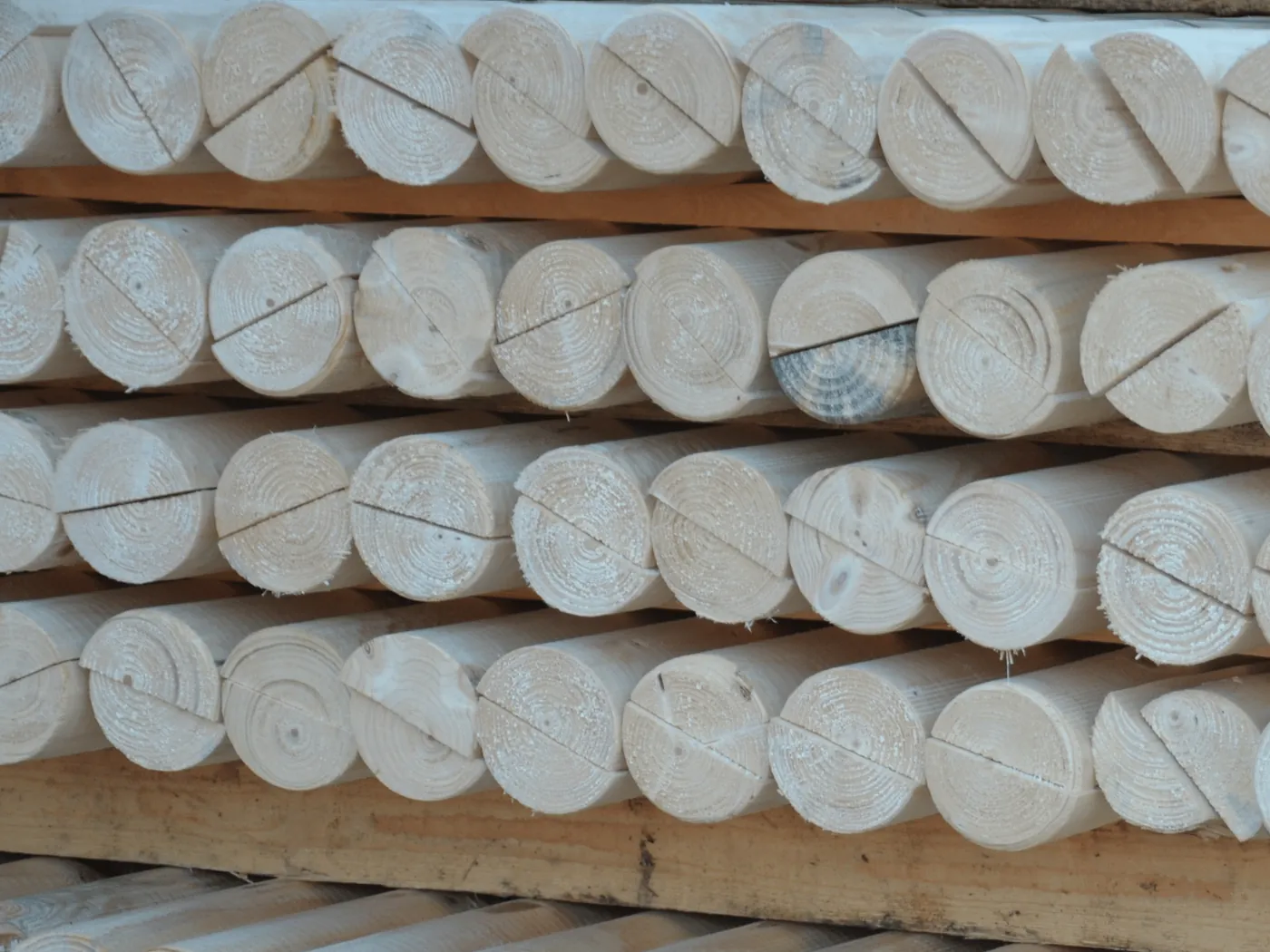
Machine-rounded half-round timbers as rails for paddock and screening fences, untreated or impregnated.

Setting robinia stakes: what matters for depth, spacing, the point, pre-drilling and the ...
Read the article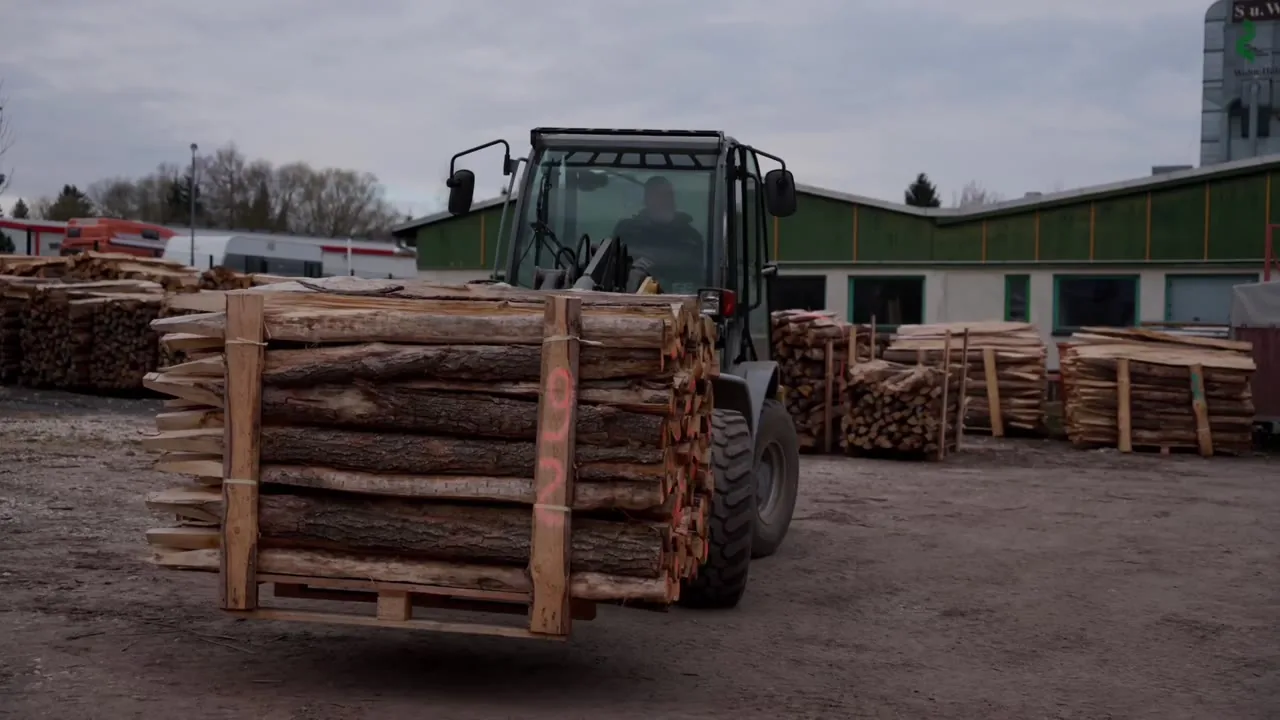
Cleft post or round post: differences in production, cross-section, size specification, fixing and appearance ...
Read the article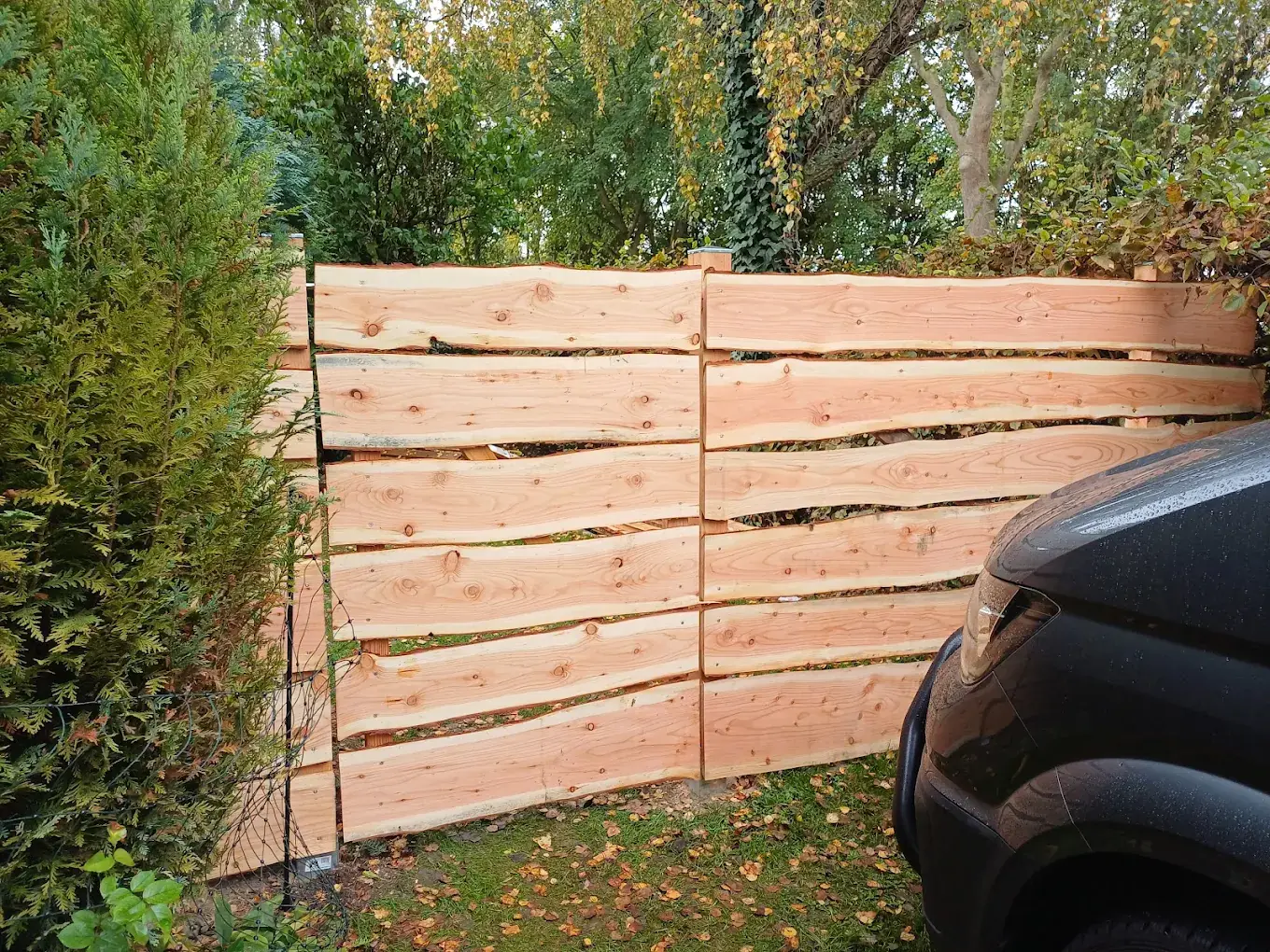
Bonanza fence in oak, larch or spruce: differences in surface, side boards and specification ...
Read the article
Cross-cutting, cleaving, pointing, palletising: production explained step by step, with video from the ...
Read the articleThe product, size, quantity and delivery postcode are enough. Your written quote follows promptly, usually within 24 hours.
Rather speak to us directly? We are available Mon–Fri 8.00–18.00. In writing you can reach us through the contact form or by e-mail at info@worldwide-wood.de.