
A look inside production.
Short clips from different productions and production sites. From cleaving and sawing through to machining, packing and loading finished goods.
Short glimpses of production.
The clips show individual working steps from different productions. They do not belong to one common process but give an insight into various products and machining operations. How this network of productions is set up is described under About us.
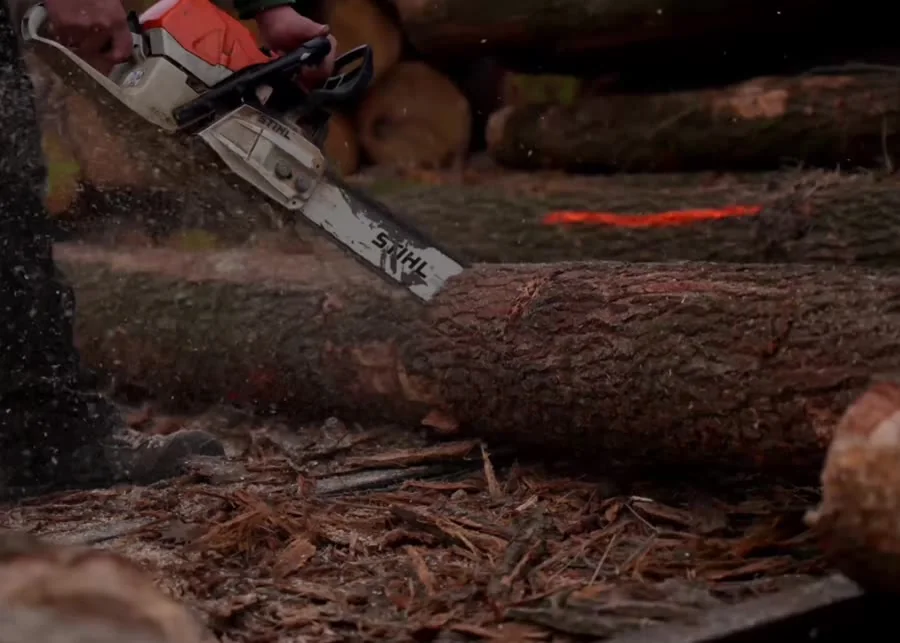
To produce oak cleft posts, the oak log is first cross-cut to the required post length. The log section can then be processed further and cleft.
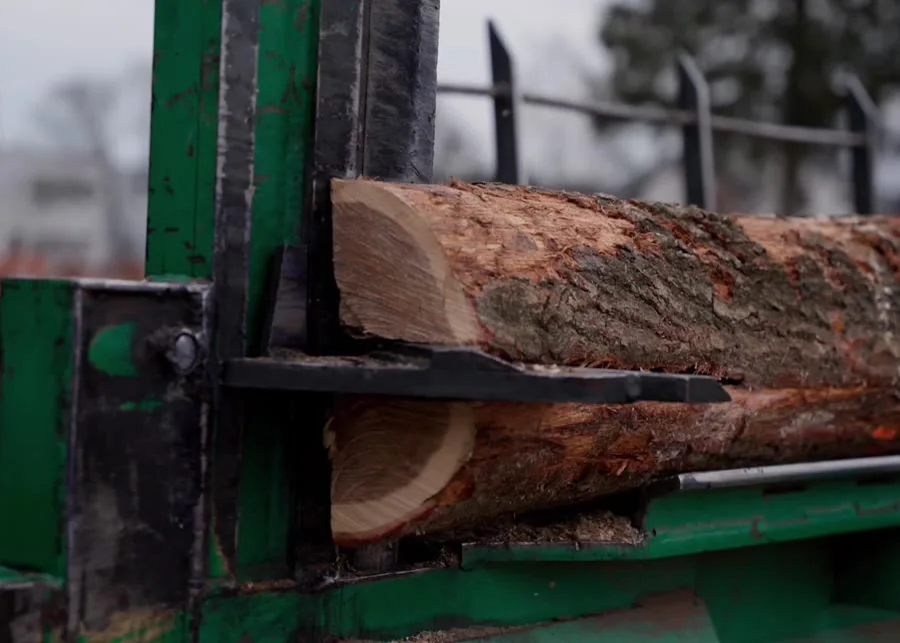
The log section is pushed through the cleaver and split along the natural grain. This is how the individual oak cleft posts are formed. Depending on the version ordered, they can then be pointed.
We show more on this in the guide How an oak cleft post is made: from the log to the pallet.
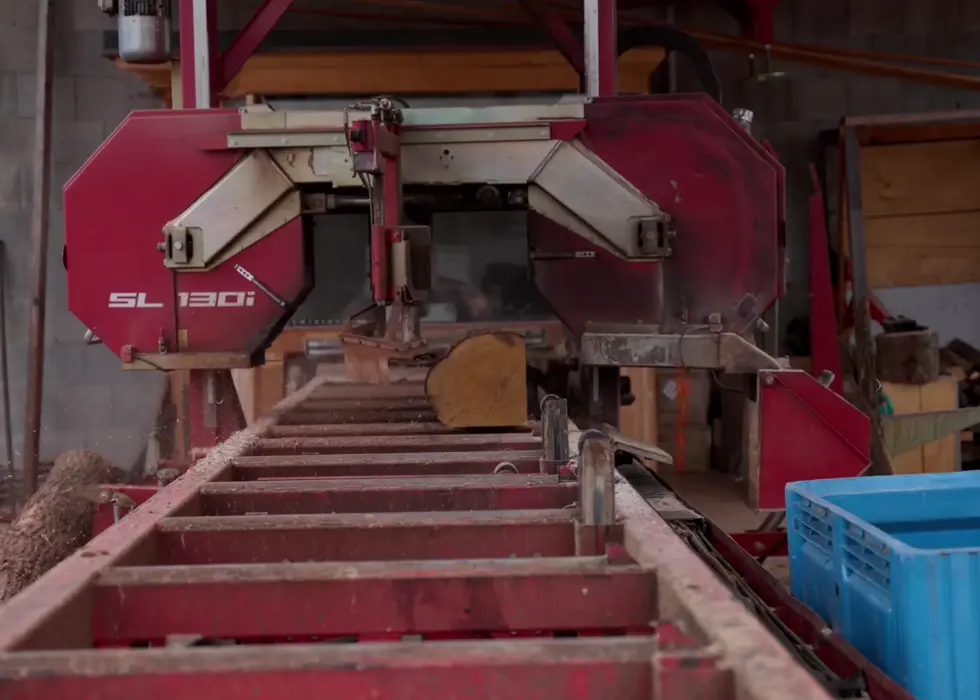
The band resaw first removes the outer side of the log with the bark. This produces a clean cant that can then be processed further into squared timber or boards, for example.
The range for this is under sawn and round timber.
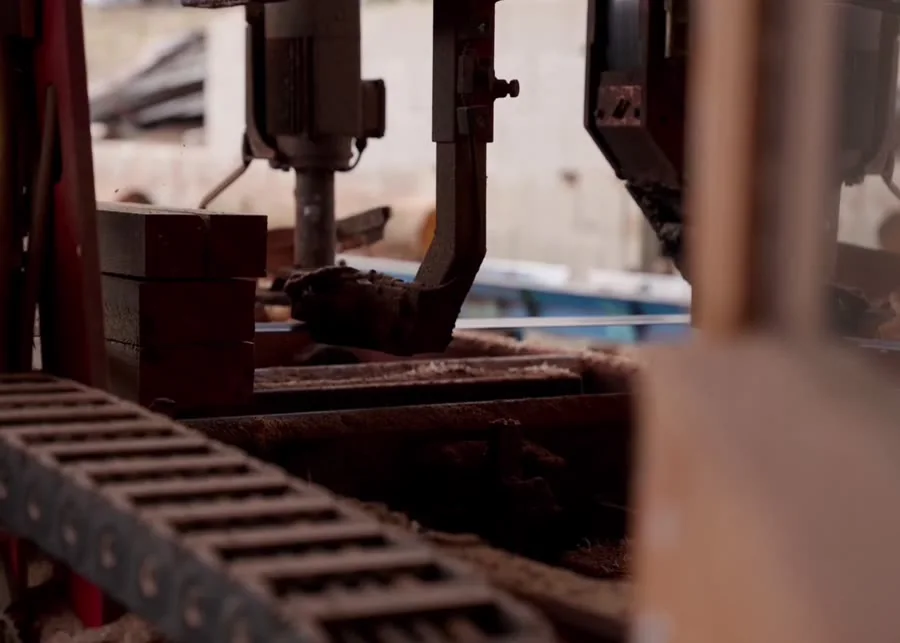
On the band resaw the timber that has already been broken down is cut up further. In the clip this produces squared timber in the intended cross-section.
As finished goods this is available as structural timber in larch and structural timber in spruce.

A piece of squared timber is cross-cut to the required length on the circular saw. The clip shows a classic working step in the further processing of sawn timber.
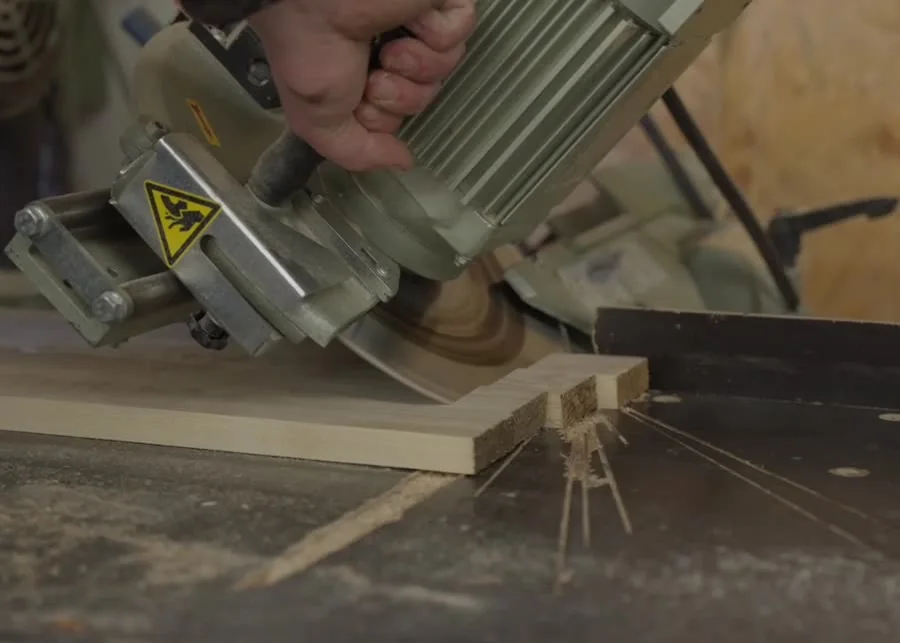
On this fence board the head is cut at an angle on the circular saw. The slope helps water run off at the top end of the board.
We stock fence boards as Larch fence pales, wide and Spruce fence pales, wide.
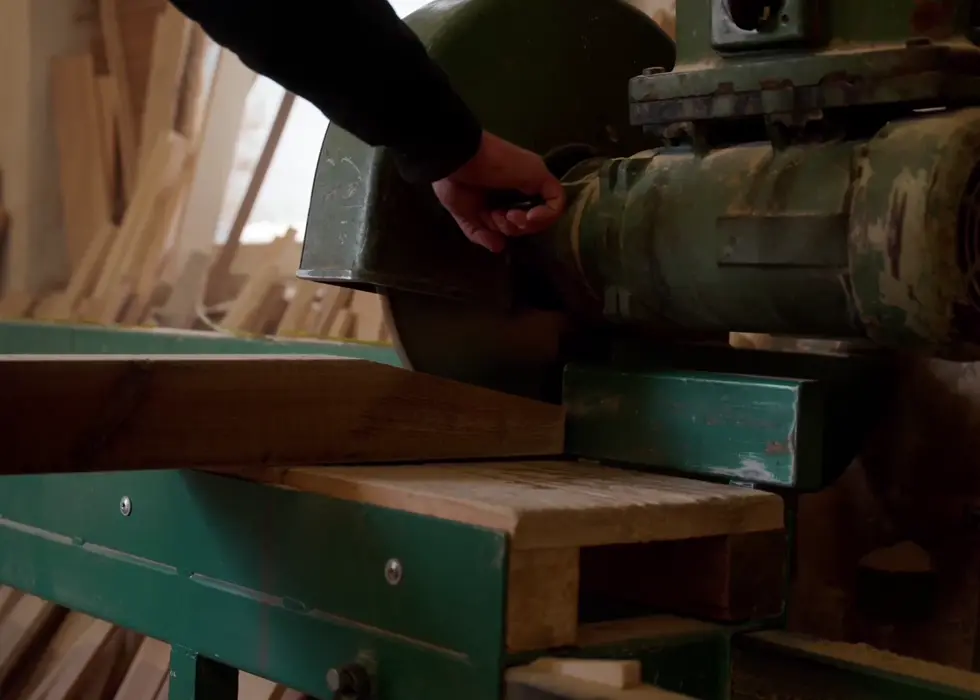
A square post is pointed at the lower end on the circular saw. This creates the typical point that can be ordered on fence posts depending on the version.
Among others, we stock posts as Larch posts and Oak posts.
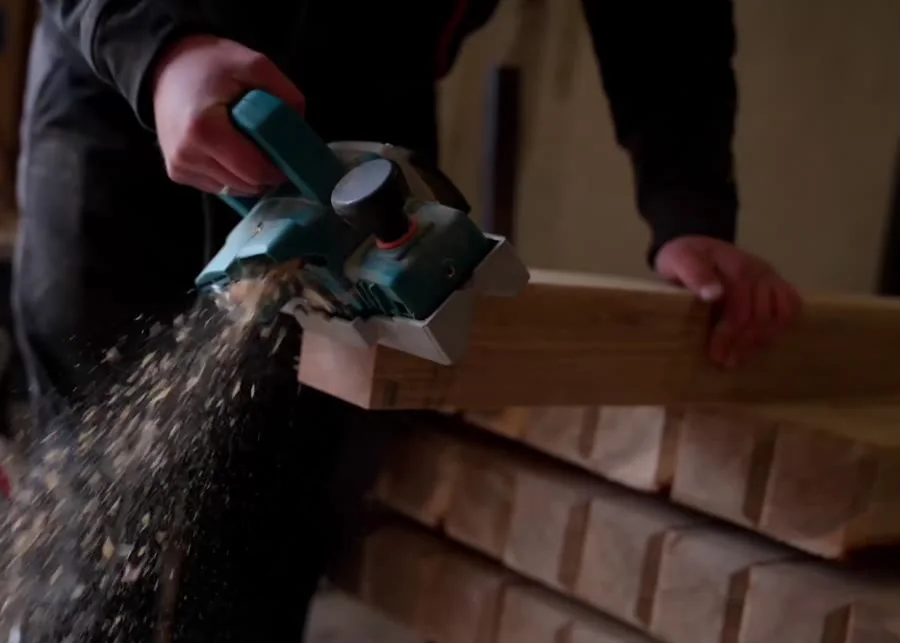
At the head of the squared timber the edges are chamfered with a chamfering machine. This creates a cleanly executed finish with eased edges.
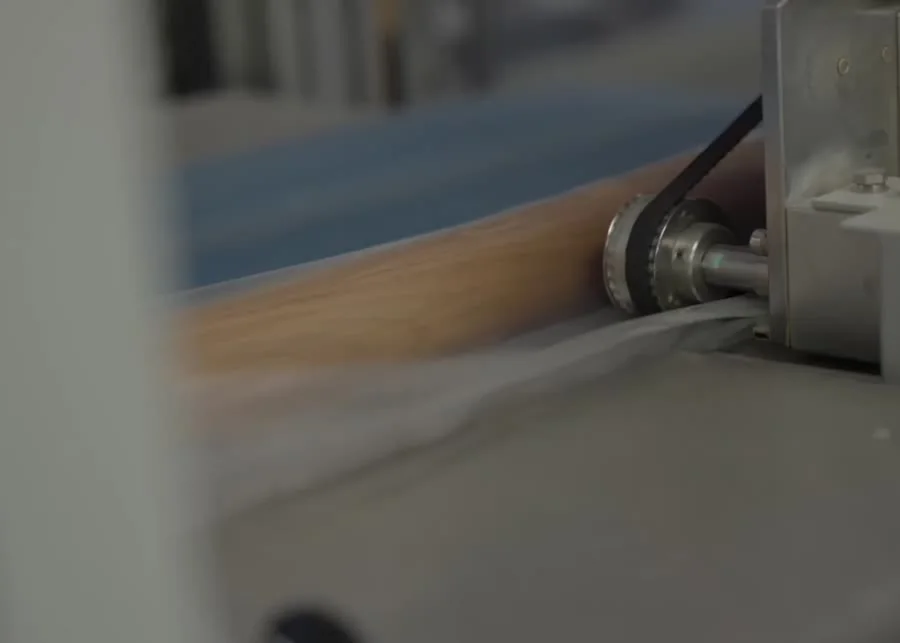
The finished round handrail is first wrapped in a thin film and sealed. It is then prepared for the further packing that follows.
You will find matching profiles and timber species under Handrails.
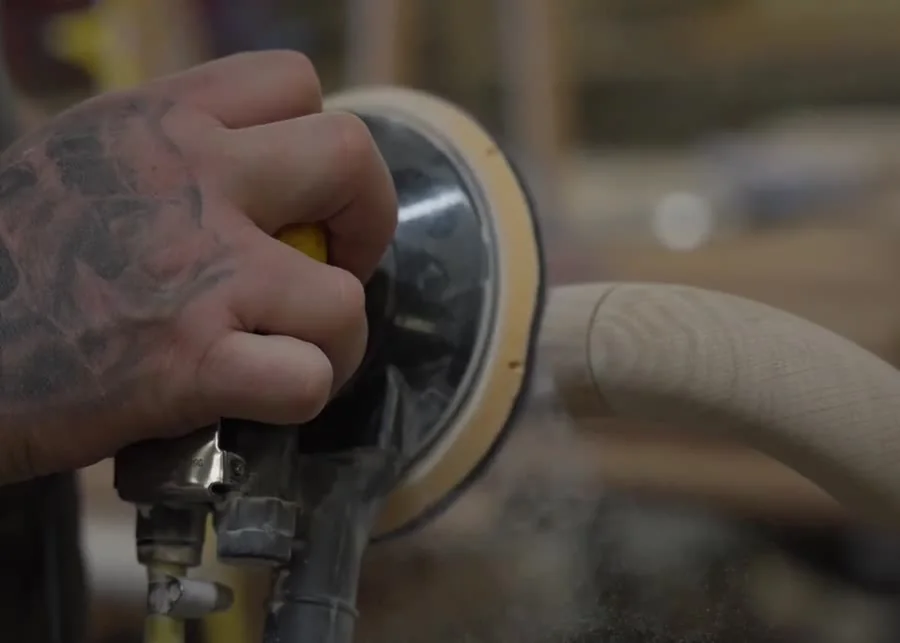
The handrail, with the 90 degree end bend already fitted, is given its final sanding. Surface and transition are smoothed cleanly once more with a hand sander.
How to put your handrail together is shown in our handrail instructions.
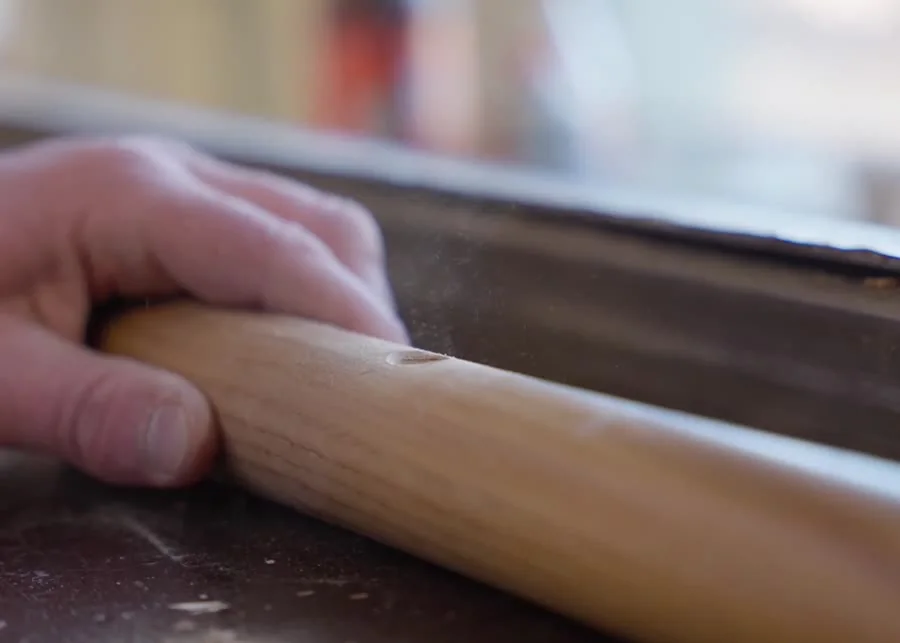
The existing hole is lightly countersunk at the upper edge. This creates a clean lead-in for the threaded connection that follows and a properly executed finish.
Brackets, end bends and connectors are available under Handrail accessories.
Ready for dispatch.
Alongside the individual machining steps we also show finished goods immediately before or during loading.
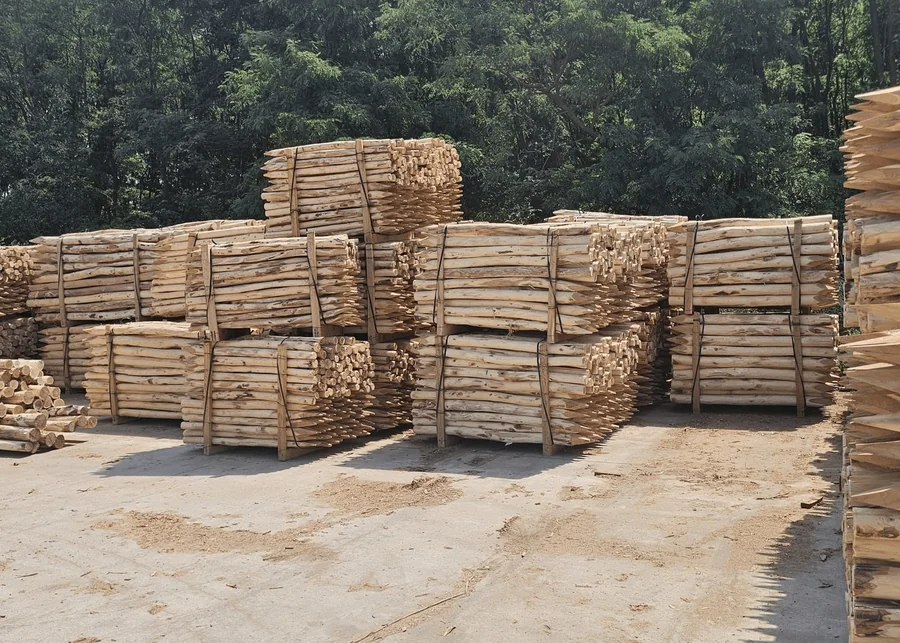
Debarked Robinia stakes are assembled on the pallet and stand ready for loading.
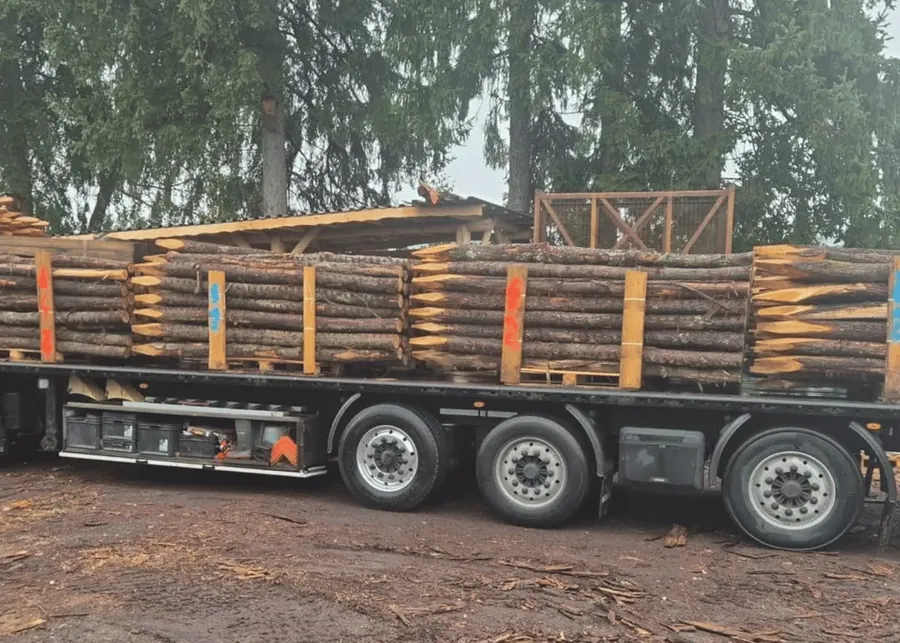
Pointed Oak round posts are bundled and loaded onto the lorry. The goods are secured and ready for transport to the delivery location.
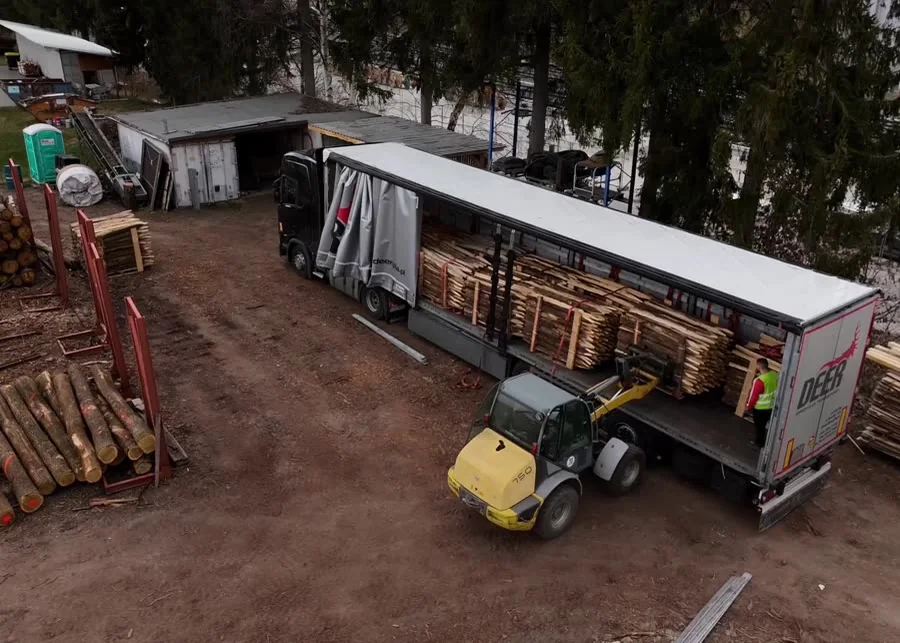
Palletised Oak cleft posts are loaded onto the lorry and prepared for dispatch. They are used, for example, for Pasture & paddock fencing or Game fencing.
Still have questions, or would you like to send us an enquiry?
The product, size, quantity and delivery postcode are enough. Your written quote follows promptly, usually within 24 hours.
Rather speak to us directly? We are available Mon–Fri 8.00–18.00. In writing you can reach us through the contact form or by e-mail at info@worldwide-wood.de.