How our oak cleft posts are made
Oak cleft posts are not made from ready-sawn squared timber. The starting point is oak logs, which are worked into the finished fence posts in several steps.
From the log out of the forest through cross-cutting and cleaving to pointing and packing, production happens in a few clear steps. Depending on the order, the posts are made in different lengths and supplied either pointed or blunt.
Through cleaving, every post keeps its natural shape. Cleft posts therefore differ deliberately from one another in cross-section, surface and line. That is exactly what is characteristic of this kind of fence post.
Step 1: the oak logs are checked and cut to length
At the start there are the oak logs that come into production from the forest. Before the actual processing begins, it is checked which logs and log sections are suitable for making the cleft posts.
The logs are then cut to the post length needed. Which length is produced depends on the order in question and the dimensions ordered.
Various post lengths can therefore be made for different applications. Typical fields of use for our oak cleft posts are, for example, pasture and paddock fencing as well as game fencing.
Step 2: the log is split in the cleaver
The log sections that have been cut then go onto the cleaver.
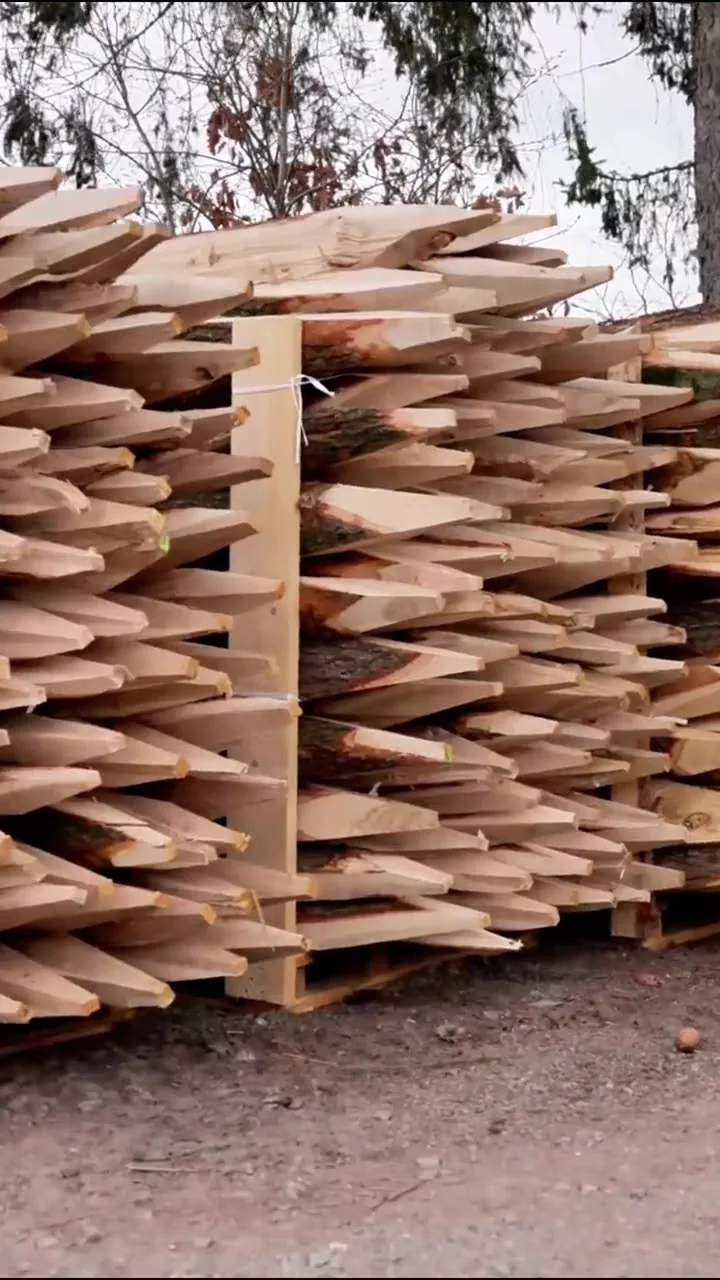
In the cleaver the log is pushed against a cross blade and first split into four parts. In this way several individual cleft posts are produced from one log section.
Depending on the thickness of the starting material and the post version wanted, the individual pieces can then be split further.
Unlike a fully sawn post, this does not produce evenly rectangular cross-sections. The shape follows the particular log and the line of the split. One oak cleft post can therefore turn out somewhat stronger, narrower, straighter or more irregular than the next.
These differences are typical of cleft stock left natural and are part of the appearance of the product.
So that everyone still gets the size ordered, it does not stay a mixed heap: after cleaving, the posts are graded into classes by their back width. What back width and edge length mean exactly is explained in the article Back width and edge length on cleft posts: what is the difference?
Step 3: sorting by back width
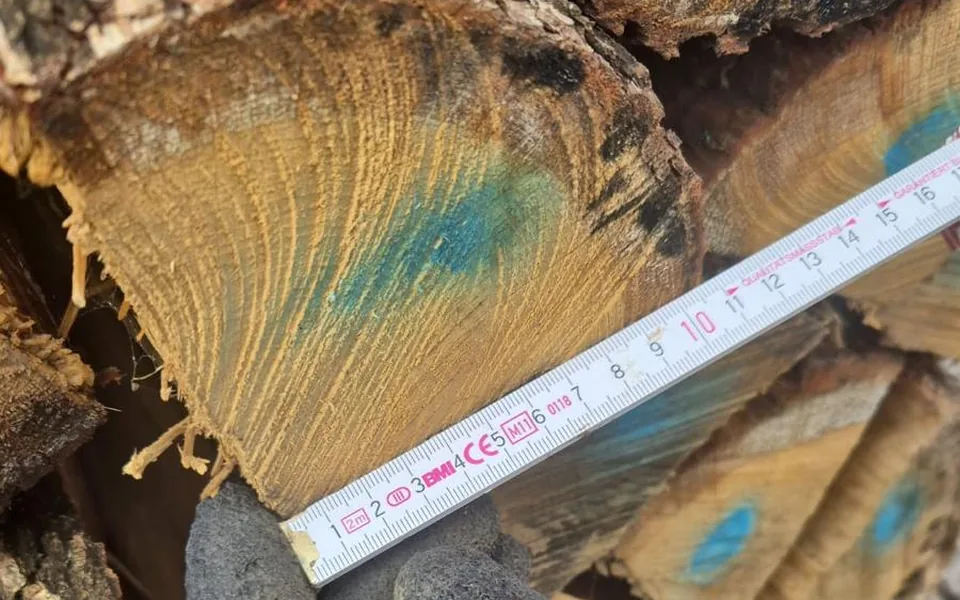
After cleaving, the posts are measured. The back width is determined on every post, that is, the widest face of the cleft cross-section.
The posts are then graded into the appropriate classes. Which combinations of length and back width exist is given in the size table on the product page Oak cleft posts. Within a class, natural deviations remain – that is part of cleft stock.
This intermediate step is the reason why an order does not arrive as a colourful mixture, but in the length and back width ordered.
Step 4: pointed or blunt as the customer wishes
After cleaving, the individual posts are worked on further according to the order.
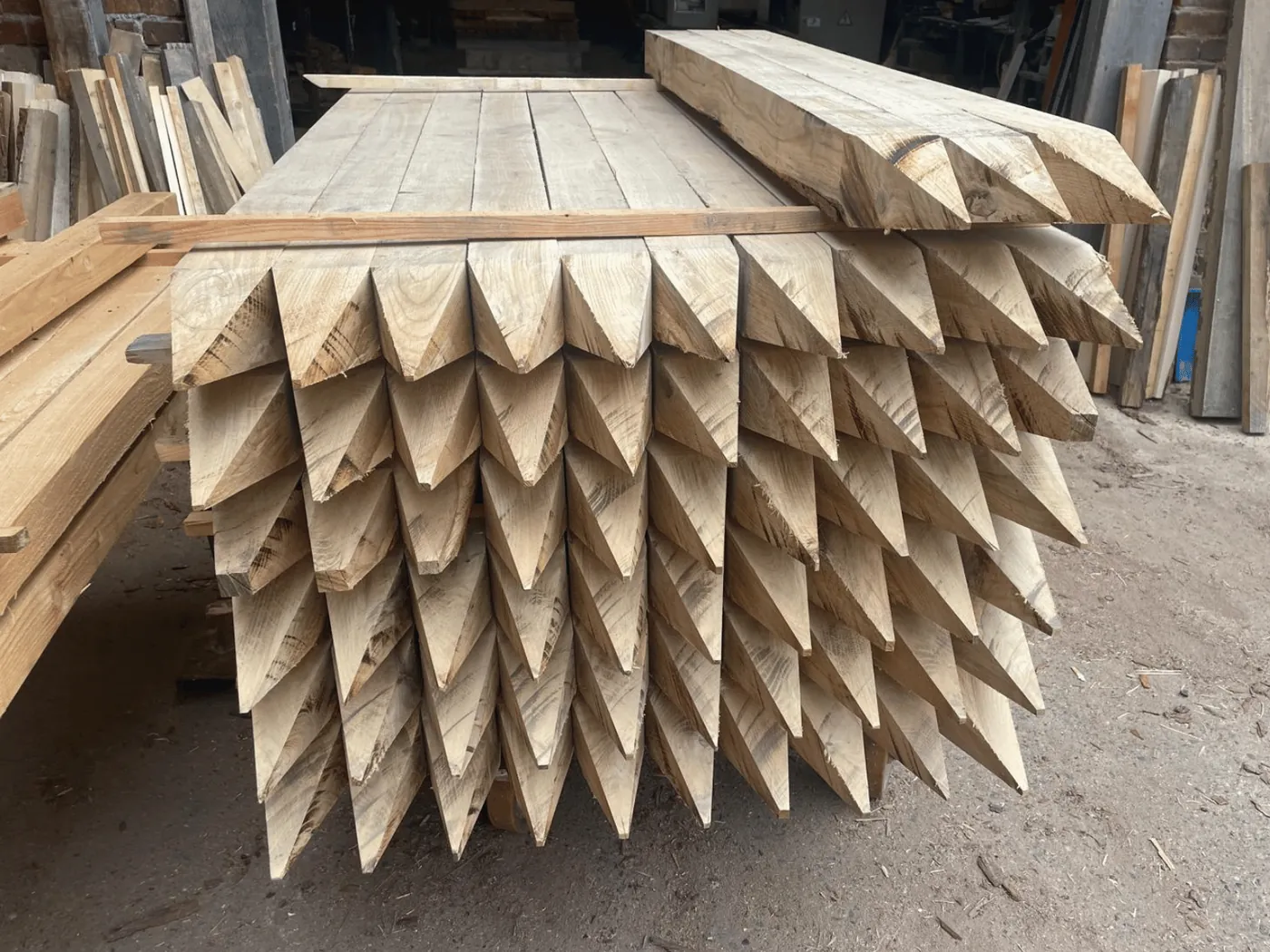
If the post is later to be driven straight into the ground, it can be pointed in the pointing machine. The lower end of the post is machined to a point.
Anyone who needs the posts blunt gets them without a point accordingly.
We can therefore supply oak cleft posts either pointed or blunt depending on the order. Which version is needed can be stated directly with the enquiry.
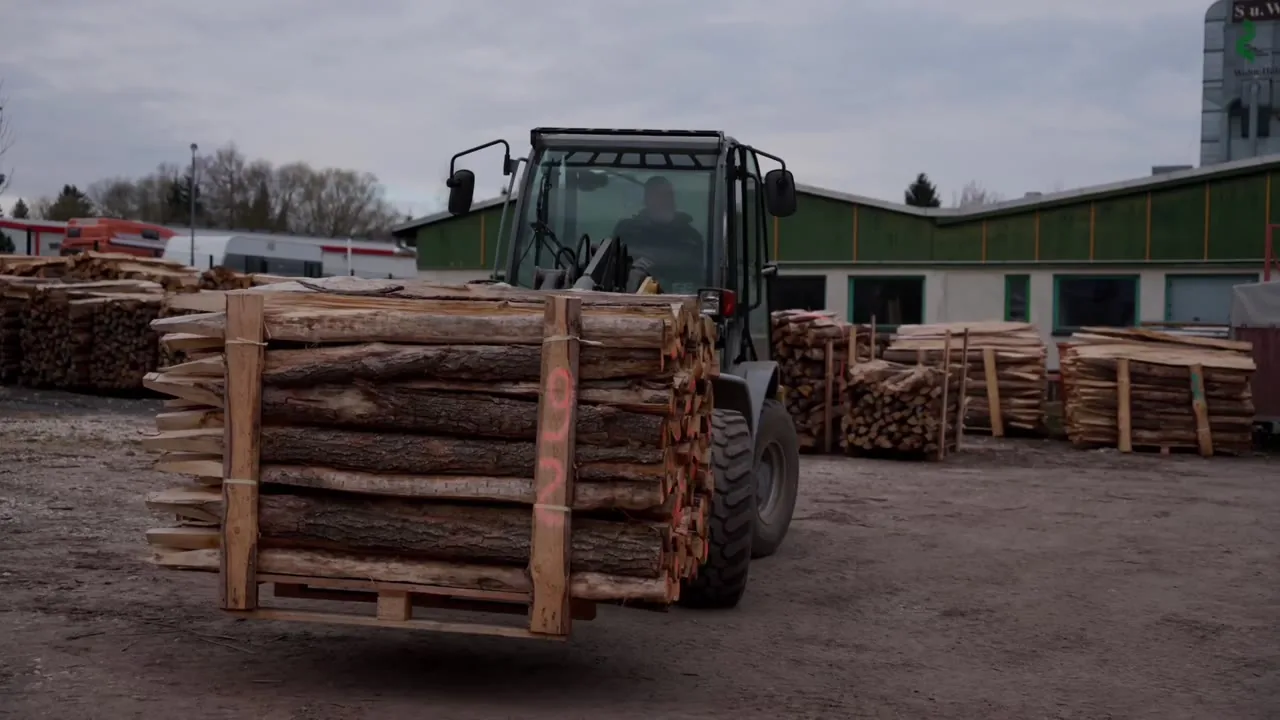
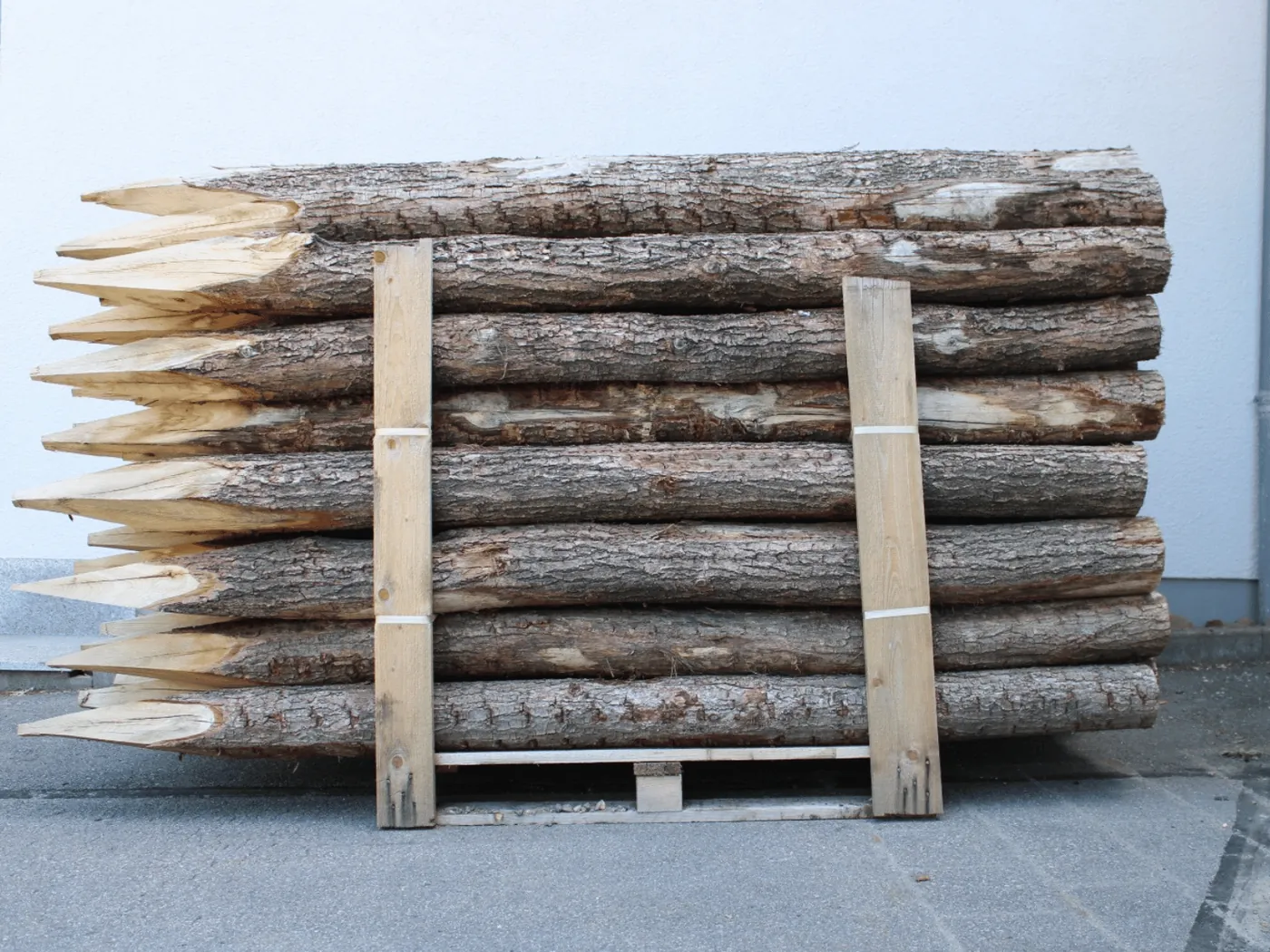
Step 5: the finished cleft posts are packed on a pallet
After machining, the finished oak posts are prepared for storage and transport.
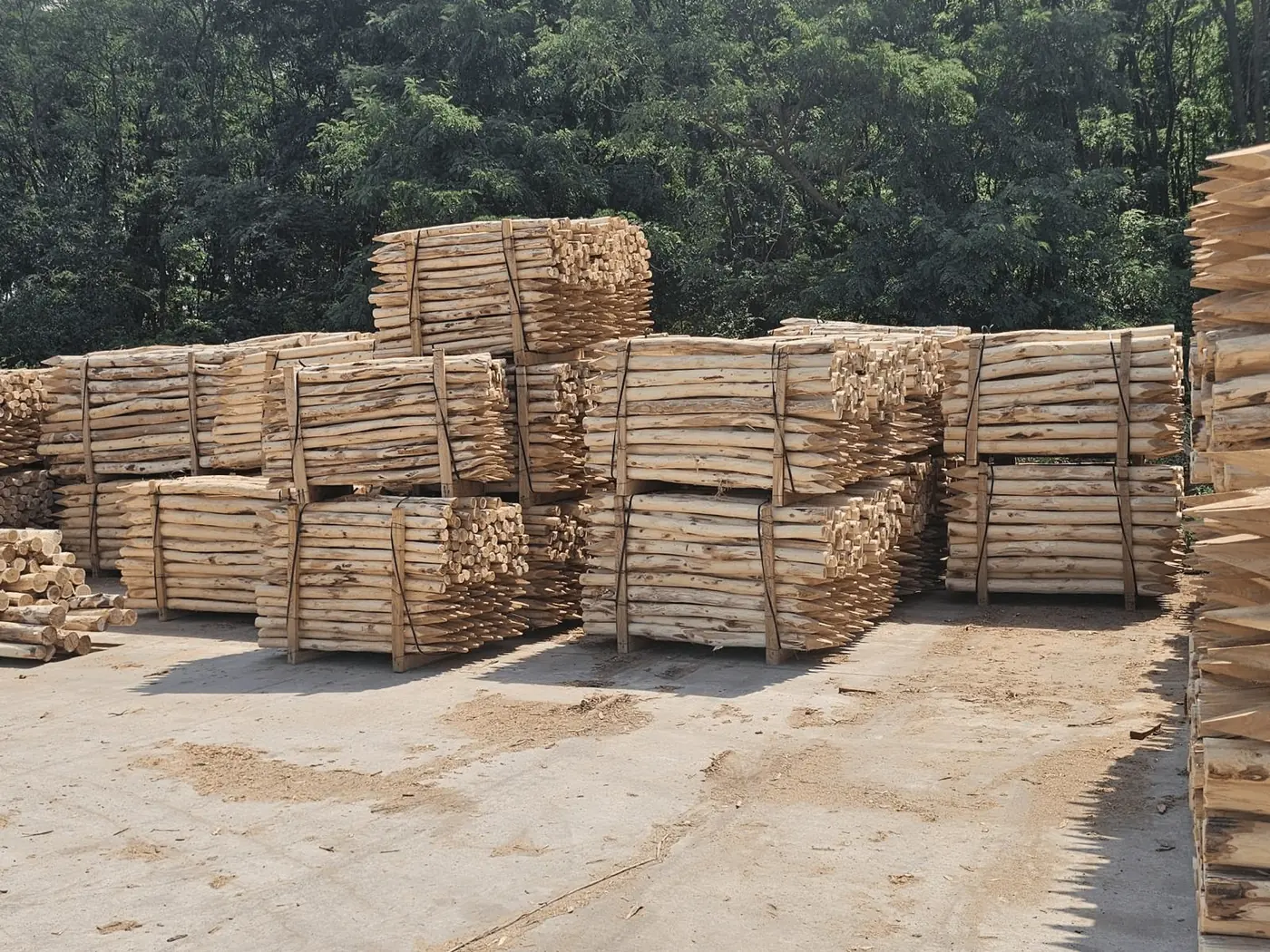
The posts are put together in layers on pallets, or into transportable packages, and then strapped. The natural shape of the individual posts is of course retained.
With cleft posts in particular, packing is a little different from exactly uniform machine-rounded stock, because not every post has the same cross-section.
For comparison: our Oak round posts are naturally grown round posts and differ from the cleft oak posts in construction and appearance. Anyone looking for a square sawn post, by contrast, will find it in our Oak posts. Stakes in other timber species are in the Stakes & Posts area.
Step 6: storage or direct loading
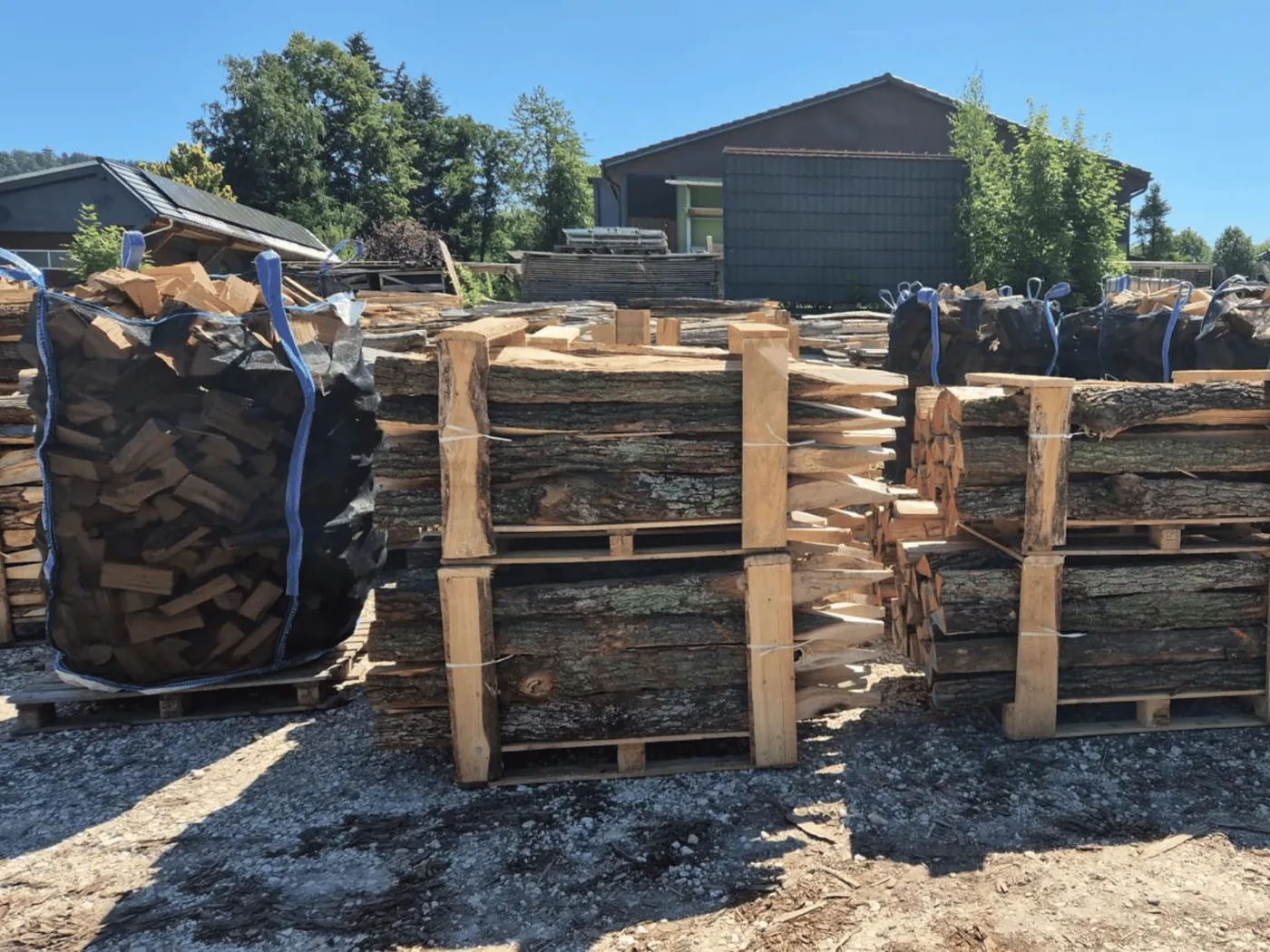
After packing, the finished goods are either put into store or loaded directly for the order in question.
When they are loaded, dispatch is by freight forwarder: from a single pallet to a full lorry load.
In this way the finished oak cleft posts go straight from production to the customer and can then be used, for example, in pasture and paddock fencing or in game fencing.
What makes an oak cleft post
A cleft post is not a calibrated industrial product with an identical cross-section.
Every post comes from a natural log section and can therefore vary somewhat in shape and dimension. Curves, differing widths and a natural surface are also part of cleft stock.
Anyone who needs a round cross-section that is as even as possible, by contrast, should look at our Oak round posts. For applications needing exactly square sawn material, our Oak posts are available.
The various oak products can therefore be clearly distinguished:
- Oak cleft posts: naturally cleft posts with an individual cross-section.
- Oak round posts: naturally grown round posts.
- Oak posts: square sawn posts in various dimensions.
Oak cleft posts for fence building, pasture and forestry
Oak cleft posts are used above all where a natural and robust timber stake is called for. Typical applications are:
- Pasture & paddock fencing
- Game fencing
- agricultural enclosures
- forestry fences and crop protection
- property and landscape boundaries
The lengths and versions available are given directly on our product page Oak cleft posts. The rest of the range is in the Stakes & Posts area.
From log to finished post
The whole process can therefore be reduced to six steps:
- Cross-cutting: the log is checked and cut to the post length wanted.
- Cleaving: the log section is pushed through the cross blade and split.
- Grading: the posts are measured and graded into classes by back width.
- Pointing: depending on the order, the posts are pointed or left blunt.
- Packing: the finished posts are packed in layers and strapped.
- Storage or loading: the goods then go into store or straight to dispatch.
That is how our finished oak cleft posts for fence building, agriculture and forestry are made from the original oak log.
Production does not take place in a single works but in several productions. Which ones those are and how we work is described under About us; individual working steps from other productions are shown in Inside our production.