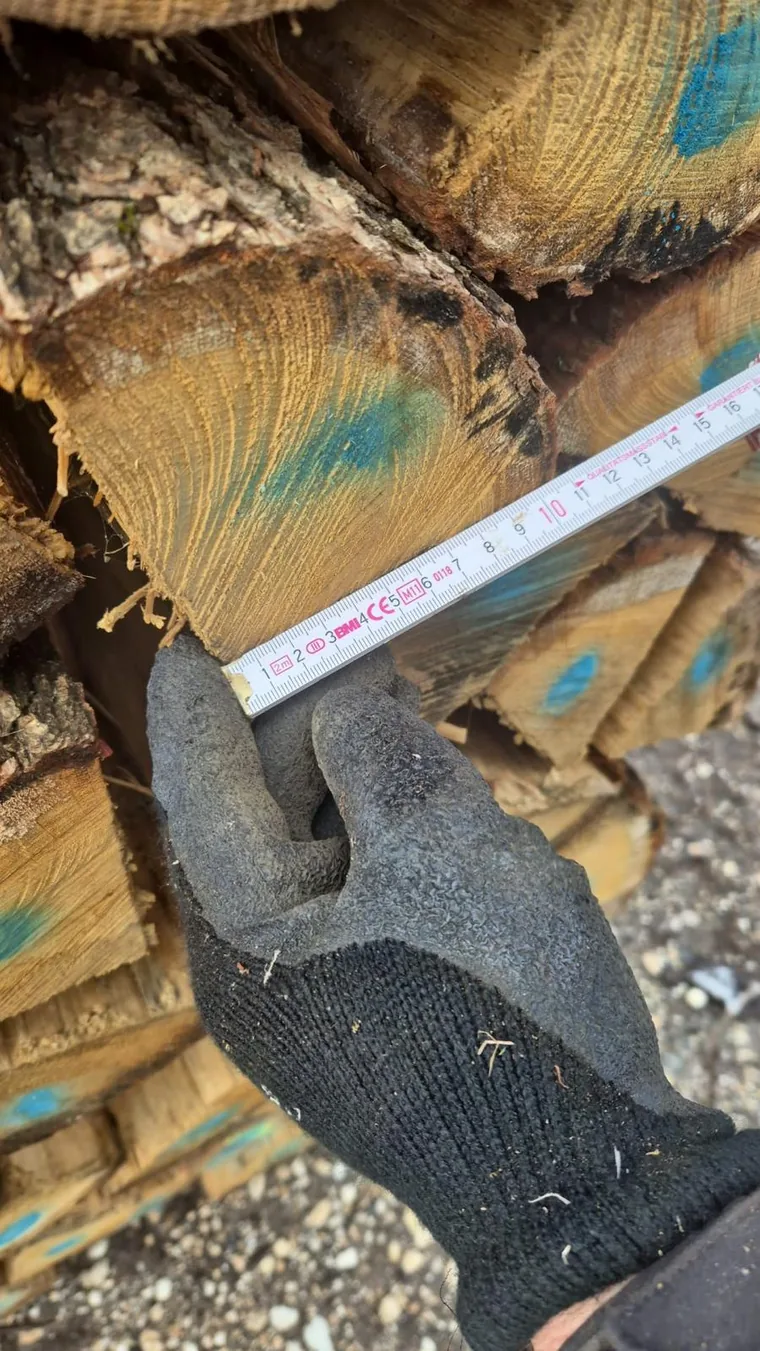
With oak cleft posts and robinia cleft posts you often come across different size specifications. One supplier gives a back width, another an edge length. On top of that there are round posts, which in turn are graded by their diameter.
Why are cleft posts measured differently?
All three specifications describe the thickness of a post, but they are measured differently. The figures therefore cannot simply be exchanged one for one.
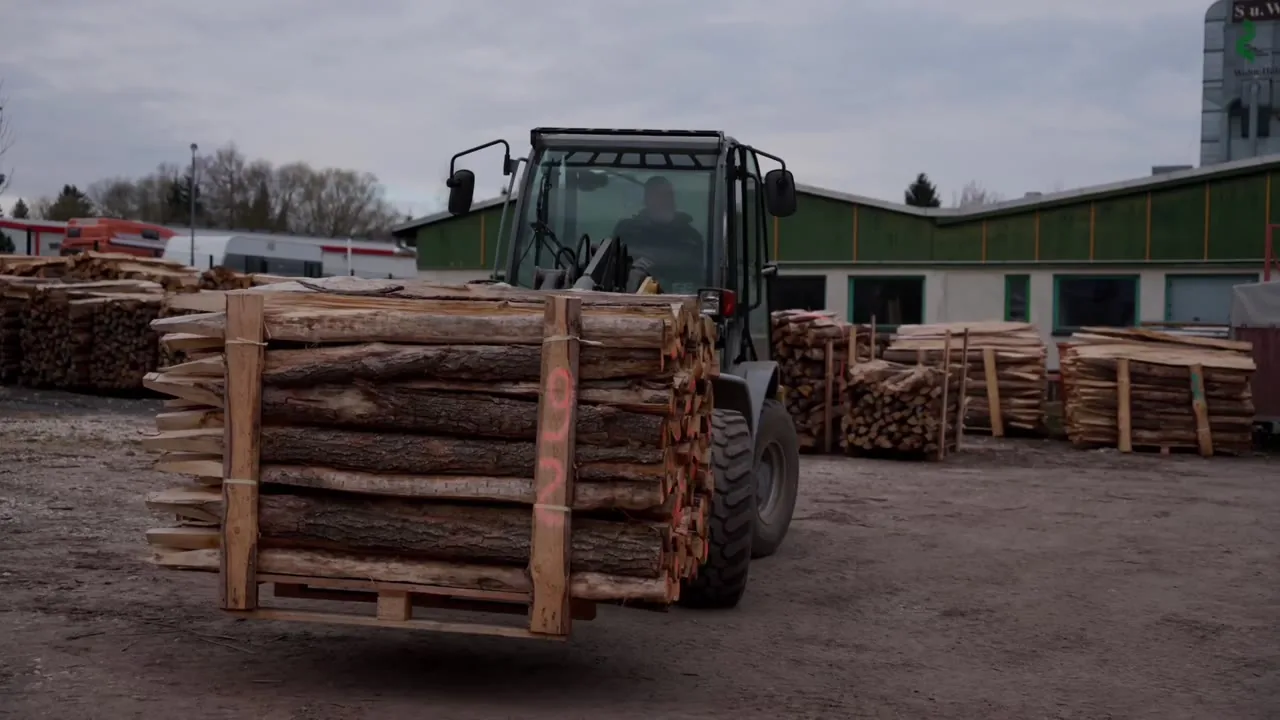
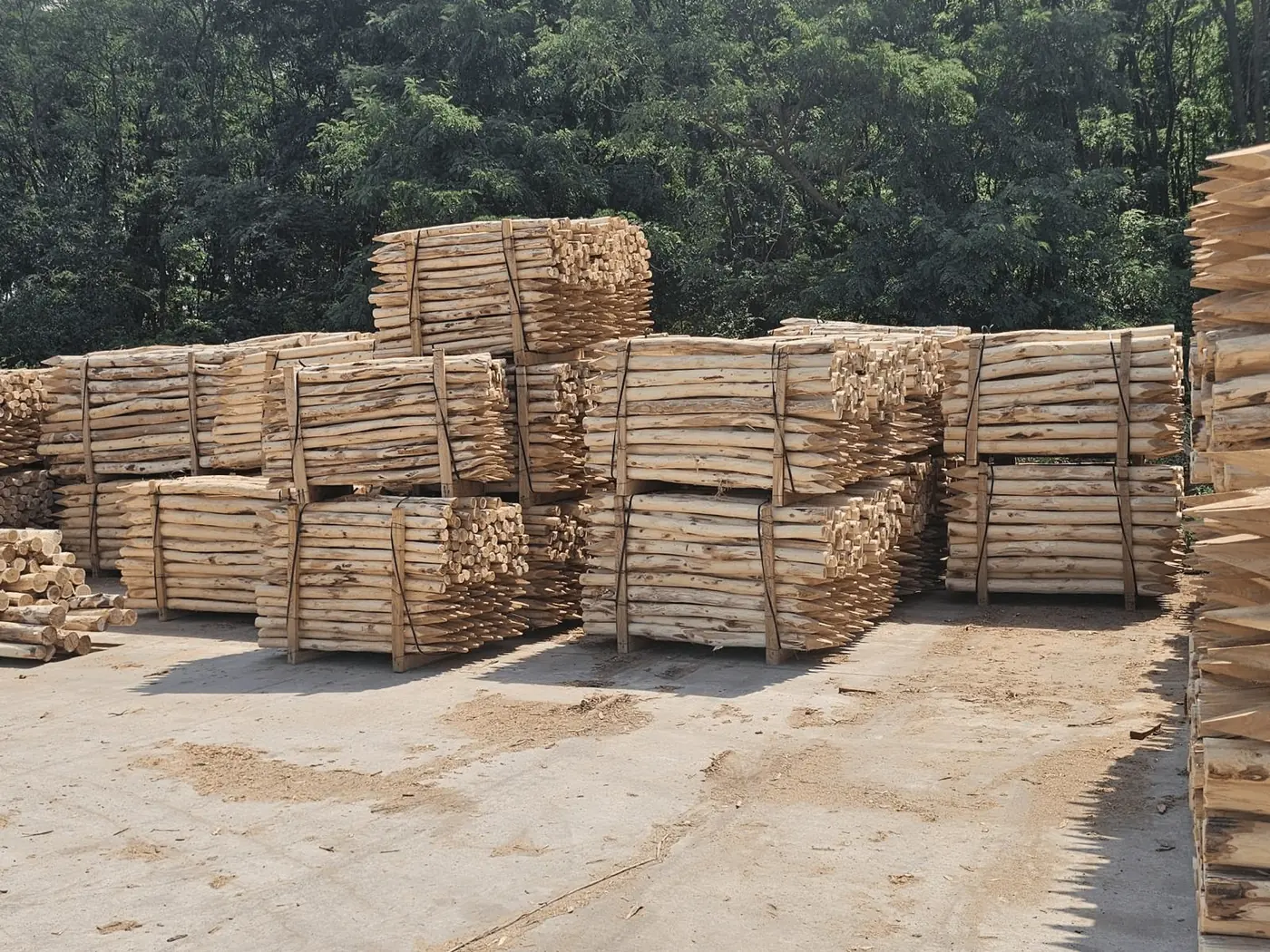
A cleft post is produced by splitting a log section along the natural grain. That gives it a naturally irregular, often wedge-like cross-section and distinguishes it from an evenly round or square sawn post. We stock both shapes in the Stakes & Posts category.
Depending on the log diameter and the post thickness wanted, a log section can be halved, quartered or split further, for example. What that looks like in production is shown in the guide How an oak cleft post is made: from the log to the pallet.
It is exactly this natural shape that is the reason why back width or edge length is used for cleft posts and not simply a diameter.
What is the back width?
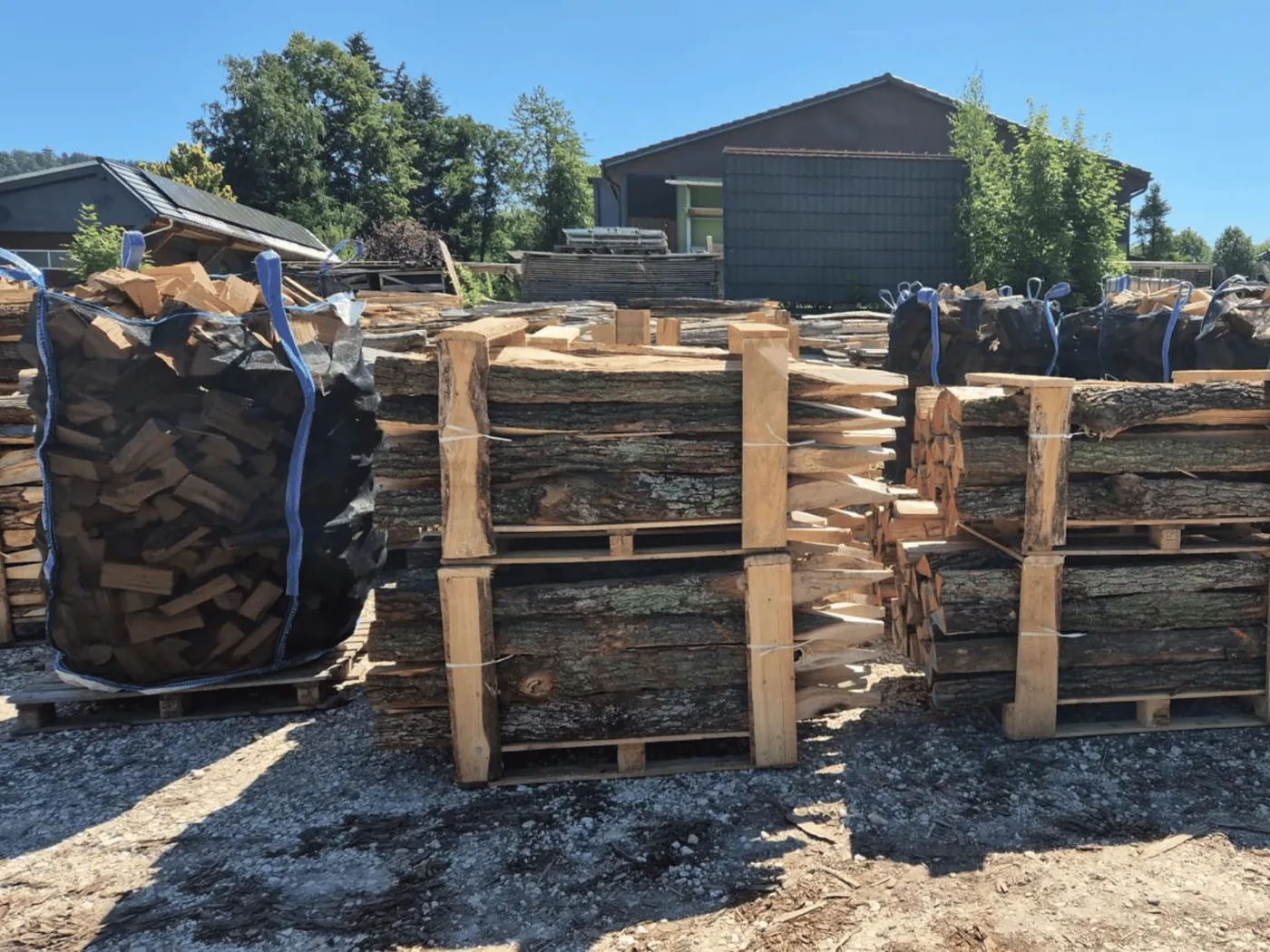
On a cleft post, the back is the outer face that originally belonged to the outside of the log. The back width accordingly describes the width of that face.
With our oak cleft posts there are gradings such as:
- 9 to 13 cm
- 12 to 16 cm
- 15 to 20 cm
What does edge length mean?
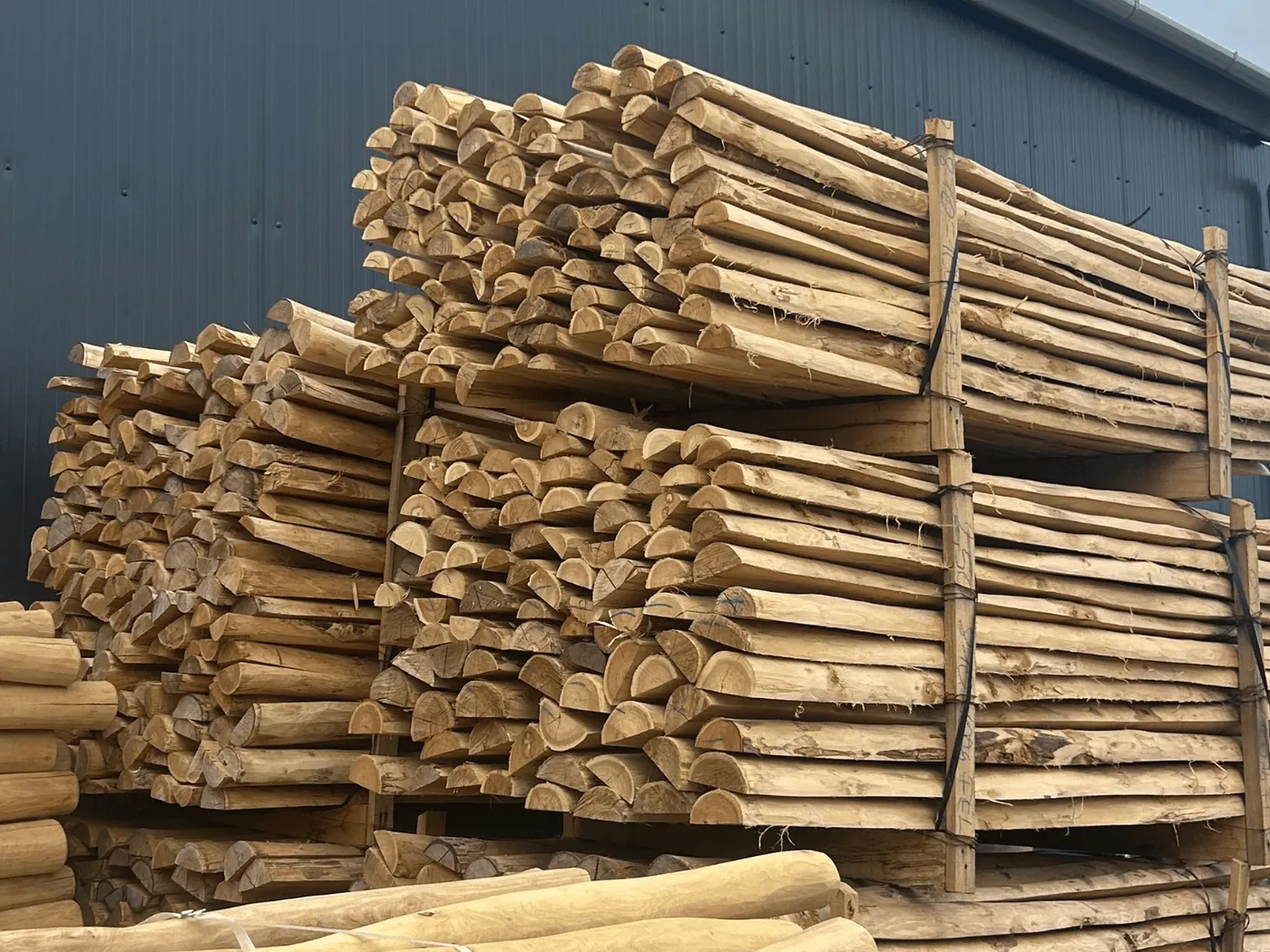
With the edge length, by contrast, the side dimensions of the cleft cross-section are considered.
Put simply:
- Back width
the width of the outer face of the log. - Edge length
the side dimension of the cleft face. - Diameter
the size of an approximately round post.
With our robinia cleft posts the grading is therefore given by the edge size, for example 8 to 10 cm or 10 to 12 cm. What is meant is the same side dimension.
Back width and edge length are therefore not the same measurement, but in practice they serve a similar purpose: they give an order of size for the thickness of the cleft post.
How back width and edge length are measured
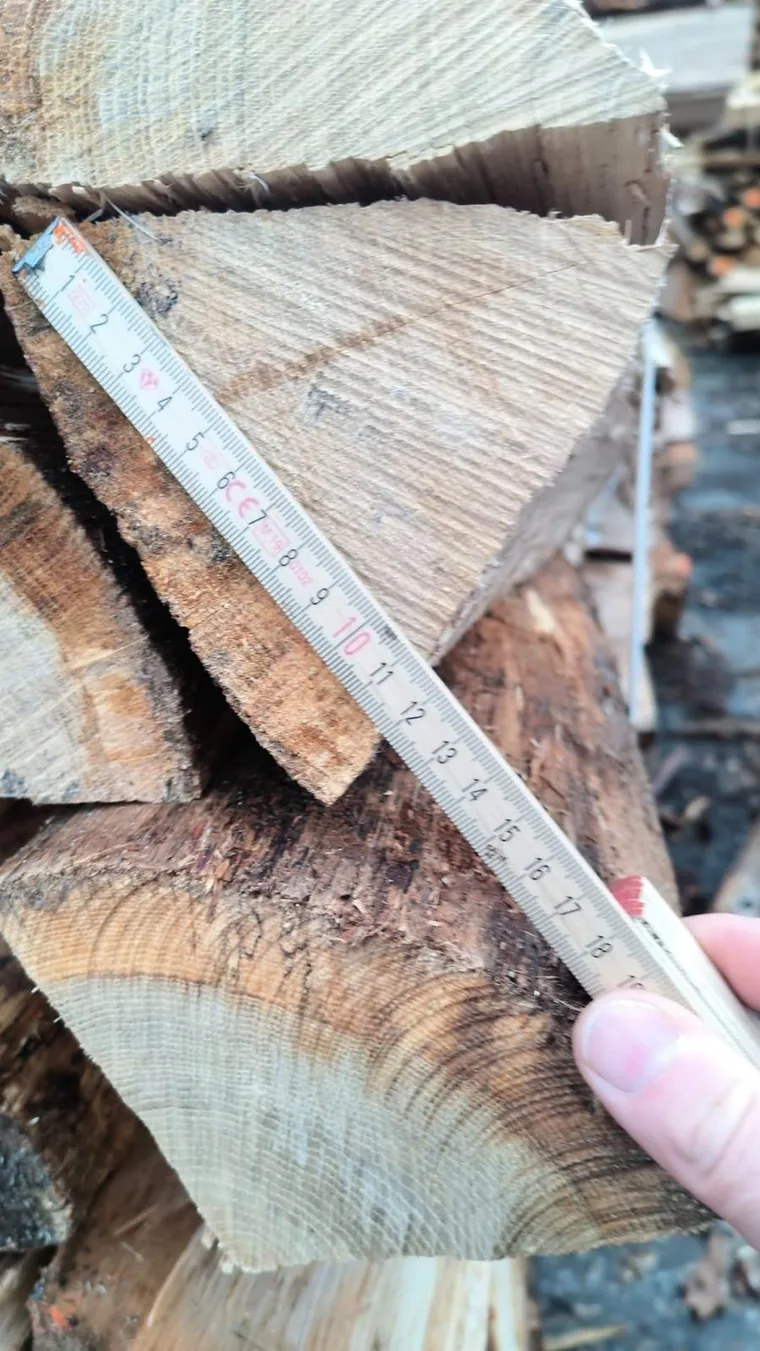
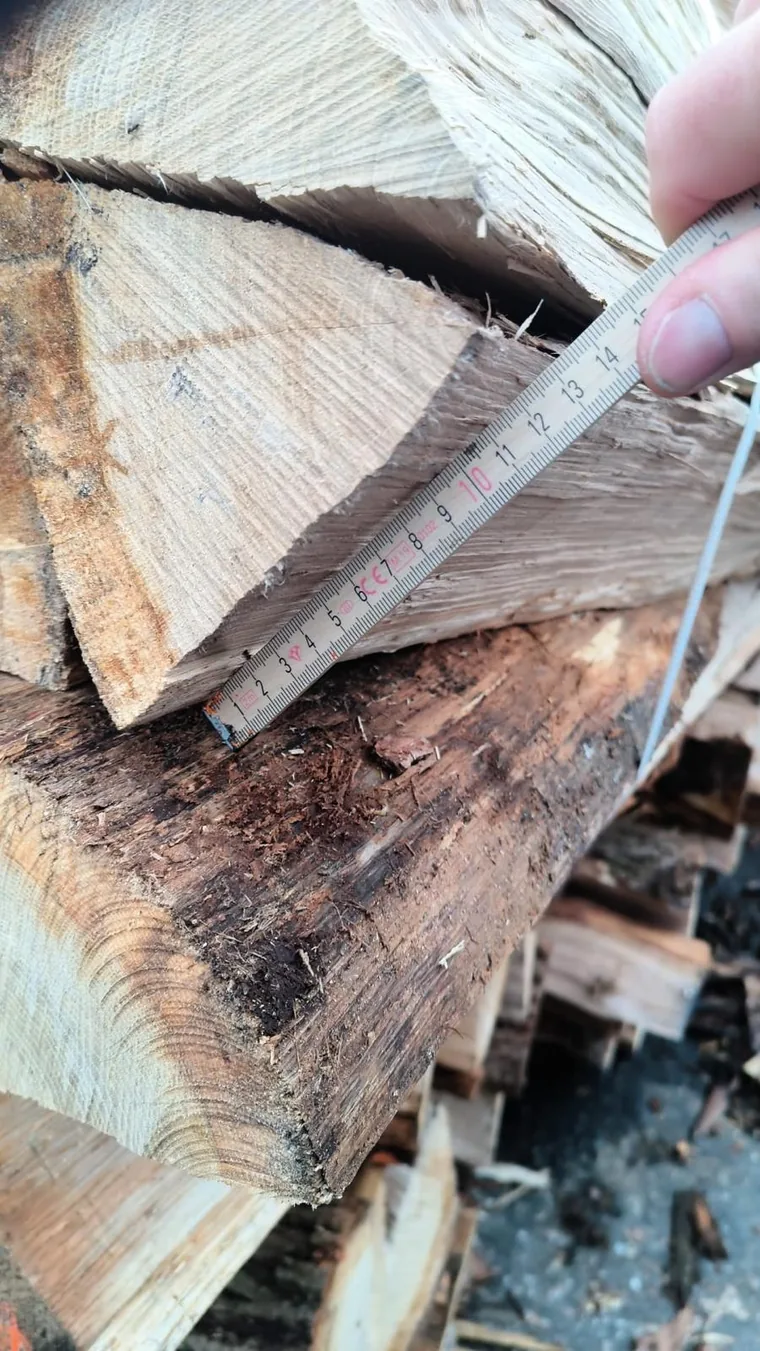
Both photographs show the same stack of posts. The difference is not in the timber but in where the folding rule is placed.
Can back width and edge length be converted?
On a real cleft post, not exactly.
For a rough idea you can consider a perfectly round log quartered exactly through its centre. On this idealised quarter, the two edges are of equal length. If it is additionally assumed that the back width is measured as the straight width between the two outer points, the following orientation results mathematically:
| Back width | Edge length on the ideal quarter | round post of equal area Ø* |
|---|---|---|
| 10 cm | approx. 7 cm | approx. 7 cm |
| 12 cm | approx. 8.5 cm | approx. 8.5 cm |
| 15 cm | approx. 10.5 cm | approx. 10.5 cm |
| 18 cm | approx. 12.5 to 13 cm | approx. 12.5 to 13 cm |
| 20 cm | approx. 14 cm | approx. 14 cm |
*The round post diameter here refers only to an arithmetically equal cross-sectional area. Incidentally, the fact that the two right-hand columns show the same figures is not a transcription error: a quarter circle with radius R has, arithmetically, the same area as a full circle with diameter R.
This table is expressly not a grading or conversion table for real cleft posts. An actual post can differ considerably from it. A log is not perfectly round, the split follows the nature of the timber, and not every post corresponds to a log quartered exactly.
Can a cleft post be compared with a round post?
Only approximately.
A round post with a diameter of 10 cm has a completely different cross-section from a cleft post with a back width of 10 cm. So: 10 cm back width ≠ 10 cm round post diameter.
An arithmetically similar cross-sectional area does not automatically mean that two posts are equivalent in construction terms either.
For ordering, the simplest distinction is therefore:
- Cleft posts
back width or edge length. - Round posts
diameter.
Anyone who wants to know in general when each post shape makes sense will find the guide Cleft post or round post: which shape suits which job?.
Why are there different size specifications at all?
With naturally cleft timber there is no calibrated standard cross-section. In practice, different ways of describing the thickness of a cleft post have therefore become established. Part of the trade works with back widths, other suppliers with edge lengths.
When comparing, the decisive question is therefore always: where on the post was the stated measurement taken?
Only when that is clear can two offers sensibly be compared with each other.
In brief
- Back width
denotes the width of the outer face of a cleft post. - Edge length
denotes the side dimension of the cleft face. - Diameter
is used for round posts.
Back width and edge length both describe the thickness of a cleft post, but they are different measurements. With naturally cleft timber there is no exact general conversion.
Which gradings we stock is given on the product pages in the Stakes & Posts category.