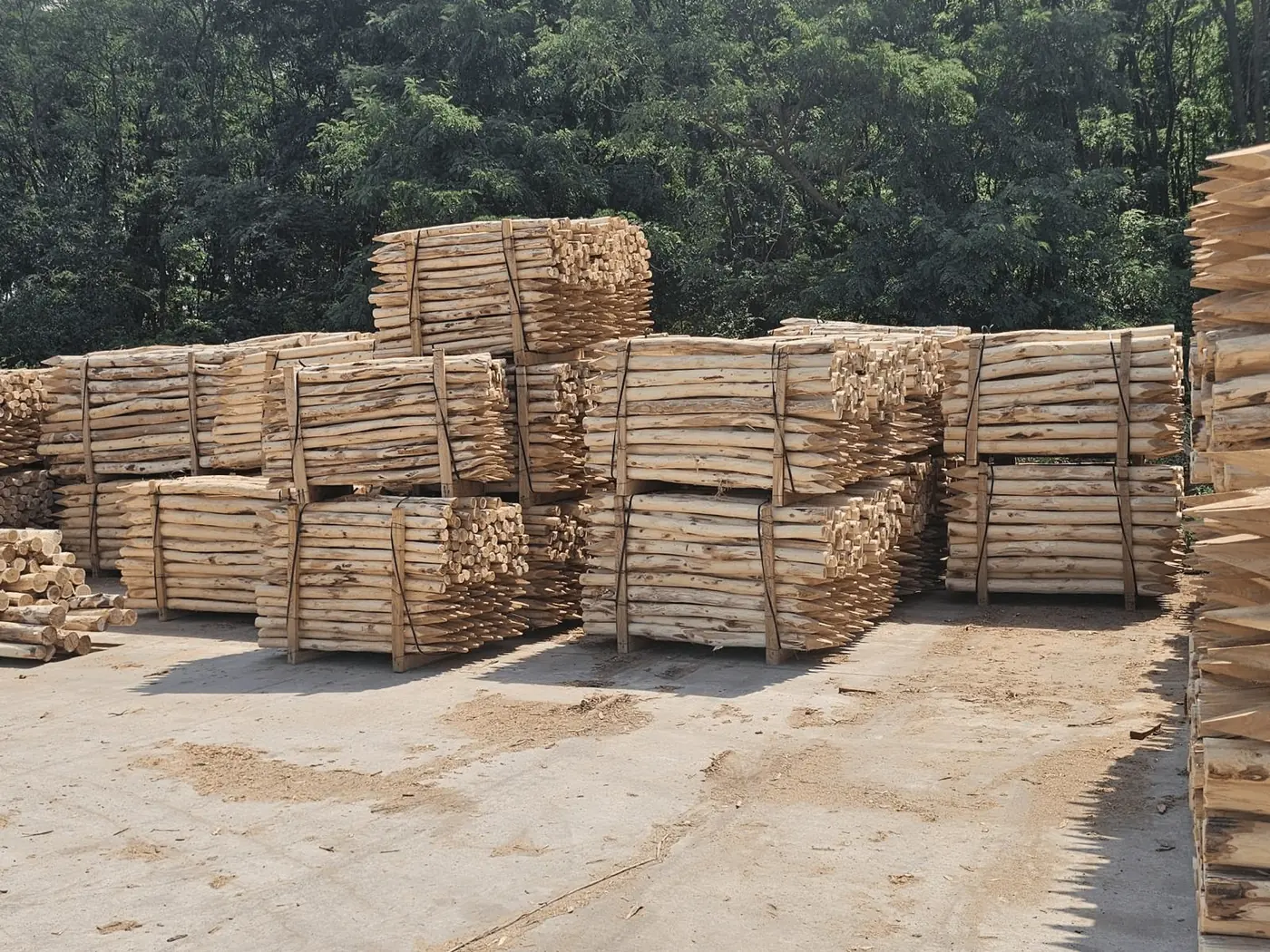

Robinia stakes are often used for pasture fences, game fences and in viticulture and fruit growing. Robinia is hard and heavy, and the heartwood has a high natural durability. Naturally grown stakes can also show slight curves and differing diameters.
What is special about robinia stakes?
When setting them, therefore, it is not only the timber species and the stake length that matter. The setting depth, the stake spacing and the fixing have to suit the fence system, the soil and the terrain.
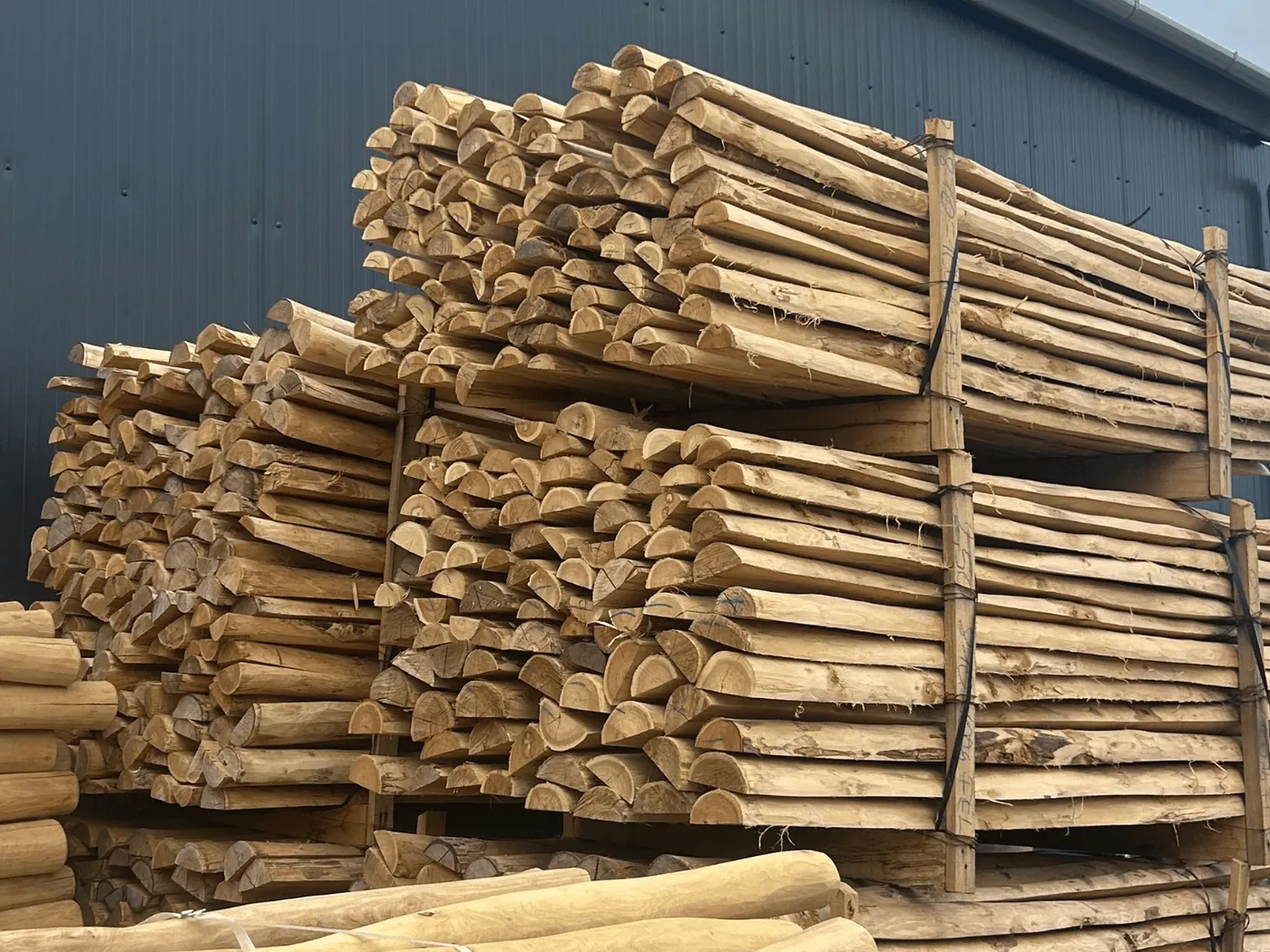
Dimensions and versions are given on the product page Robinia stakes, debarked. As an alternative we also stock Robinia cleft posts; both belong to the Stakes & Posts category.
Robinia is among the hard and heavy European utility timbers. Because of its high hardness, pre-drilling is advisable for screwed and nailed connections.
Naturally grown Robinia stakes, debarked are also not exactly uniform industrial products. Shape, diameter and line can vary from stake to stake. These differences are part of the natural character of the timber.
How deep do robinia stakes need to be set?
There is no special setting depth just for robinia stakes. As a rough guide value, about 50 to 70 cm of setting depth is often assumed for timber posts depending on the fence height. Corresponding guide values are also given by the Deutscher Holzschutzverband – Pfosten und Zäune montieren.
Another widespread rule of thumb says that about one third of the total stake length should stand in the ground. This rule of thumb is also found, for example, in the recommendations on animal-appropriate horse keeping from the Ministerium Rheinland-Pfalz – Empfehlungen zur Pferdehaltung.
These figures are not fixed requirements, however. The setting depth actually needed depends among other things on:
- the above-ground fence height
- the soil conditions
- the type of fence and the intended purpose
- the loading
- the function of the post
- local weather and site conditions
A corner or end post of a tensioned fence, for example, is loaded differently from an ordinary intermediate stake. In loose or weak soil, greater anchoring can likewise be necessary.
50 to 70 cm, or around one third of the stake length, are therefore merely rules of thumb for initial planning and not a blanket installation requirement.
The high natural durability of robinia heartwood therefore does not mean that a robinia stake can be set less deeply.
Further guide values for specific applications are given under Pasture & paddock fencing, Game fencing and Vineyards & orchards.
What post spacing is right?
The stake spacing, too, is not determined by the timber species alone.
A wire or strand fence needs different spacings from a fence with timber rails. With game fences the mesh and the terrain play a part; in viticulture it is the wire frame system in question.
There is therefore no general “robinia stake spacing” that suits every application.
For pasture and paddock fences you can use our pasture fence calculator for a first estimate of quantities. The calculator serves as orientation and is no substitute for project-specific planning.
Robinia stakes: pointed or blunt?
Depending on the version, robinia stakes can be supplied pointed or blunt.
A point makes it easier to drive the stake into suitable soils. Which setting technique makes sense depends, however, on the ground and the stake dimension.
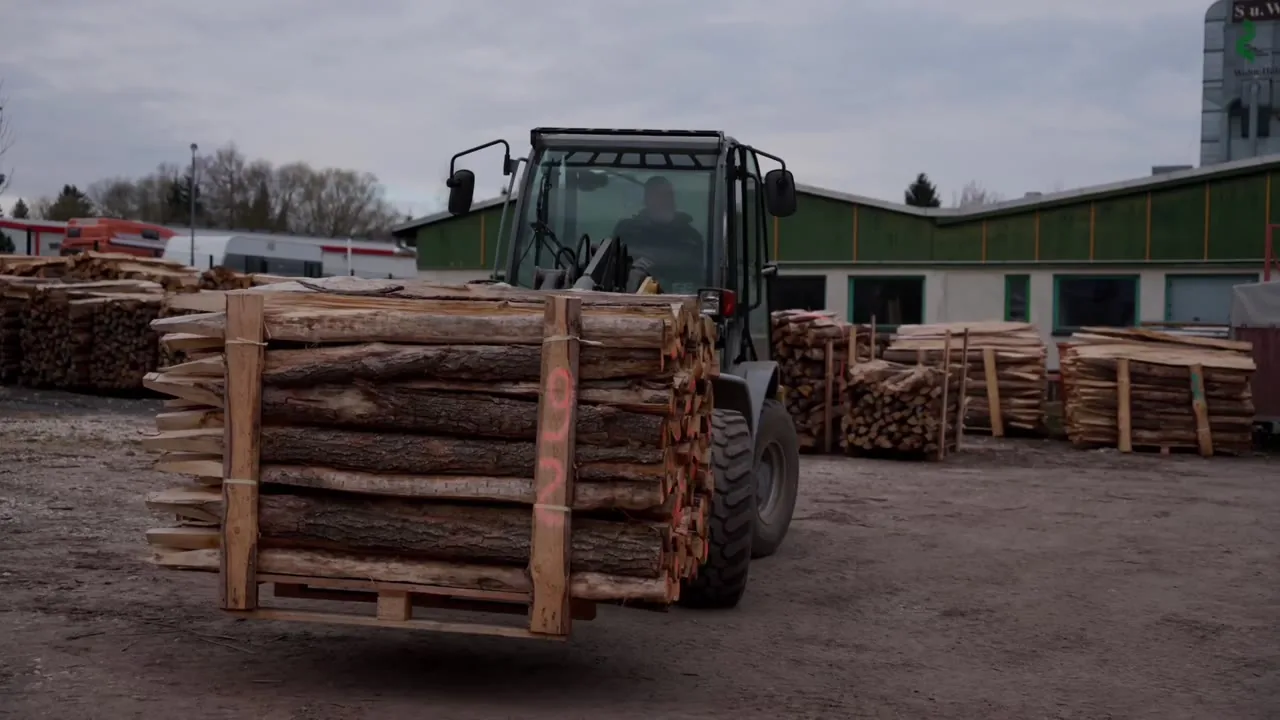
With larger stakes or longer runs of fence, robinia stakes are often driven into the ground with suitable machinery. The stake should be aligned under control while this is done and the head protected from unnecessary damage.
The video below shows, as an example, a robinia stake being driven into the ground by machine.
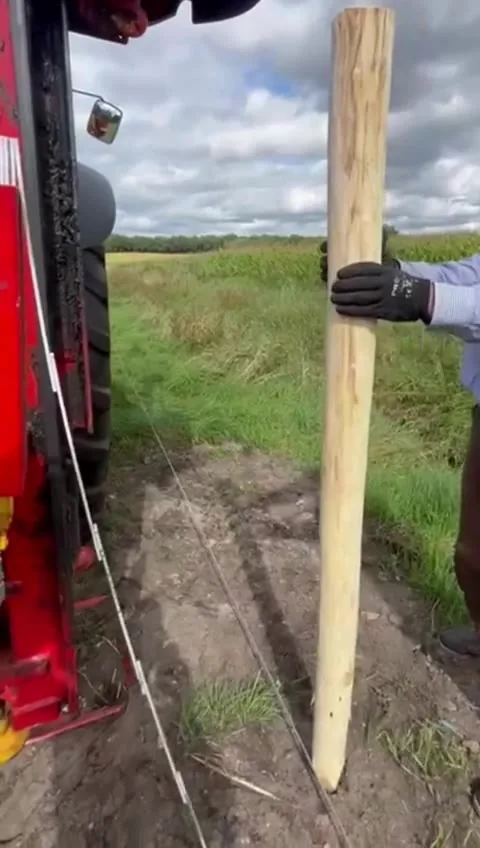
With naturally grown stakes it is also advisable to sort the goods briefly along the fence line before setting them. Slightly curved stakes can then be aligned so that the fence line looks visually calmer.
You will find more on the different post shapes in the guide Cleft post or round post: which shape suits which job?.
Pre-drilling and fixing
Robinia is very hard. Pre-drilling is therefore sensible when screwing or nailing. The Bavarian State Institute of Forestry points out that screwed and nailed connections in robinia should be pre-drilled because of its high hardness. Further details on hardness, working and properties are given by the Bayerische Landesanstalt für Wald und Forstwirtschaft – Das Holz der Robinie.
Which drill diameter and which fixing are used depends on the screw, the fitting and the construction. Blanket figures are not sensible here.
For wire, rails or other fixings, the fence system in question should therefore always be taken into account.
Robinia in ground contact
The heartwood of robinia is assigned to durability class 1–2 under DIN EN 350 and therefore has a high natural durability.
This high natural durability also allows robinia to be used in direct contact with soil and water.
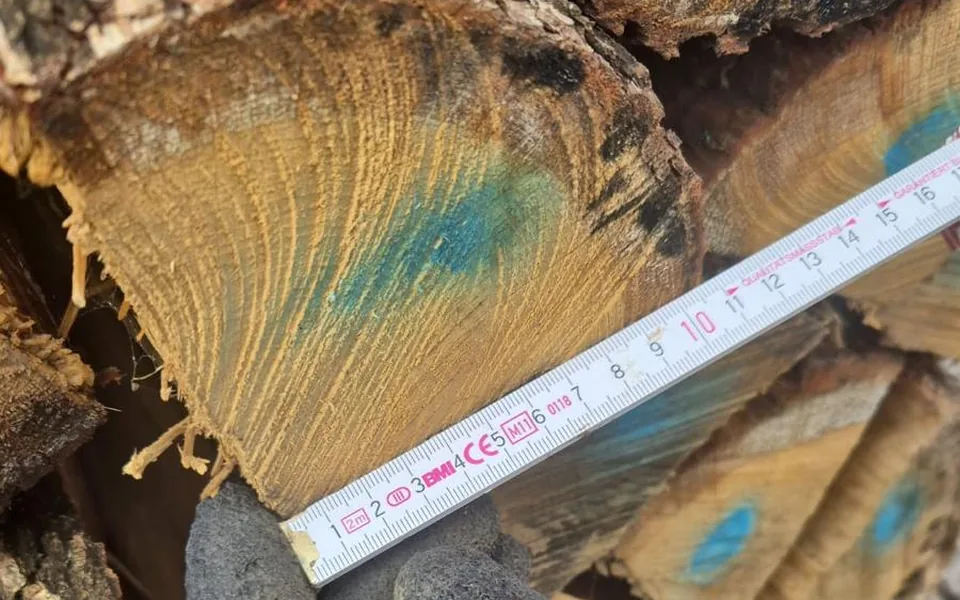
The distinction between heartwood and sapwood matters: the high durability refers to the heartwood and should not be transferred to all parts of the timber across the board.
There can be differences within the heartwood as well. Juvenile timber close to the pith in particular can have a lower natural durability than adult heartwood.
Common mistakes when setting robinia stakes
- Too shallow a setting depth
The durability of the timber is no substitute for sufficient anchoring. - Adopting blanket stake spacings
The spacing has to suit the fence system in question. - Ignoring the naturally grown shape
Slight curves should be taken into account when aligning the fence line. - Screwing without pre-drilling
The high hardness of robinia can make fitting difficult. - Treating natural stakes like exactly uniform ones
Debarked robinia stakes can differ in diameter, shape and line.
Stakes in other timber species and versions are in the Stakes & Posts category.