Cleft post or round post? Both shapes have long been used in fence building, but they differ distinctly in how they are made, in cross-section, appearance and working.
Cleft post and round post: what is the difference?
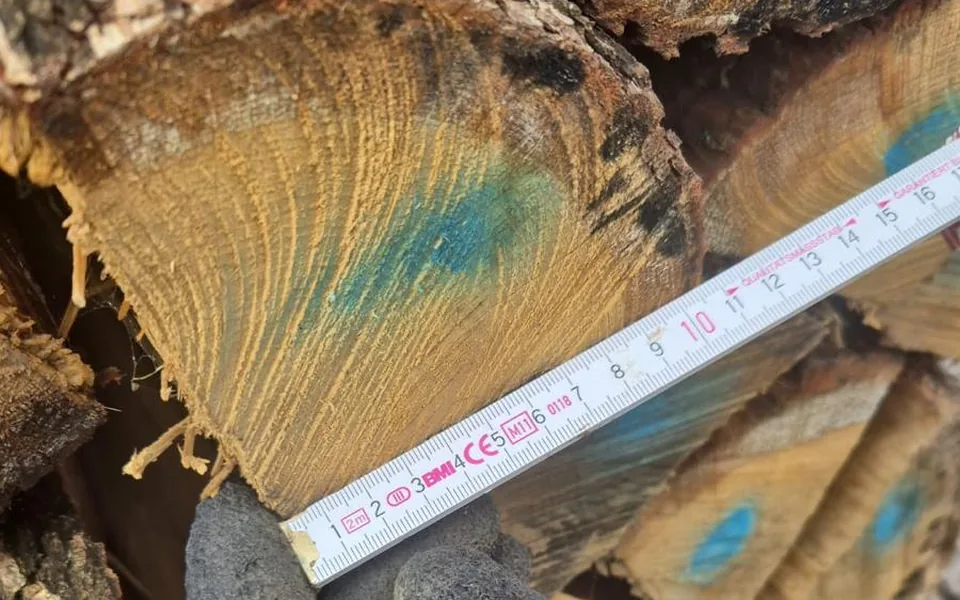
A cleft post is produced by splitting a log section along the natural grain. What this production process looks like from the log to the finished post is shown step by step in the article How an oak cleft post is made.
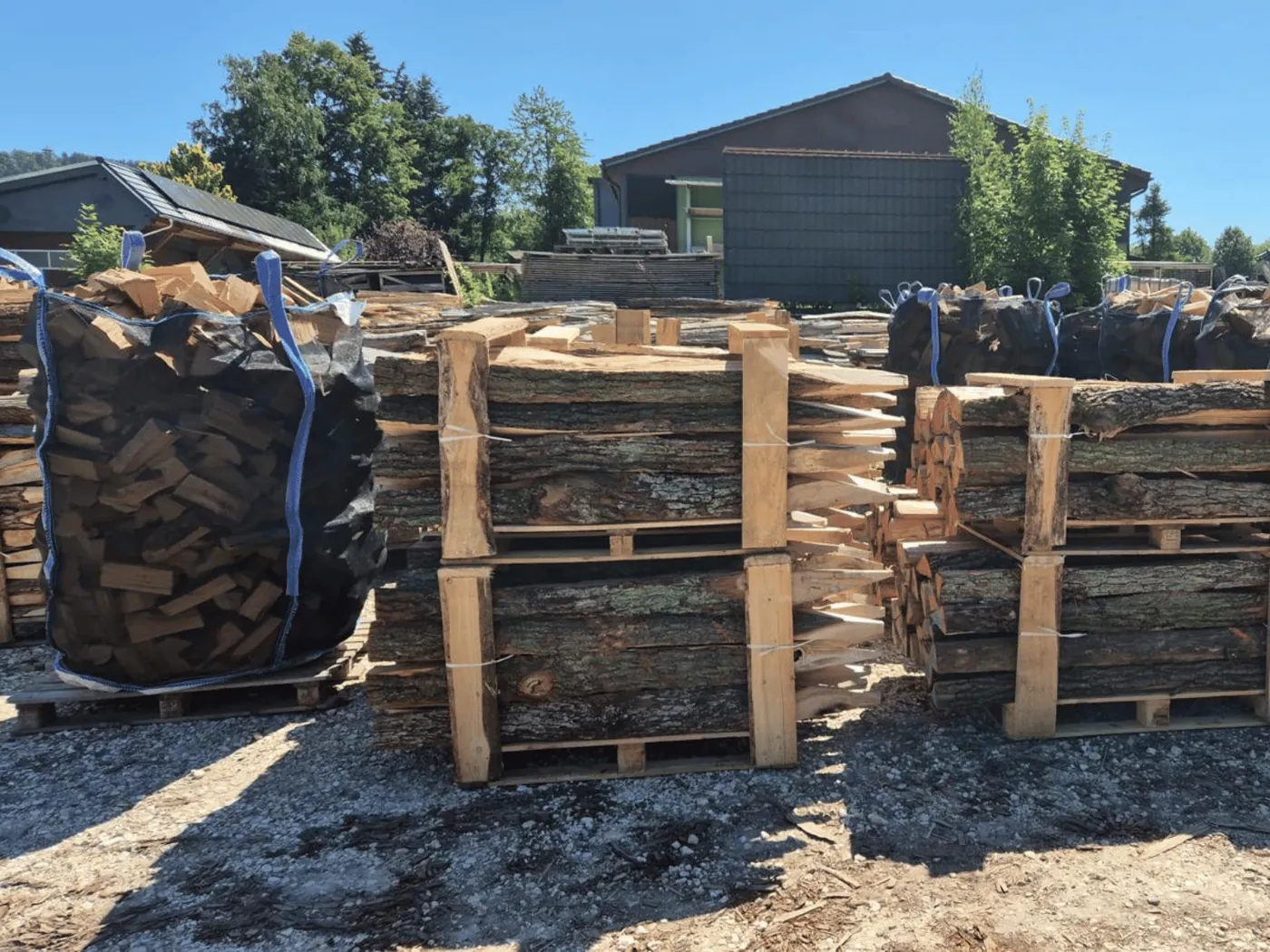
The separation largely follows the natural line of the timber. This produces irregular cross-sections, and no post looks exactly like the next. Typical examples are our Oak cleft posts and Robinia cleft posts.
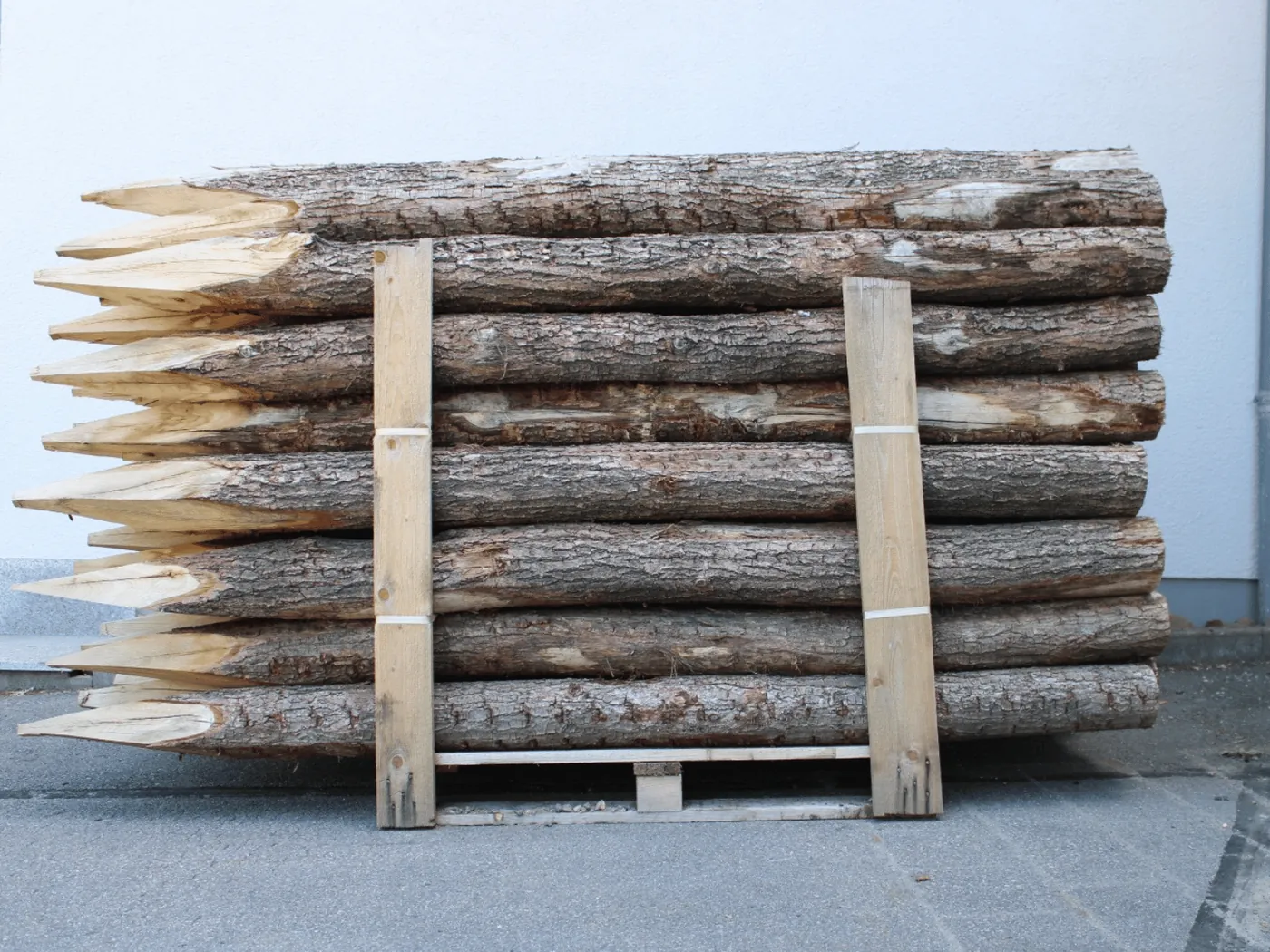
The term round post, by contrast, describes only the round shape to begin with. The terms round timber post or simply round fence post are also common. As a basic rule, all round posts that are not machine-rounded are naturally grown; the difference lies in how they are processed. Our oak round posts keep their bark and are only pointed. With our robinia stakes, the bark is removed and the natural shape of the log is retained. Our softwood stakes, on the other hand, are machine-rounded and thereby given an even diameter.
So:
- Cleft post
Cleft from the log, with an irregular cross-section. - Round post with bark
Naturally grown and only pointed; the bark stays on the post. Example: our oak round posts. - Debarked round post
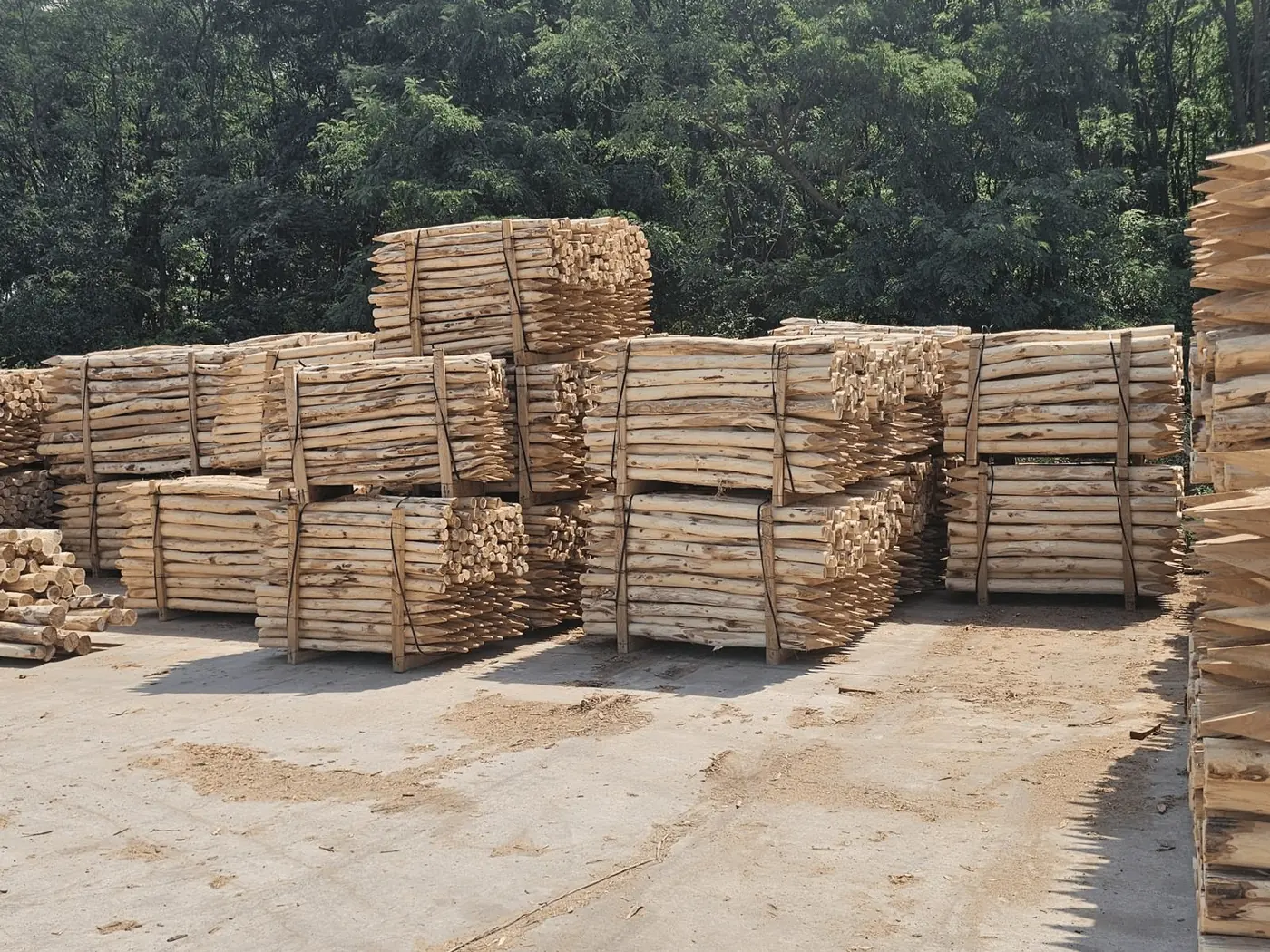
Naturally grown; the bark is removed and the shape of the log is retained. Example: our robinia stakes. - Machine-rounded round post
Machined to an even diameter. Example: our softwood stakes.
A round post is therefore not automatically machine-rounded or calibrated. Which shape suits better depends less on a blanket “better or worse” than on the actual fence, the appearance wanted, the fixing and the dimensions needed. The whole range is in the Stakes & Posts category.
What happens to the grain when timber is cleft?
Timber has a natural grain. When cleaving, the separation largely finds its way along this structure, and the shape of the finished post is therefore partly determined by the way the log grew. When sawing or machine-rounding, by contrast, the geometry wanted is worked out independently of that.
That is exactly why a cleft post looks distinctly different from a machine-rounded one. With a cleft post, the natural differences in the starting material remain visible, whereas machine-rounded stock turns out considerably more even.
No blanket statement about durability should be derived from the grain alone, however. How long a timber stake actually lasts in ground contact depends among other things on the timber species, the proportions of timber, the dimension, the moisture loading and the site. The shape alone does not decide that.
Back width and edge length: how cleft posts are measured
With a machine-rounded round post a defined diameter can be produced. A cleft post, by contrast, follows the log and the line of the split and has neither an evenly round nor a rectangular cross-section. Its sizes are therefore stated differently.
The back width describes the width of the outer face of the cleft post, the edge lengths the other faces of the natural cleft cross-section. That makes it possible to assign every post to a size class, even though it is individually shaped. What the two sizes mean exactly is explained in the article Back width and edge length on cleft posts.
Depending on the post length we stock different gradings. With the oak cleft posts the back widths range, depending on the version, from about 5–10 cm to 15–20 cm, for example. Within a class, natural deviations remain; that is not a fault but typical of cleft stock.
A post from a grading of 9–13 cm back width therefore does not have a constant cross-section of 9 × 13 cm. The figure denotes the size class. The combinations of length and back width available are given in the size table on the respective product page.
Fixing wire, mesh, boards and rails
Both shapes are used for pasture, paddock and game fences. Because of their natural cross-section, cleft posts often have flatter faces. These can be practical when fixing wire, strand or stock fencing.
Round posts, by contrast, have a round outer contour. Machine-rounded stock in particular is more even in diameter and shape and can be used repeatably along long runs of fence.
As soon as horizontal boards or rails are fitted, the bearing surface becomes more important. The flat faces of a cleft post are not the same size or in the same place on every post, and naturally grown round posts are not completely even either. Machine-rounded round posts offer the more predictable diameter here.
For fences with rails, therefore, it is not “round” or “cleft” alone that decides, but the stake dimension, the bearing surface, the fixing and the construction.
Uniform or naturally grown: the look
In appearance the two post shapes differ particularly clearly. Cleft posts look original: differing widths, edges and shapes remain visible, and along longer runs of fence in particular this produces a lively appearance.
Machine-rounded round posts look considerably more even, and the recurring round cross-section produces a calmer line. Naturally grown round posts sit visually in between.
Which look suits better is a question of design. In forestry, in a classic pasture fence or with near-natural enclosures, the natural shape is often chosen deliberately.
Cleft post or round post by application
The overview below is no substitute for individual planning, but it shows which properties often play a part in the various applications.
| Use | Shape that often suits | What matters |
|---|---|---|
| Pasture fence with wire or strand | Cleft post or round post | Timber species, dimension, fixing and the appearance wanted |
| Paddock fence with rails | Round post or cleft post with a suitable bearing surface | Rail bearing, fixing and construction |
| Game fencing | Cleft post or round post | sufficient length and dimension as well as suitable fixing of the mesh |
| Vineyards and orchards | cleft or round post depending on the support system | Dimensions, row layout and the support system in question |
| Tree tying and planting | often even round posts | Dimensions that can be planned and matching to the securing system |
| Visible garden fence | according to design preference | cleft looks more natural, even round stock calmer |
More on the areas of use is given under Pasture & paddock fencing, Game fencing, Vineyards & orchards and Garden fencing & landscaping.
Which timber species are available as cleft and round posts?
Alongside the post shape, the timber species plays a role that is at least as important. With us you will find, for example:
- Oak cleft posts
Naturally cleft posts in oak in various lengths and back widths. - Oak round posts
Naturally grown round posts in oak. Diameter and line can vary from post to post. - Robinia cleft posts
Cleft robinia posts with a natural cross-section, likewise graded by size. - Robinia stakes, debarked
Naturally grown robinia stakes in a debarked version. - Softwood stakes
Machine-rounded round posts in pine, spruce or fir, untreated and, depending on the version, pressure-treated in green or brown.
When comparing offers it is therefore worth looking not only at the terms round post or cleft post. Timber species, machining and dimension are just as important. All post shapes and timber species are in the Stakes & Posts category.
In short: when to use a cleft post and when a round post
Cleft posts often suit well if …
- a natural, traditional look is wanted,
- dimensional deviations within a grading are accepted,
- naturally flatter faces can be used for fixings,
- oak or robinia in a cleft form is wanted.
Round posts often suit well if …
- a more even fence line is wanted,
- more defined diameters matter,
- machine-rounded stock is needed,
- a round, or naturally grown, shape suits the project better visually.
The decisive question is therefore not: which post is fundamentally better? But: which timber species, post shape and dimension suit my fence?