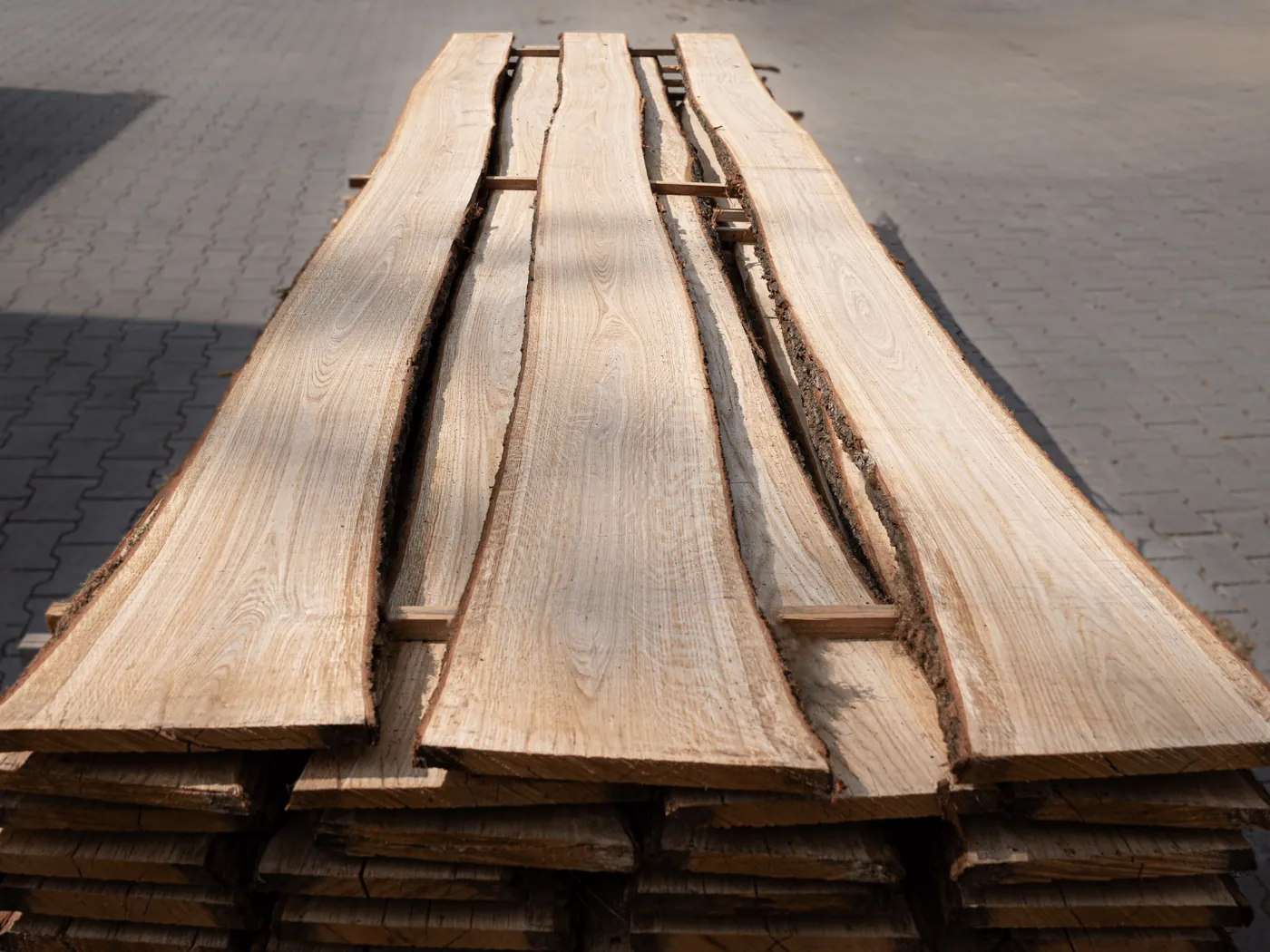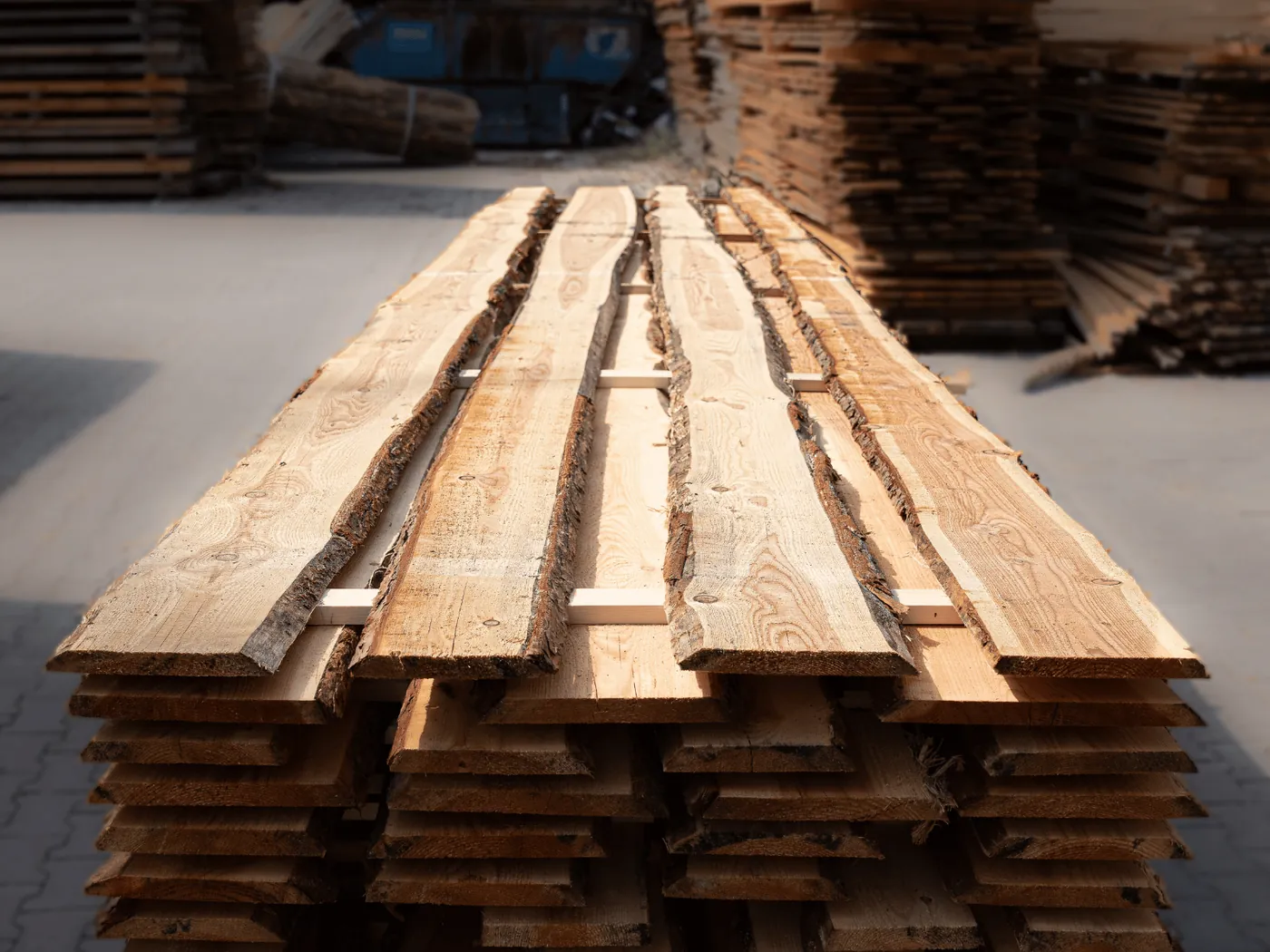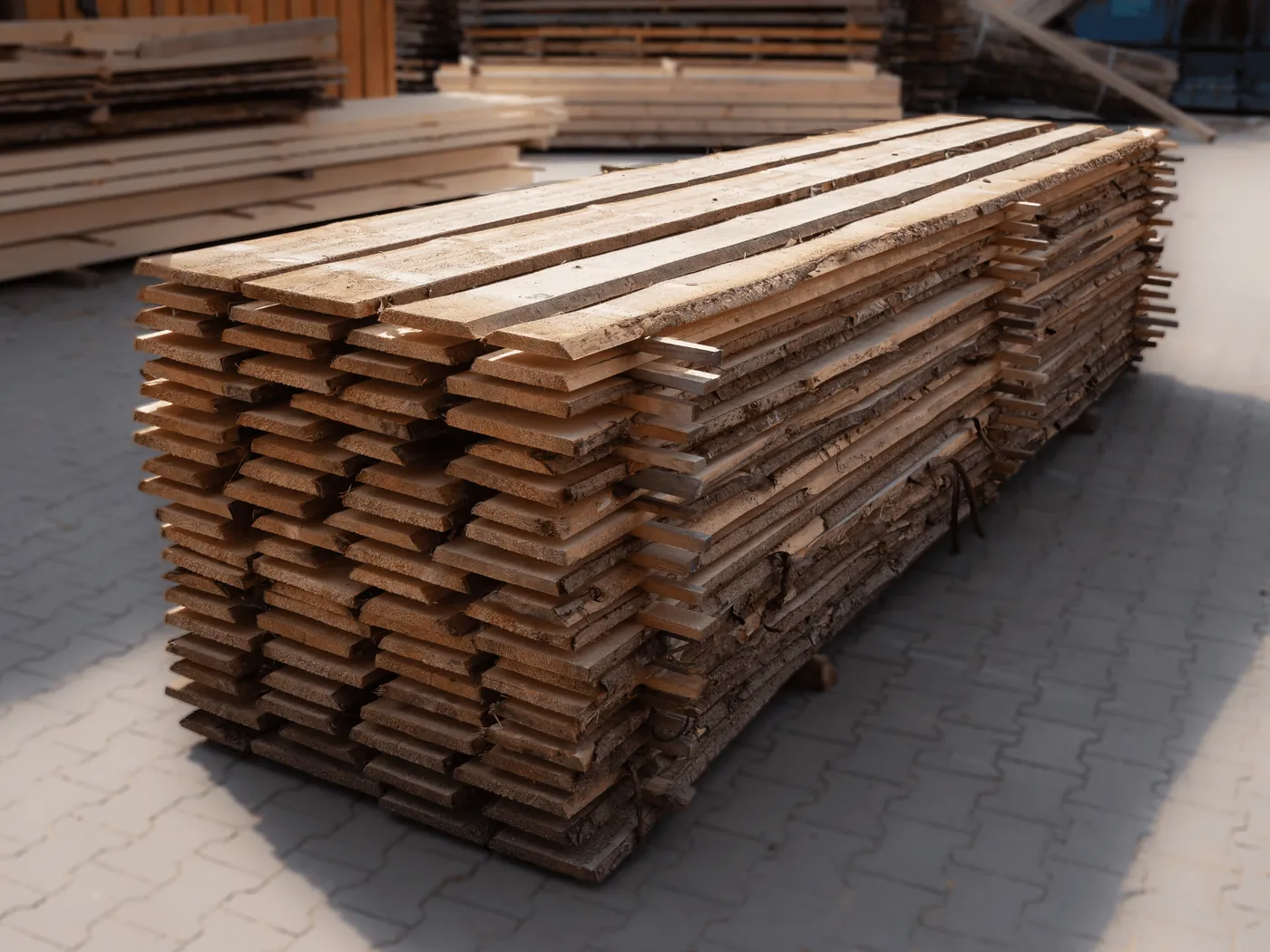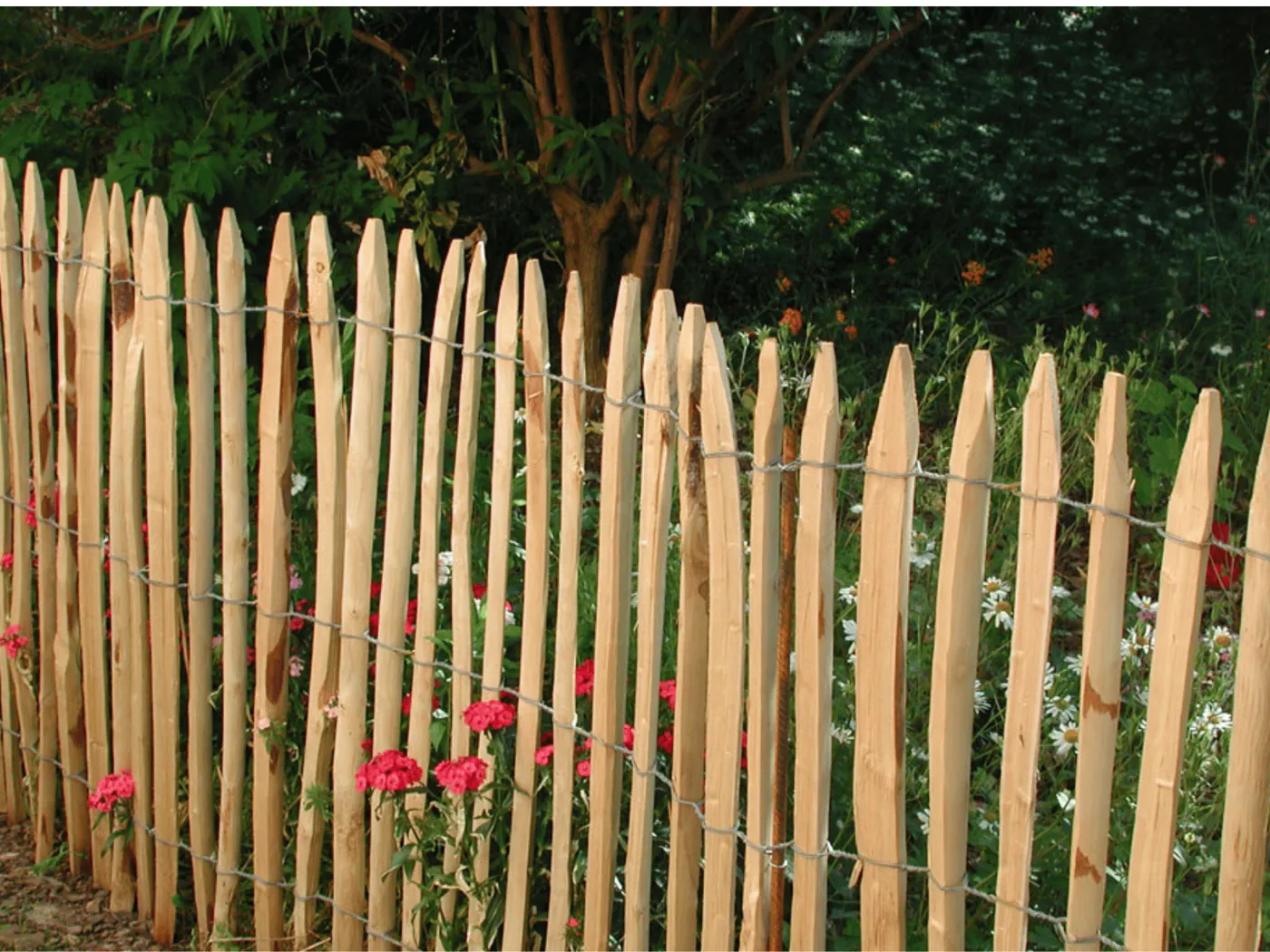
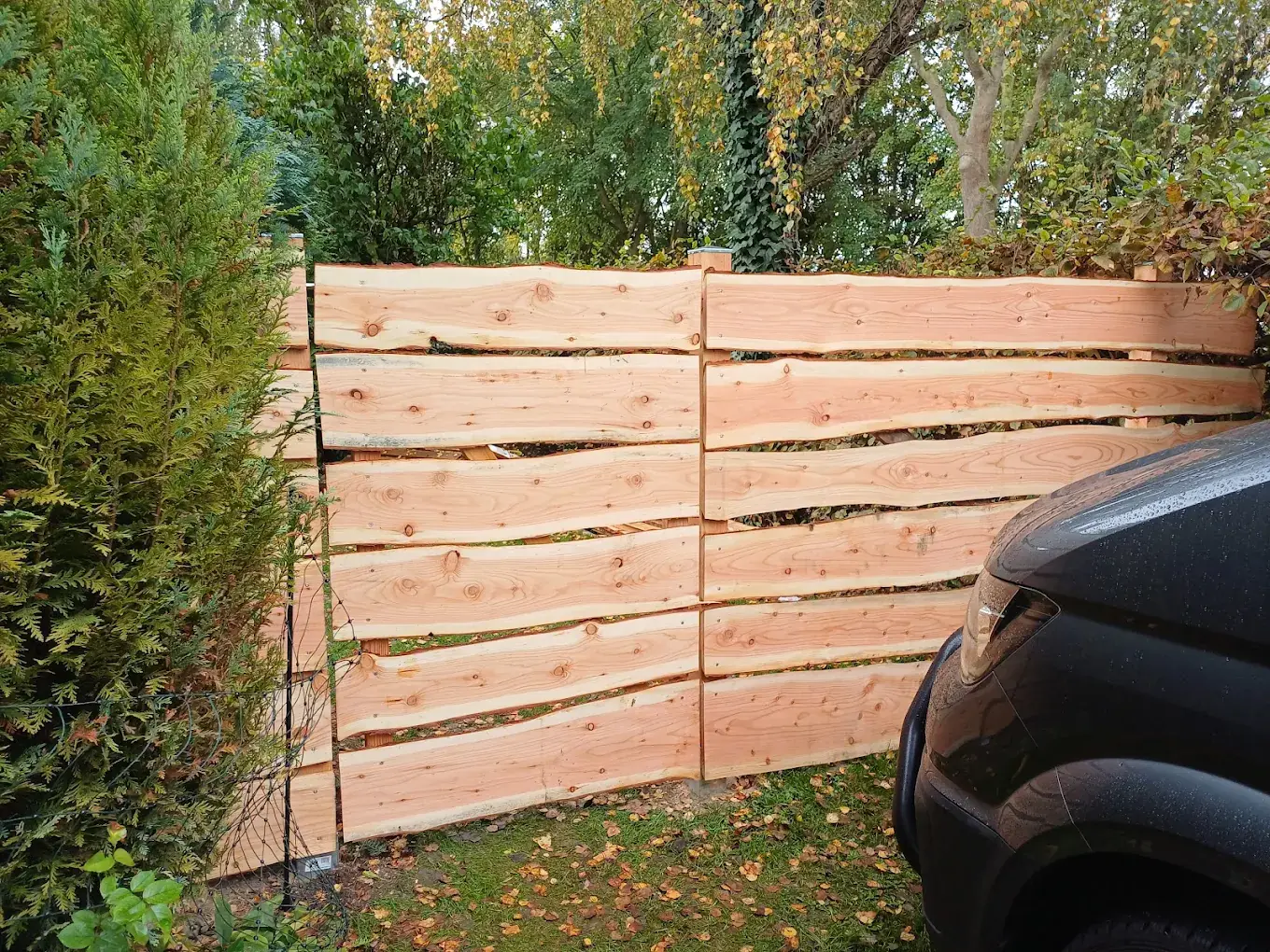
A Bonanza fence, also called a Ranger fence, consists of wide horizontal fence boards with a natural waney edge. This produces the typical rustic look in which the width and the line of the edge are deliberately allowed to vary from board to board.
What is a Bonanza fence?
We offer a choice of three timber species: Oak Bonanza fence & side boards, Larch Bonanza fence & side boards and Spruce Bonanza fence. They differ above all in price level, surface, natural resistance and the versions available.
With a classic Bonanza or Ranger fence, wide boards are fixed horizontally to suitable timber posts. The boards are listed with the other fence timber in the Fences & Fence Posts category.
Our Bonanza fence boards are approx. 24 mm thick and predominantly 15 to 25 cm wide. Because of the natural shape of the log, individual boards can turn out narrower or wider.
Standard lengths are:
- 2,00 m
- 2,50 m
- 3,00 m
- 4,00 m
- 5,00 m
Characteristic is the natural waney edge, which runs a little differently on every board.
Oak, larch or spruce?
| Timber species | Price level | Natural resistance | Surface | Side boards |
|---|---|---|---|---|
| Oak | higher | high | rough-sawn | yes, considerably cheaper |
| Larch | medium | higher than spruce | rough-sawn or planed | yes, considerably cheaper |
| Spruce | cheaper | lower | rough-sawn, planed at extra cost | no |
The table is deliberately not a statement about service life. How a timber fence develops outdoors depends substantially on the construction, the weathering and the moisture loading.
In brief: with the regular Ranger fence boards, oak is the highest-quality and most expensive option, larch sits in the middle and spruce is the cheapest.
The side boards in oak and larch are each considerably below that. They are therefore the most economical way to build a Bonanza fence – and the route by which oak, too, moves into an affordable price range.
Bonanza fence in oak
Oak Bonanza fence & side boards is the strongest of the three timber species. As a regular Ranger fence board it is the highest in price; as side boards, by contrast, it is very affordable.
The Ranger fence boards in German oak are offered rough-sawn with a natural waney edge. Alongside those we stock oak side boards from the outer areas of the log.
These side boards arise anyway when the logs are cut and are therefore offered considerably cheaper than the regular Ranger boards. With oak in particular the gap is large: anyone who has so far ruled the species out because of its price level can still get an oak fence via the side boards.
With side boards, width, shape and the line of the edge can vary more. Boards with and without a waney edge may be included.
The natural tannins in oak should also be borne in mind: in combination with moisture and metals containing iron, dark discolouration can occur.
Bonanza fence in larch
Larch Bonanza fence & side boards offers a good middle way between price, appearance and natural resistance.
The regular Ranger fence boards in German larch are available rough-sawn or planed. In addition we stock larch side boards, offered rough-sawn.
Left natural, larch changes colour over time under weathering and can develop a grey patina.
Bonanza fence in spruce
Spruce Bonanza fence is the most economical of the three options.
The boards in German spruce are supplied rough-sawn with a natural waney edge as standard. On request a planed version is possible at extra cost.
We do not offer separate side boards in spruce.
Since spruce has a lower natural resistance than oak or larch, suitable design detailing and the ability to dry out quickly are particularly important.
Ranger fence boards or side boards?
With oak and larch there are two different options.
Ranger fence boards are graded more specifically for the typical Bonanza fence appearance and have the natural waney edge as their characteristic feature.
Side boards arise when cutting from the outer areas of the log. Widths, shapes and edges can vary more, which is why they are particularly interesting for deliberately natural and irregular fence appearances.
Because this timber arises anyway when cutting, we offer it considerably cheaper than the regular Ranger boards. For a rustic fence appearance, side boards are therefore the most economical choice – in larch as in oak.
With the Spruce Bonanza fence there are only the regular Ranger fence boards.
Timber protection, stain and waney edge
The Bonanza boards can in principle be painted, oiled or treated with a suitable timber preservative. What matters is to follow the manufacturer's instructions for the coating system in question and to prepare the timber surface accordingly.
On boards with a natural waney edge, remains of bark or inner bark may still be present. These are part of the rustic look, but they are not permanently bonded to the timber. Through drying, weathering and the natural movement of the timber they can come away over time and partly fall off.
If the surface is to be coated, it is therefore advisable to remove loose pieces of bark and inner bark beforehand. Coating directly onto loose bark or inner bark makes little sense, since these layers can later come away along with the paint.
The actual natural timber edge remains – what can change is above all the remains of bark and inner bark adhering to it.
Which posts go with it?
Which posts are used depends on the fence height, the soil, the construction and the appearance wanted.
Depending on the project, Oak posts, Oak round posts, Robinia stakes, debarked or Softwood stakes come into question, for example.
For garden fences built in the classic way, Larch fence posts and Spruce fence posts are also available.
We explain more about the different post shapes in the guide Cleft post or round post: which shape suits which job?.
Example of a simple material list
For a Bonanza fence you essentially need:
- Posts
They form the basic grid of the fence. - Bonanza fence boards
Depending on the construction wanted, two or more horizontal rows are fitted. - Suitable fixings
Choice and dimension depend on the timber species, the posts and the construction.
For a 10 m run of fence with two rows of boards you first need about 20 linear metres of boards. Added to that are the posts and, where appropriate, a reserve for cutting and bay layout.
For a first overview of quantities the pasture fence calculator can be used. It serves as orientation and is no substitute for project-specific planning.
- 1Enter the fence length
- 2Define the fence construction
- 3Estimate the material requirement
The pasture fence calculator helps with a first overview of quantities for boards, rails and posts.
To the pasture fence calculator A guide only – no substitute for project-specific planning.Building a Bonanza fence: the basic principle
The build can be reduced to four steps:
- Set out the fence line
Determine the run, corners, gates and post positions. - Set the posts
Adjust the setting depth and spacing to the construction, the soil and the loading. - Pre-sort the boards
Distribute widths and the line of the waney edge roughly before fitting. - Fix the boards
Fit the horizontal boards to the posts with suitable fixings.
You will find further notes on garden and property fences under Garden fencing & landscaping, and information for pastures and paddocks under Pasture & paddock fencing.
Design detailing for durability
Whatever the timber species, one rule applies: water should be able to run off as quickly as possible and the timber should then be able to dry out again.
Permanent pockets of moisture should be avoided by design. This design detailing has a considerable influence on how a timber fence develops outdoors.
Further technical information: Umweltbundesamt – Holzschutzmittel und konstruktiver Holzschutz
Which timber species offers the best value?
- Oak
As a regular Ranger fence board the highest price level, but a particularly high-quality and strong version. As side boards considerably cheaper. - Larch
A good middle way between price, appearance and natural resistance. - Spruce
The cheapest of the three timber species for the regular Ranger fence board and interesting for fence projects planned on a budget. The construction and the moisture loading should be given particular attention. - Side boards in oak or larch
They arise anyway when cutting and are therefore the cheapest option of all. Widths and edges vary more; anyone who wants the rustic fence appearance anyway gets the best ratio of price to fence area here.
Posts, rails and further fence timbers for the build are in the Fences & Fence Posts category.