Anyone looking for timber cladding for a facade, a gable, a soffit or other timber linings often faces the same question: larch or spruce?
Spruce and larch cladding compared
Both species are suitable for cladding boards, but they differ in natural resistance, appearance and price. Spruce is usually the more economical option. Larch is higher in price but has a higher natural resistance to weathering.
You will find both options with us as spruce cladding and larch cladding – each rough-sawn or planed, listed in the Sawn & Round Timber category.
| Characteristic | Spruce | Larch |
|---|---|---|
| Colour | light, whitish to yellowish | warmer, yellowish to reddish brown |
| Natural resistance | lower | higher |
| Outdoors | design detailing particularly important | often chosen for external cladding |
| Surface available from us | rough-sawn or planed | rough-sawn or planed |
| Price level | usually cheaper | usually higher |
| Typical decision | the economical solution | higher natural resistance and a more distinctive look |
The table is not a forecast of service life. How timber cladding develops outdoors depends substantially on the construction, the weathering and the moisture loading.
Spruce for cladding: light and economical
Spruce is light to begin with and has a rather restrained timber character. The Bavarian State Institute of Forestry describes spruce as a highly valued building and working timber with an advantageous ratio of strength to mass. At the same time spruce has only a low natural durability and, unprotected, is not very weather-resistant.
With spruce cladding outdoors, good design detailing is therefore particularly important: water should if possible not stand on the timber permanently, and the construction should be able to dry out again after being wetted.
In price, spruce is as a rule the cheaper of the two options. It is therefore particularly interesting where larger areas are to be clad with timber economically.
Larch for cladding: more characterful and more resistant
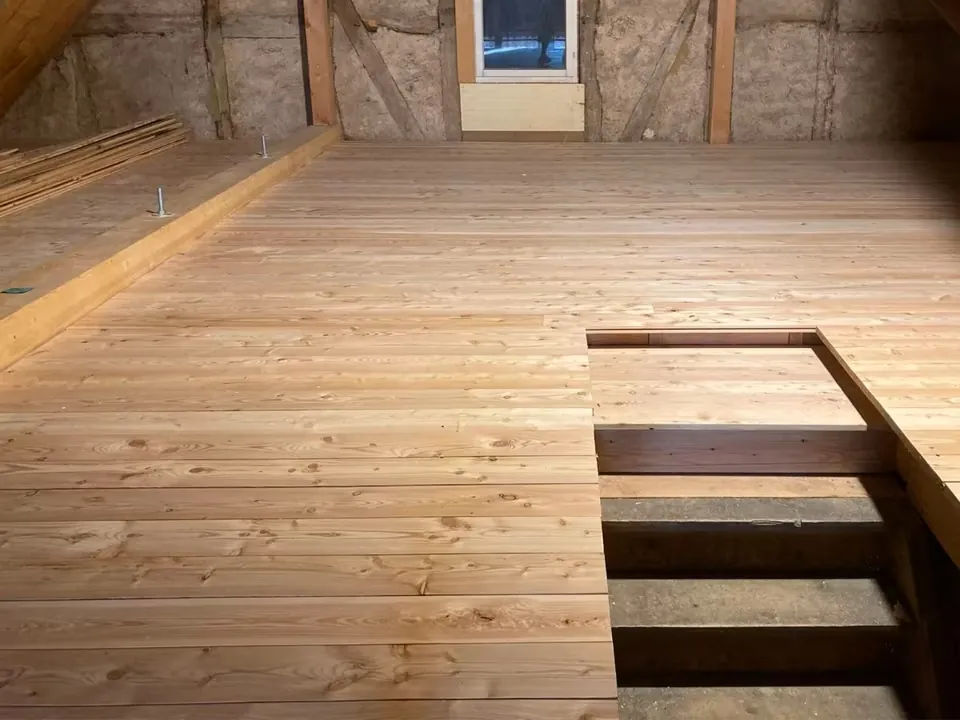
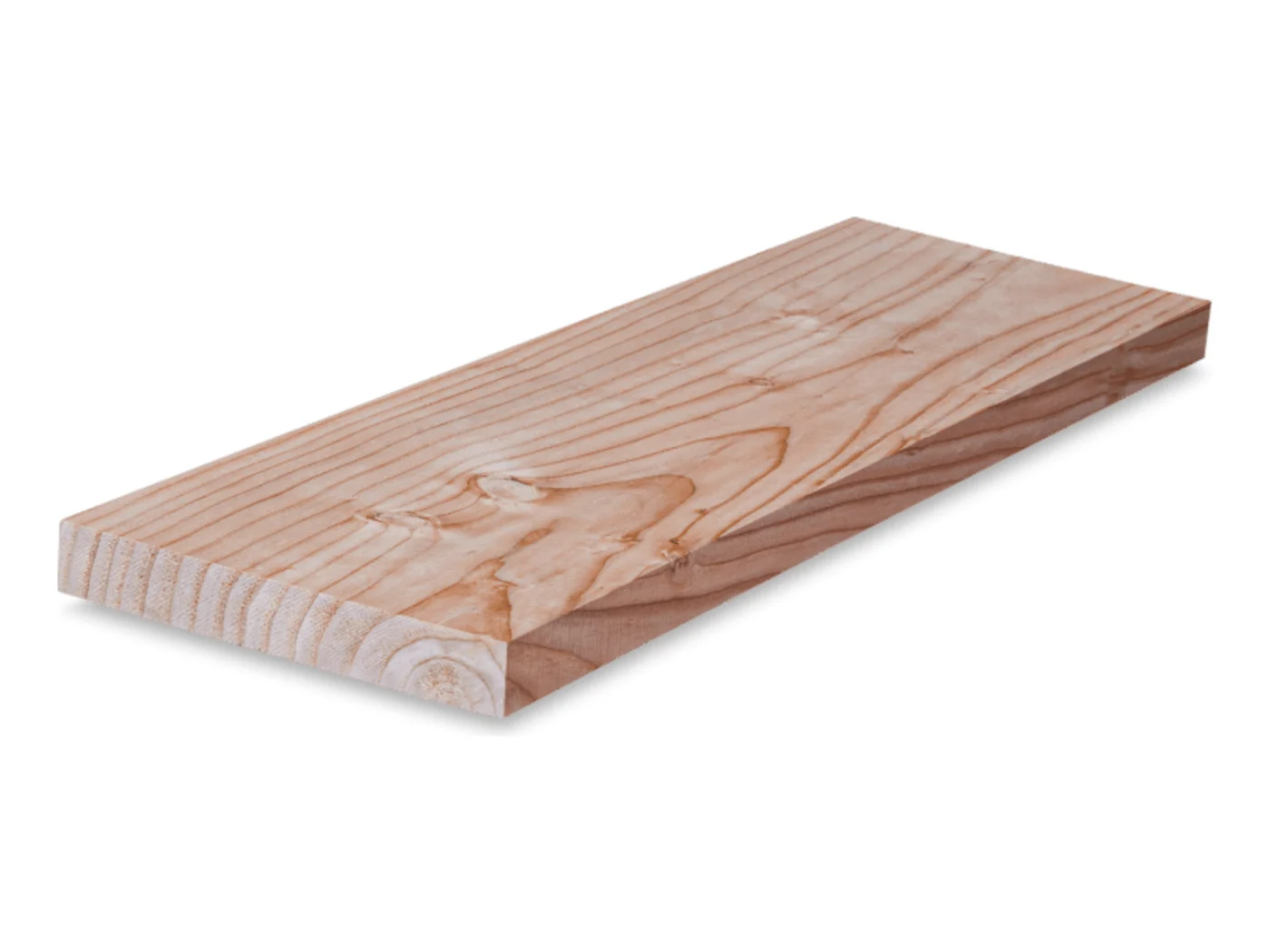
Larch has a considerably warmer and stronger colour tone than spruce. The LWF describes the heartwood of larch as reddish brown and expressly names its comparatively high weather resistance.
For external cladding such as facade elements, wall linings, roof overhangs and gables, larch is therefore often chosen.
That makes larch cladding particularly interesting where timber cladding is more exposed to the weather or where the stronger larch look is wanted.
Larch, too, should be built in outdoors so that water can run off and the timber can dry out again. A more resistant timber species is no substitute for suitable design detailing.
In price, larch cladding is usually above spruce cladding.
Rough-sawn or planed?
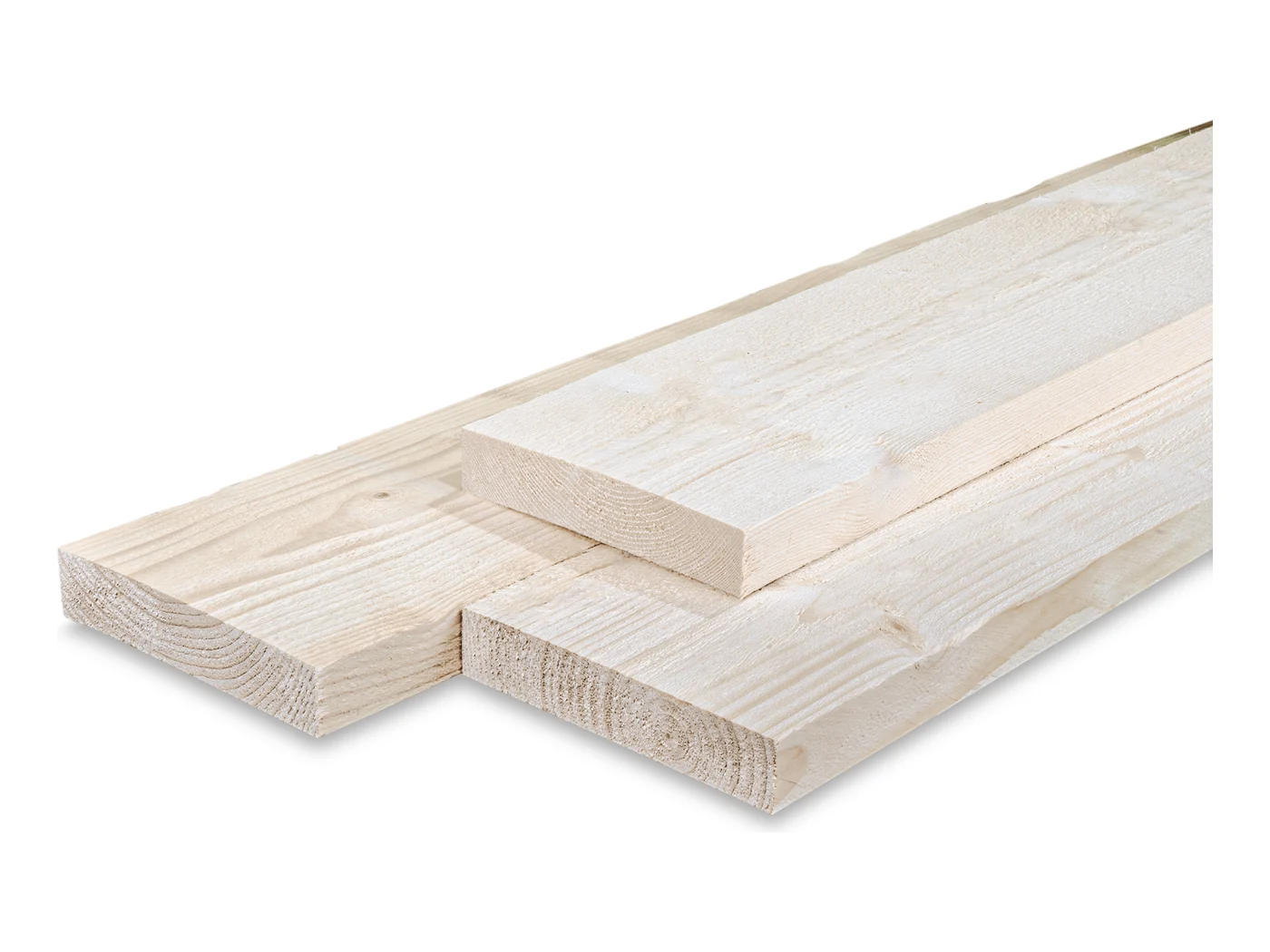
We can offer both spruce cladding and larch cladding rough-sawn or planed.
Rough-sawn cladding has the typical texture of the saw cut and looks stronger and more original.
Planed cladding has a smoother and more even surface and looks correspondingly calmer.
Which option is chosen is therefore not only a technical but also a design decision.
With both timber species we stock, among other things:
- 24 × 100 mm
- 24 × 120 mm
- 24 × 140 mm
- 24 × 160 mm
- further wide boards on request
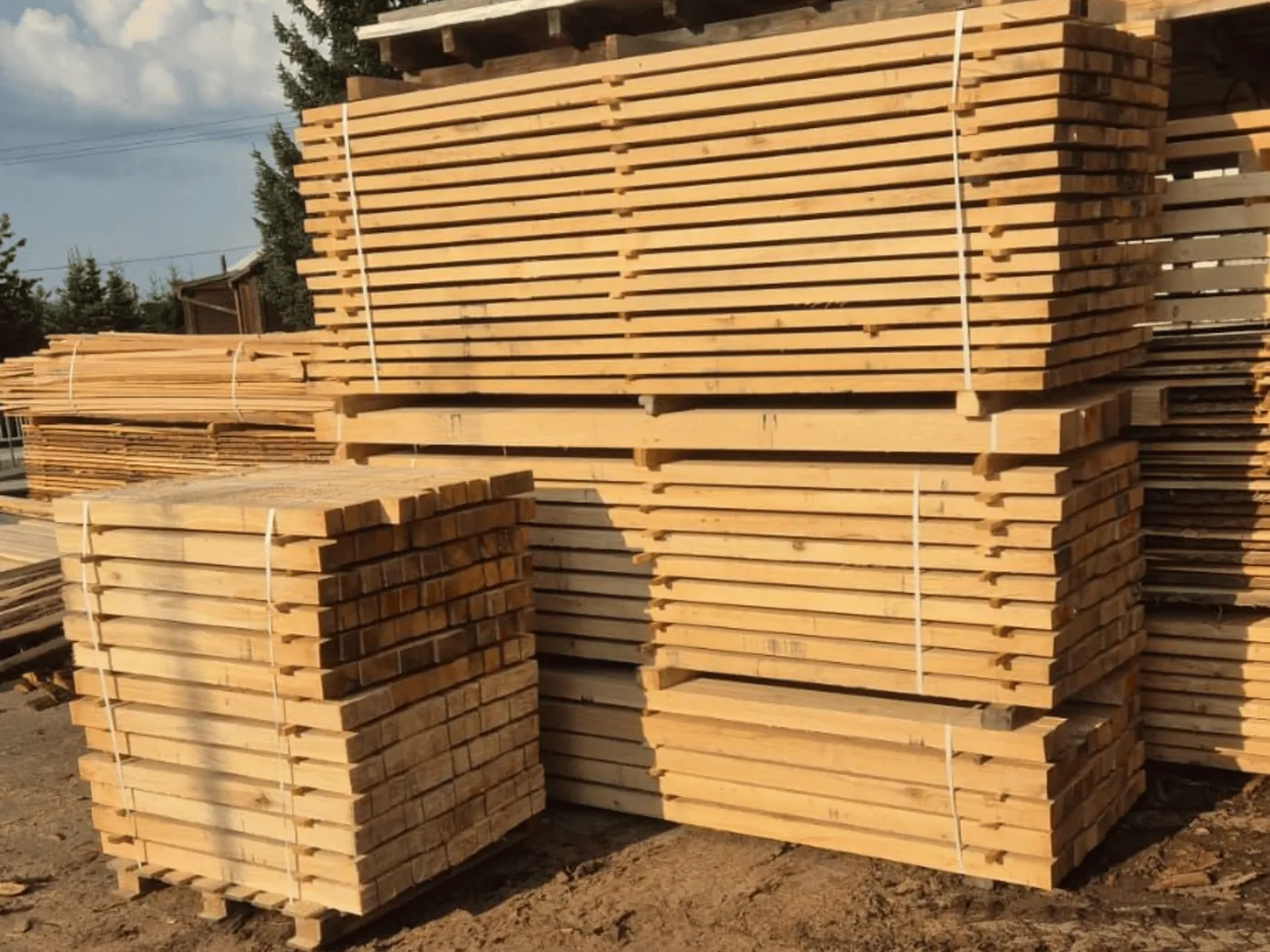
Standard lengths are 3.00 m, 4.00 m and 5.00 m. Further dimensions and intermediate lengths are possible depending on the version.
Weathering: why the construction matters just as much as the timber species
With external cladding it is not the timber species alone that decides how the construction develops over the long term.
What matters above all is avoiding permanent moisture. The German Environment Agency therefore puts design detailing ahead of chemical timber preservation. That includes keeping rain and splash water away from the timber as far as possible and making it possible for it to dry out quickly.
That applies to larch and spruce equally – with spruce this point is particularly relevant because of its lower natural resistance.
Which is cheaper: larch or spruce?
Spruce cladding is as a rule the more economical choice. Larch cladding is above it in price.
An actual price comparison should, however, always set the same dimension and version against each other. What is relevant includes:
- board width and thickness
- rough-sawn or planed
- Length
- order quantity
- availability
- delivery location
For that reason we deliberately do not give fixed square-metre or linear-metre prices here.
Which cladding is the right one?
Spruce is interesting if …
- price plays an important part,
- a light timber look is wanted,
- the construction is well protected, or detailed to suit the lower natural resistance.
Matching product: spruce cladding
Larch is interesting if …
- a higher natural resistance is wanted,
- the cladding is more exposed to weathering,
- a warmer and more distinctive timber appearance is preferred.
Matching product: larch cladding
For outdoor applications and further timber linings you will also find information under Garden fencing & landscaping.
Tongue-and-groove boards or cladding?
Cladding boards should not be confused with rough-sawn tongue-and-groove boards.
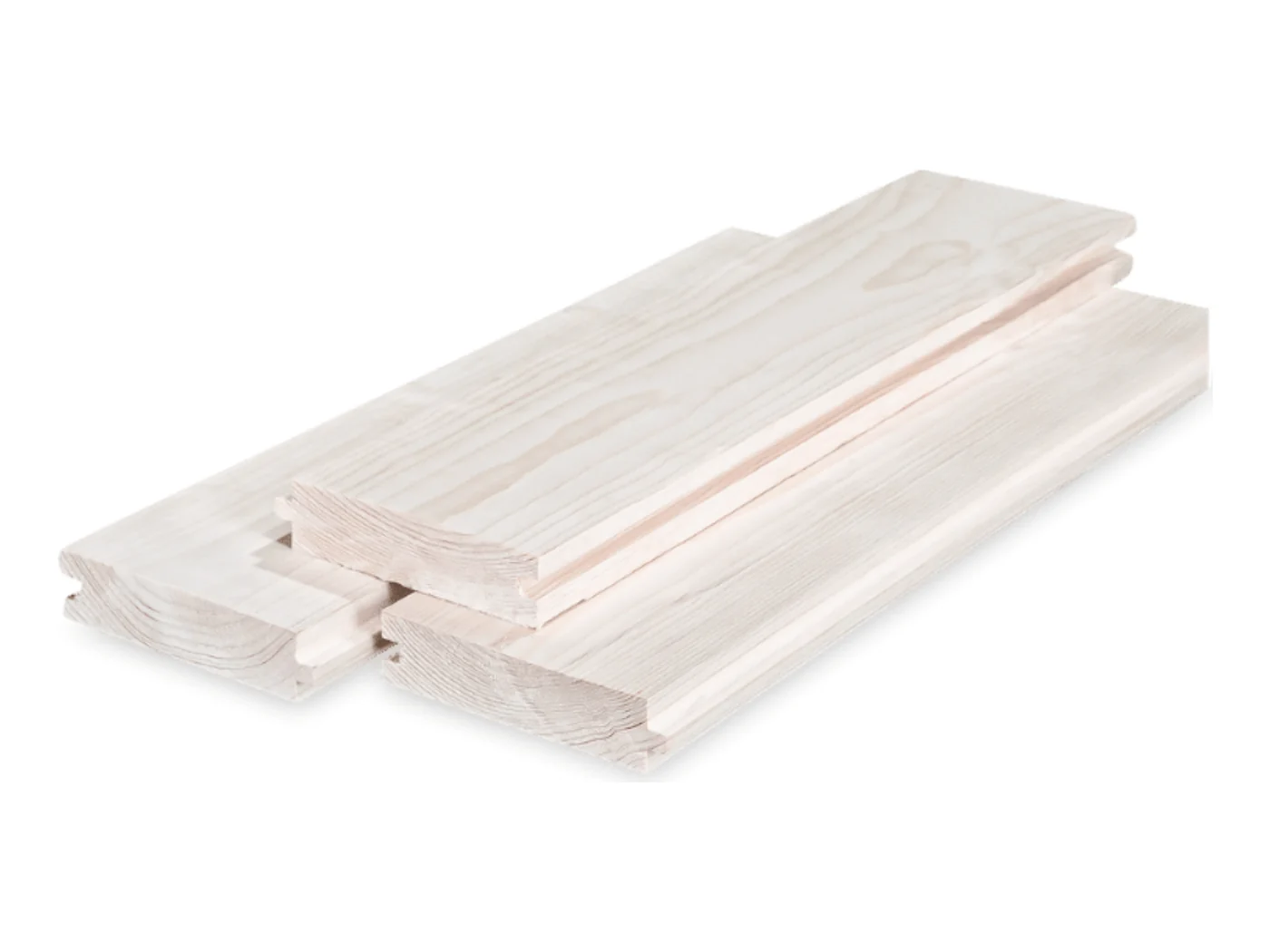
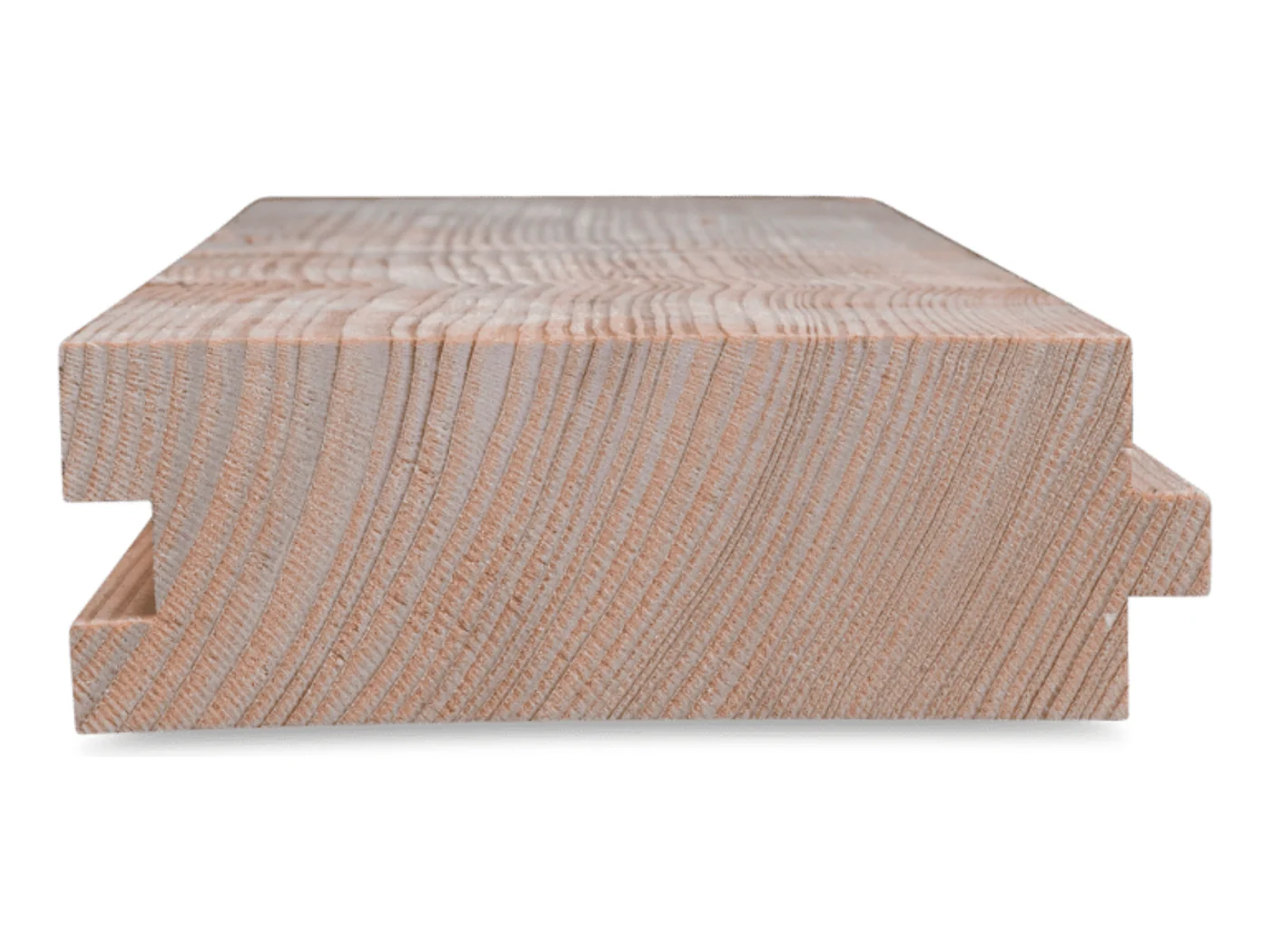
Our cladding boards have no tongue-and-groove joint. Spruce rough-sawn tongue-and-groove boards and larch rough-sawn tongue-and-groove boards, by contrast, have a tongue and groove on their long edges and therefore produce a different surface construction.
We explain the differences in detail in the guide Tongue-and-groove boards or cladding: what is the difference and when do you use which?.
Cladding, tongue-and-groove boards and the other profiles are in the Sawn & Round Timber category.