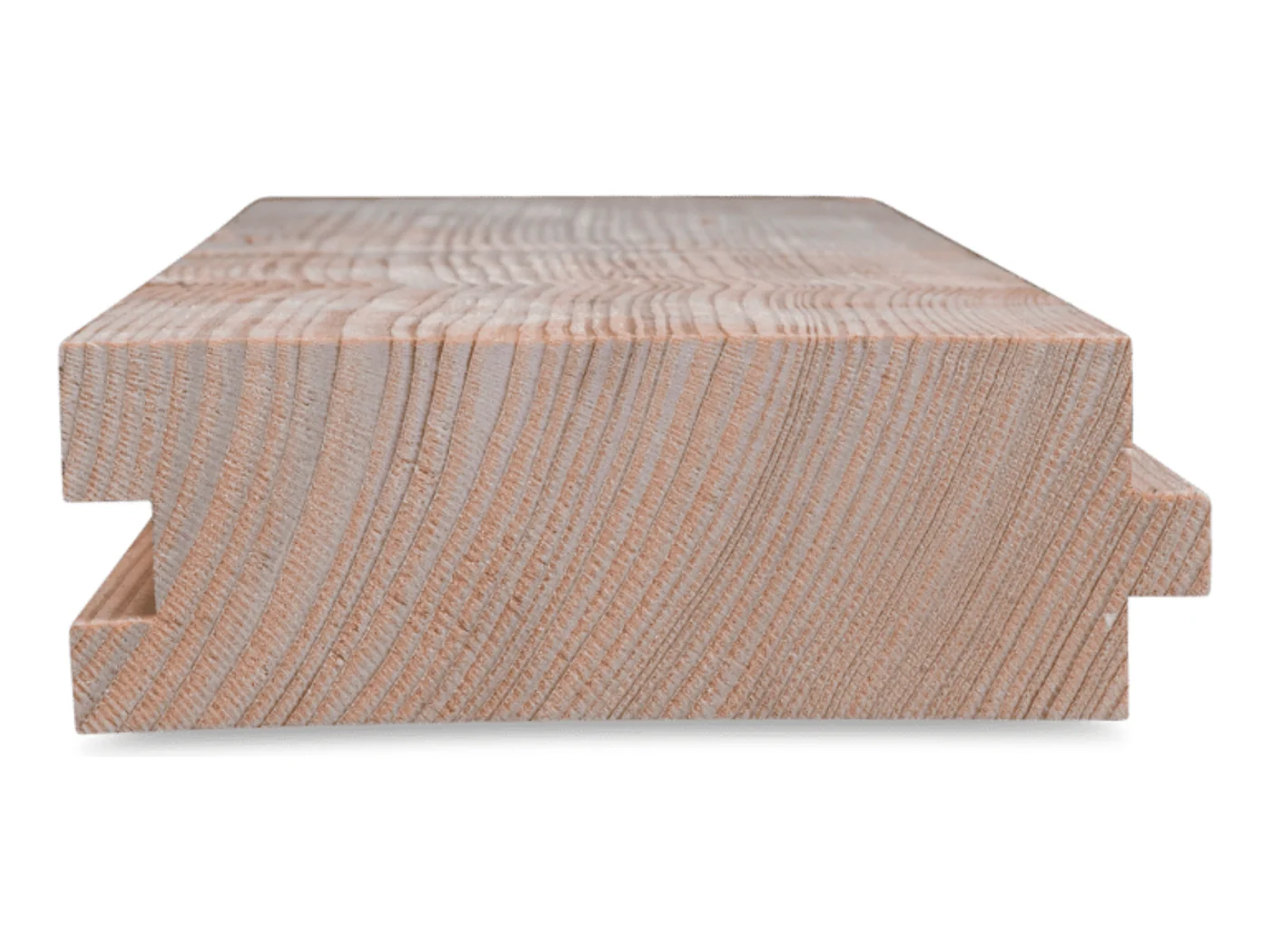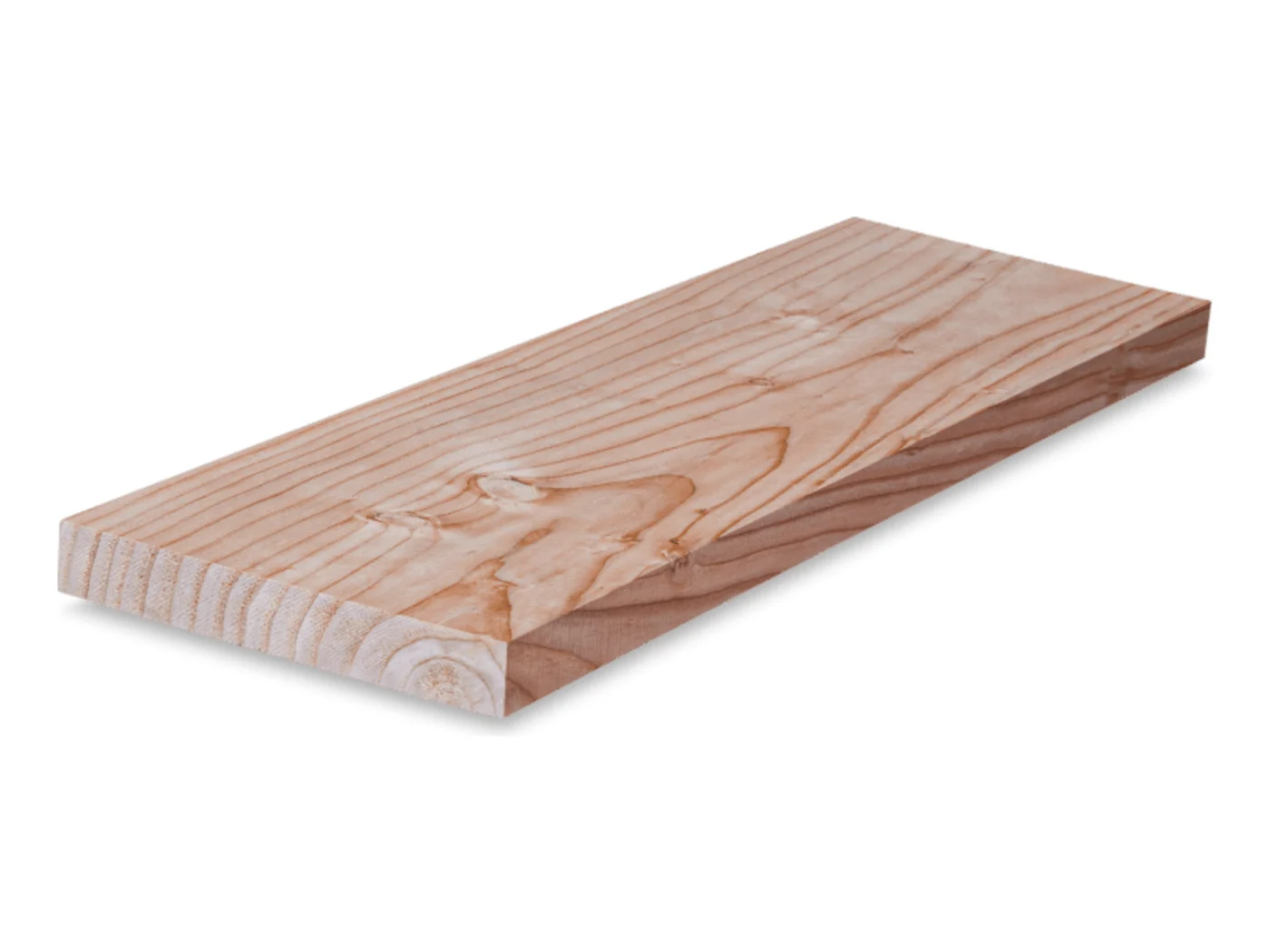
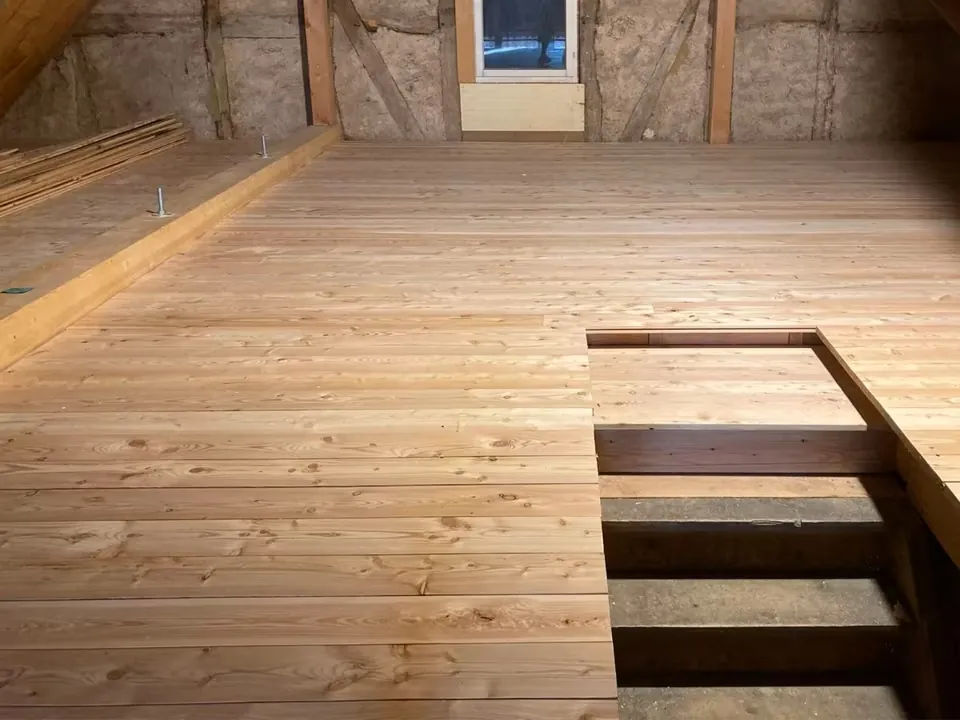
Rough-sawn tongue-and-groove boards – in German often searched for as both Rauhspund and Rauspund – and cladding boards are easily confused with each other. Both are boards that can be worked into larger timber surfaces. The decisive difference, however, lies in the profile of the long edges.
What are rough-sawn tongue-and-groove boards?
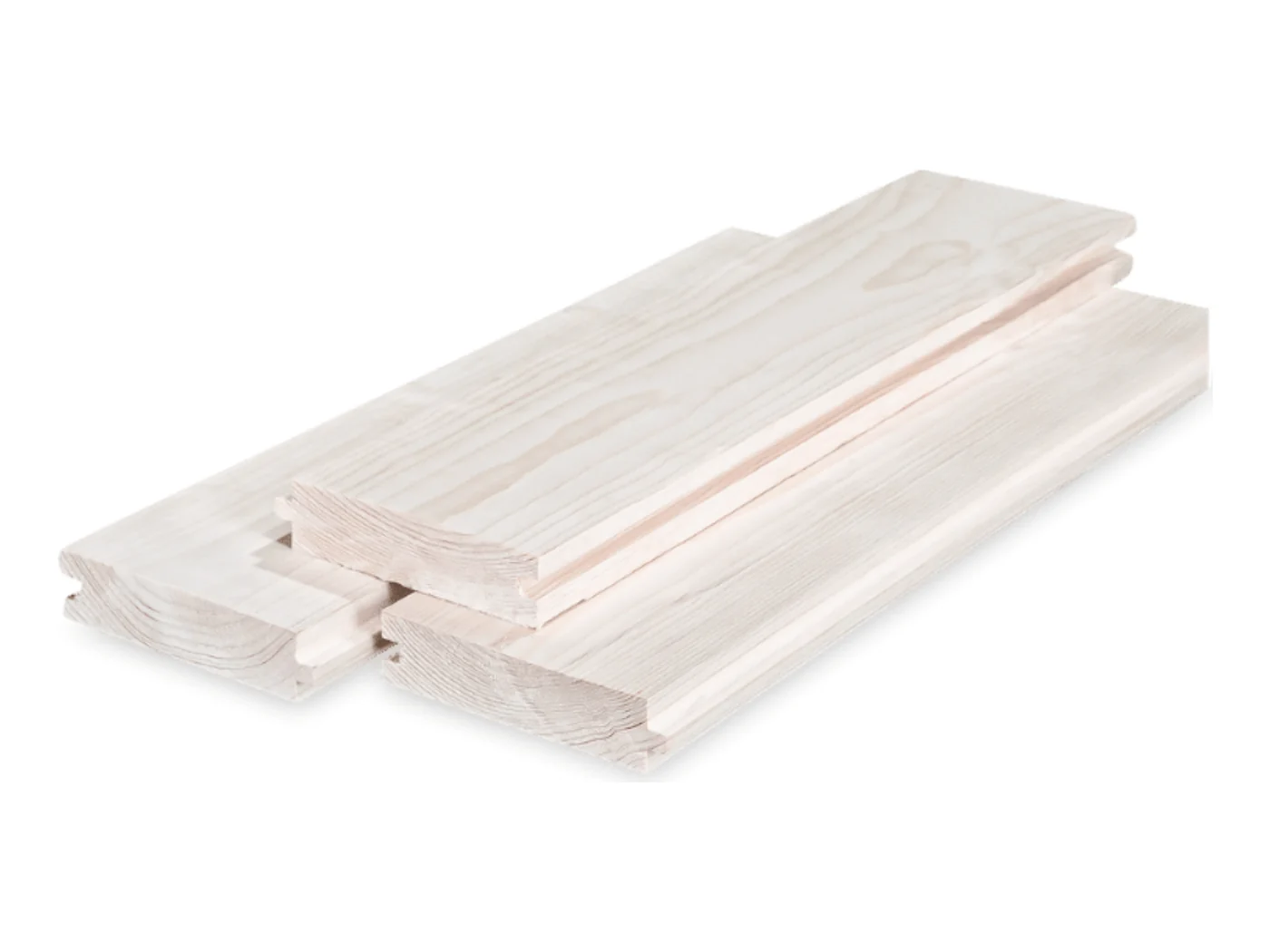
Tongue-and-groove boards have a tongue and groove. The boards engage in each other when laid. Our cladding boards, by contrast, have no tongue-and-groove profile and can be arranged in different ways depending on the construction.
You will find both options with us in spruce and larch: Spruce rough-sawn tongue-and-groove boards, Larch rough-sawn tongue-and-groove boards, spruce cladding and larch cladding, all in the Sawn & Round Timber category.
Tongue-and-groove boards have a groove on one long edge and the matching tongue on the opposite long edge. When they are put together, the tongue of one board engages in the groove of the next.
This produces a continuous, largely closed board surface. On our products the tongue and groove are on the long edges.
Our tongue-and-groove boards are planed on the front and evened off on the back.
- Spruce rough-sawn tongue-and-groove boards
24 × 146 mm, 28 × 146 mm and 31 × 146 mm. Lengths: 3.00 m, 4.20 m and 5.10 m. - Larch rough-sawn tongue-and-groove boards
24 × 146 mm, 28 × 146 mm and 31 × 146 mm. Lengths: 3.00 m, 4.00 m and 5.00 m.
Tongue-and-groove boards are particularly interesting where a surface is to be built up from interlocking tongue-and-groove boards.
One distinction matters: the term “Rauhspund” on its own says nothing about what loads a finished construction can take or whether, for example, it can be walked on or acts as bracing. For that, the whole construction, the board thickness, the supports, the fixing and the loading in question have to be considered.
What is cladding?
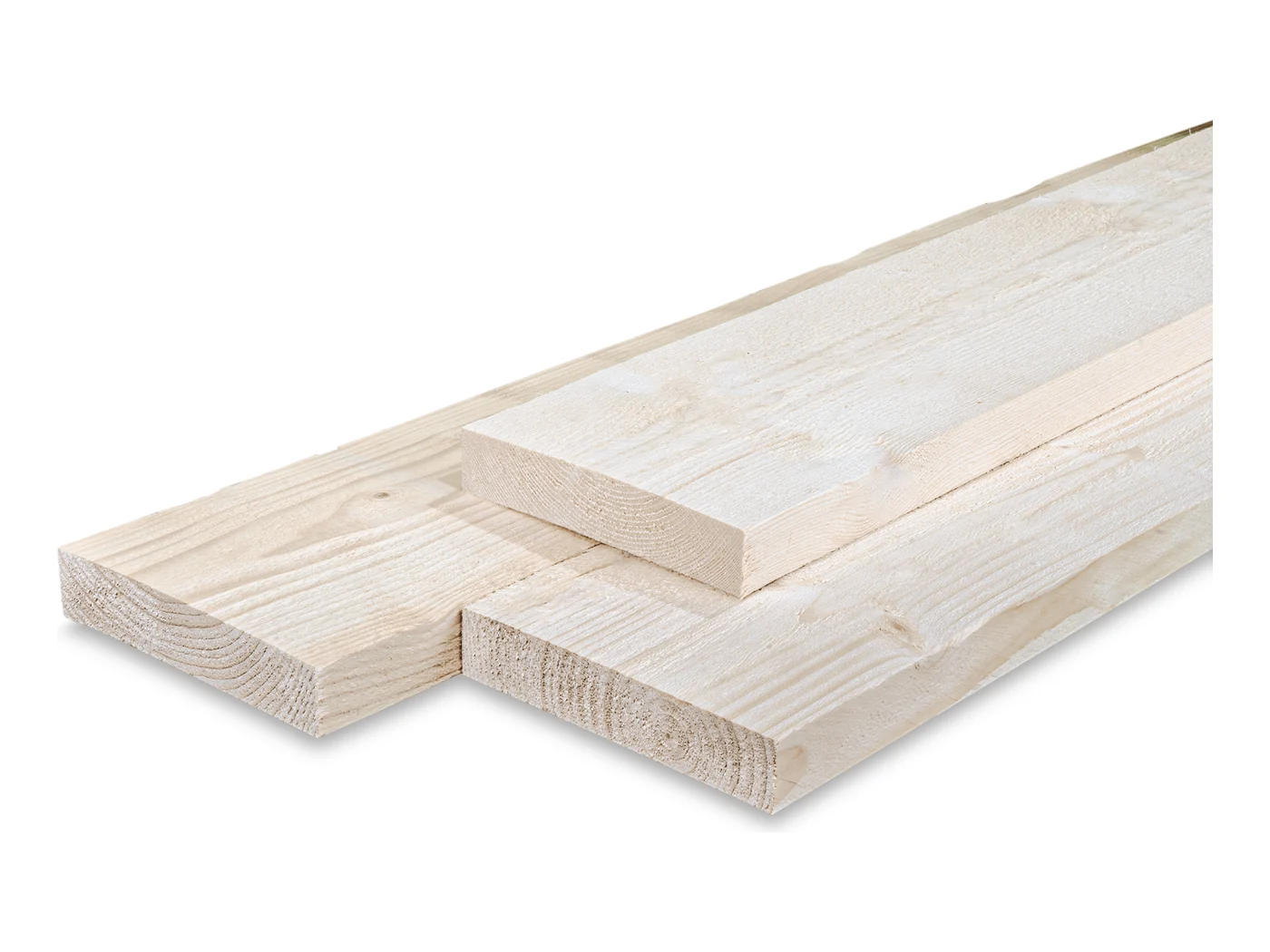
Our spruce cladding and larch cladding consist of boards without a tongue-and-groove joint.
That makes the arrangement of the individual boards freer. Depending on the construction, joints can be provided for or other types of cladding and lining can be built, for example.
“Cladding” here means timber cladding, or the cladding board for timber surfaces and linings – not temporary formwork for concrete work.
Our cladding boards are available rough-sawn or planed.
Common dimensions:
- 24 × 100 mm
- 24 × 120 mm
- 24 × 140 mm
- 24 × 160 mm
- further wide boards on request
Standard lengths are 3.00 m, 4.00 m and 5.00 m. Intermediate lengths and further dimensions are possible on request depending on the version.
Cladding boards come into question, for example, for timber linings on walls, facades, gables or soffits. The actual construction always has to suit the particular use.
Rough-sawn tongue-and-groove boards or cladding compared
| Characteristic | Tongue-and-groove boards | Cladding |
|---|---|---|
| Long edges | Tongue and groove | without tongue and groove |
| Surface construction | boards engage in each other | individual boards arranged freely to suit the construction |
| Surface available from us | planed on the front, evened off on the back | rough-sawn or planed |
| Timber species available from us | Spruce and larch | Spruce and larch |
| Joint pattern | largely determined by the tongue and groove | depending on the construction chosen |
| Typical decision | a continuous tongue-and-groove surface | freely built cladding or lining |
Put simply: choose tongue-and-groove boards if a tongue and groove is needed. Choose cladding boards if the boards are to be worked without that profile.
Only then does the question of spruce or larch arise.
Spruce or larch?
We stock both tongue-and-groove boards and cladding in German spruce and German larch.
Spruce is a widely used building and working timber. Its natural durability against weathering is, however, comparatively low. For outdoor applications the Bavarian State Institute of Forestry therefore expressly points out the importance of protective measures built into the design.
Larch has a higher natural weather resistance. The LWF describes larch as a versatile building and construction timber for indoor and outdoor use.
You will find a more detailed comparison in our guide Larch or spruce for cladding.
Moisture content and design detailing
Timber reacts to changes in humidity. It takes up moisture and gives it off again, and its dimensions can change as a result. This natural process has to be taken into account in joints, fixings and the whole construction.
With outdoor applications it is also important to avoid permanent moisture as far as possible and to make it possible for the construction to dry out.
The German Environment Agency puts design detailing ahead of chemical timber preservation and names protection from rain, splash water, thaw water and condensation, among other things, as important measures.
That is particularly important with spruce, but in terms of the construction it applies equally to larch. A more resistant timber species is no substitute for a suitable construction.
When do you use tongue-and-groove boards and when cladding?
Tongue-and-groove boards suit if …
- a tongue-and-groove joint is wanted,
- a largely closed board surface is to be created,
- interlocking long edges suit the construction planned.
Matching products: spruce rough-sawn tongue-and-groove boards and larch rough-sawn tongue-and-groove boards.
Cladding suits if …
- boards without a tongue and groove are needed,
- the joint pattern, or the arrangement, is to be chosen freely in the construction,
- a choice between a rough-sawn and a planed surface is wanted.
Matching products: spruce cladding and larch cladding.
Which board thickness, substructure and fixing are required depends on the specific application. The complete range is in the Sawn & Round Timber area.